Editor’s Note: This post is written by a member of LTV’s sponsored content team, The Leisure Explorers. Do you own a Leisure Travel Van and enjoy writing? Learn more about joining the team.
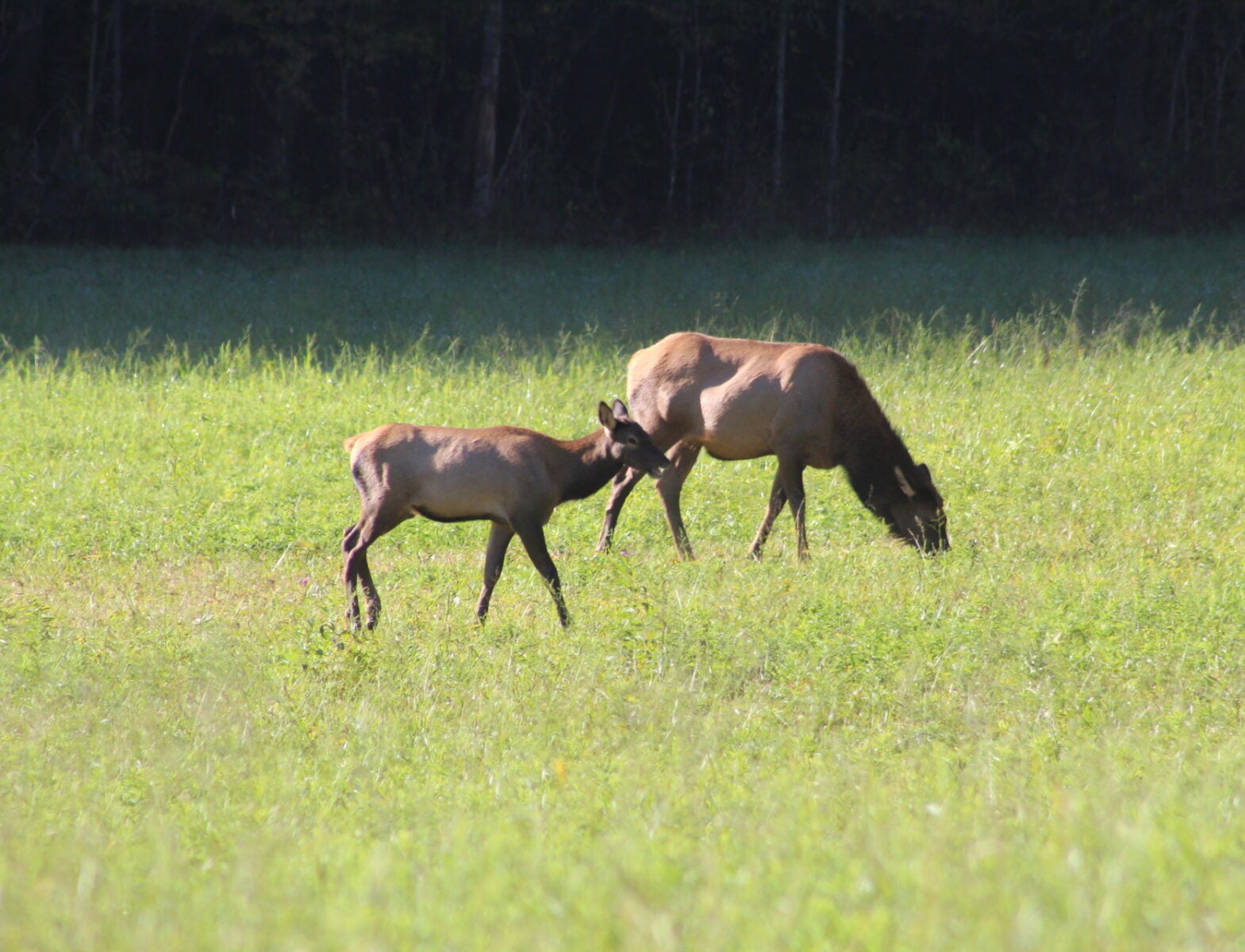
We approached the Great Smoky Mountains National Park from the North Carolina side. When we entered the park, we were welcomed by the greeting committee—a herd of elk.
The time of year for our visit was October 2019, with temperatures in the 30s at night and 70s (Fahrenheit) during the day. We were on our way west as part of our seven-month Maritimes adventure that took us from Arizona through the east coast of the US and five eastern Canadian provinces—a 15,000-mile journey.
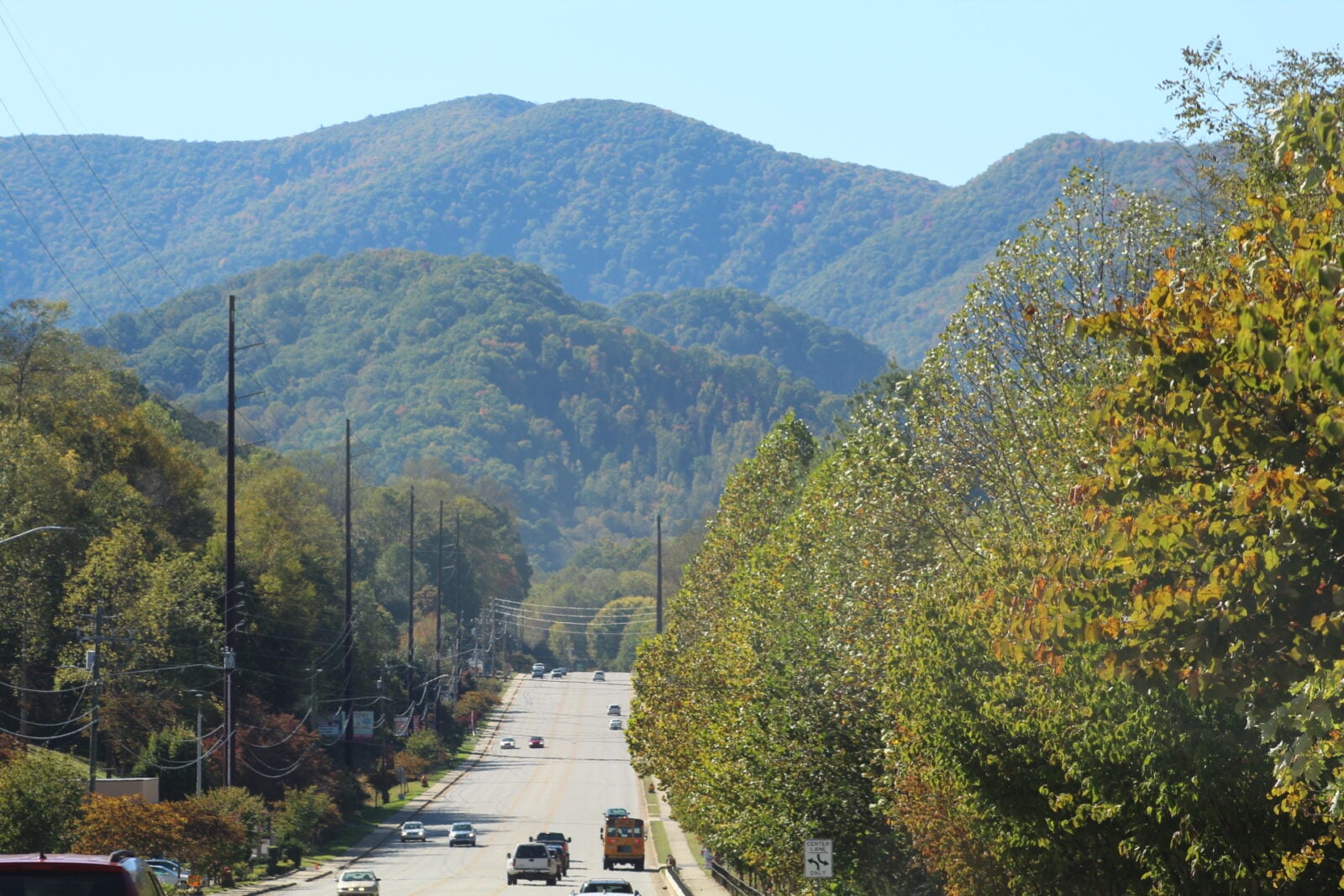
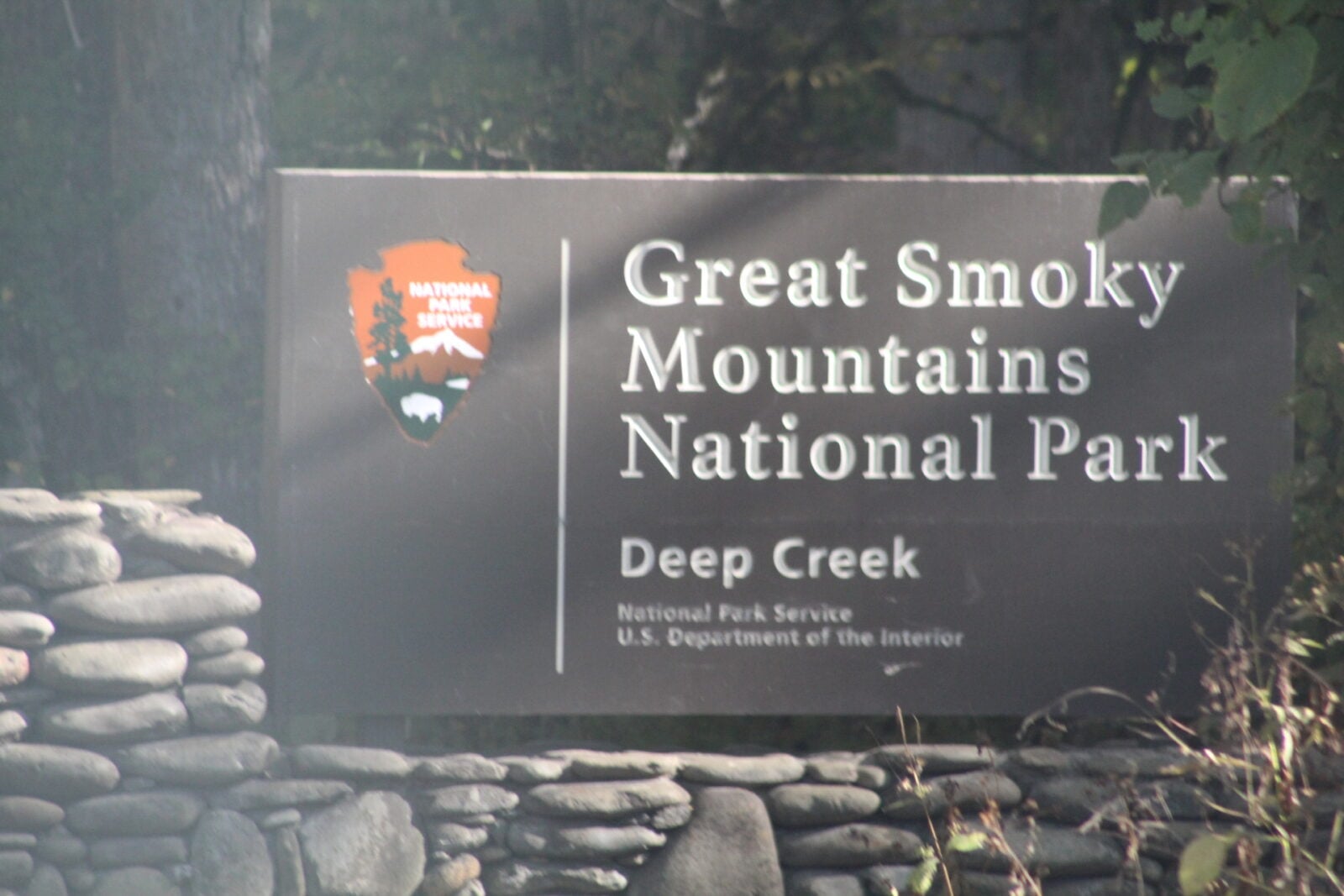
We didn’t get any reservations here in the Great Smoky Mountains National Park; we just showed up at the visitor center and enquired about space available for camping. The ranger said, “Yes,” and gave us a map with directions to the open campground. We actually camped in two campgrounds during our visit to the Smoky Mountains. On our first night, we camped at Deep Creek Campground. We had to leave the national park and then re-enter through the back of the park to get to Deep Creek. The second campground we stayed at for two nights was Smokemont Campground, situated in the heart of the park’s activities.
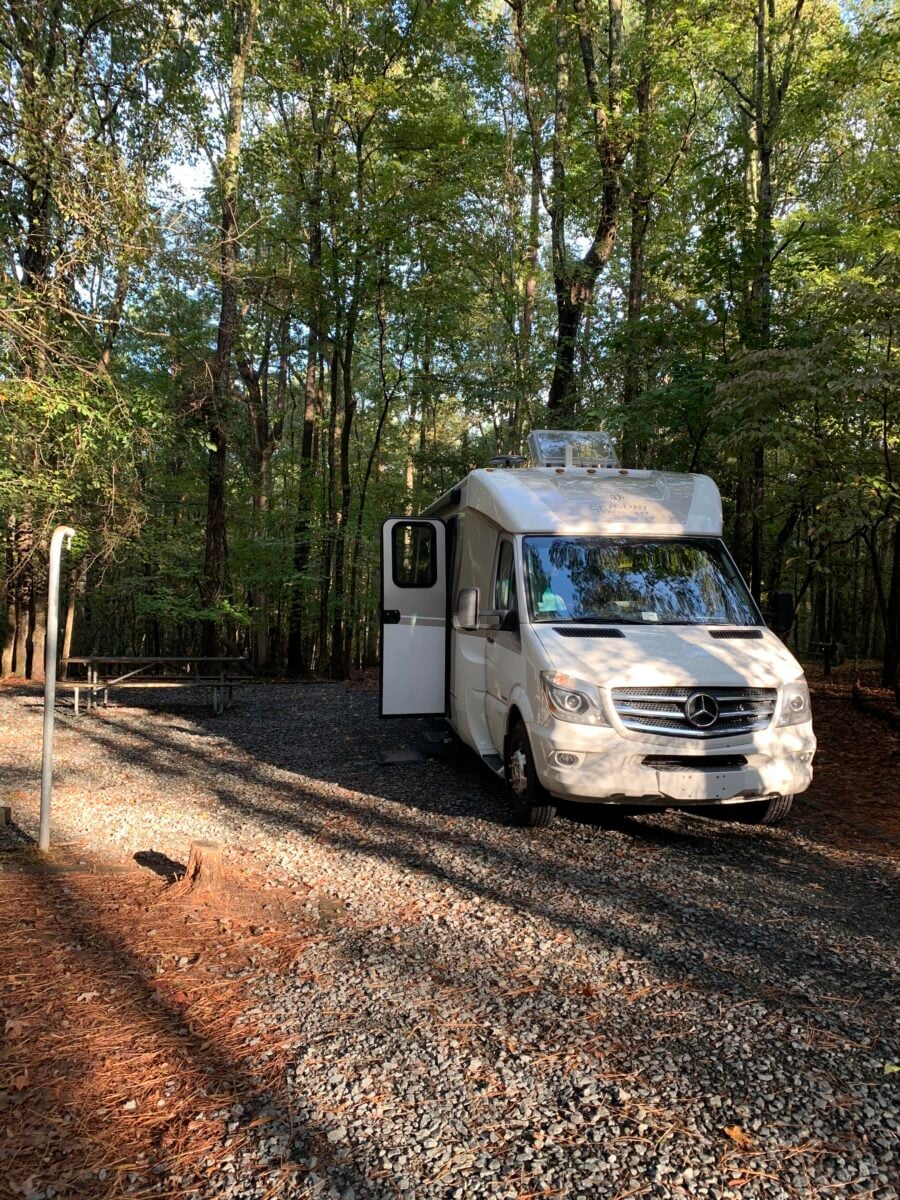
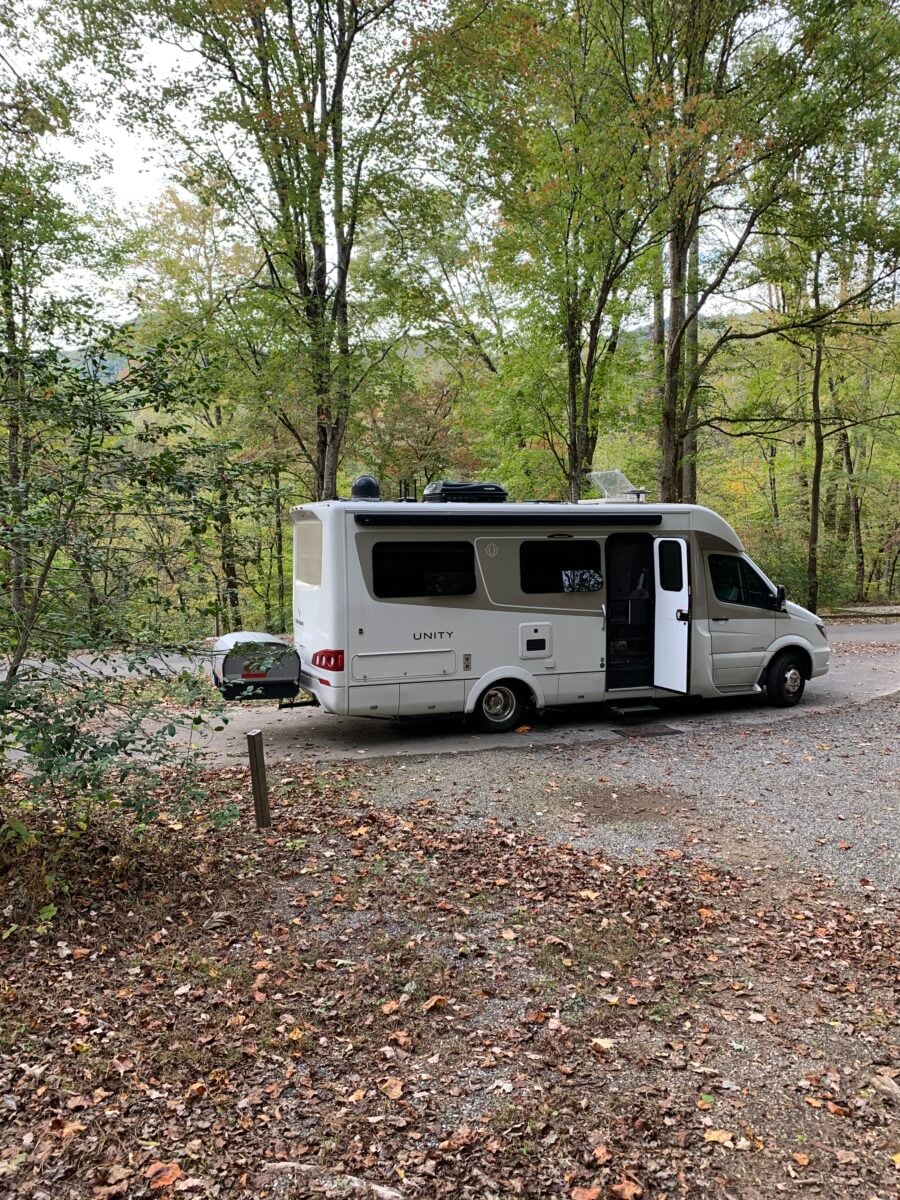
Like most national parks, the Great Smoky Mountains National Park campsites don’t have electric or water hookups. However, potable water is available in the campgrounds. It’s dry camping at its finest (dry camping is RV lingo for camping without water and electric hookups), but we don’t mind dry camping because our LTV is entirely self-contained. At $20 per night, $10 per night with the senior/access pass, you can’t go wrong. Campsites are paved and level. There’s plenty of room between sites, and the sites are well shaded with large trees. The campsites are also conveniently located near many of the hiking trails. Come along as we camp on the North Carolina side of the Smoky Mountains.
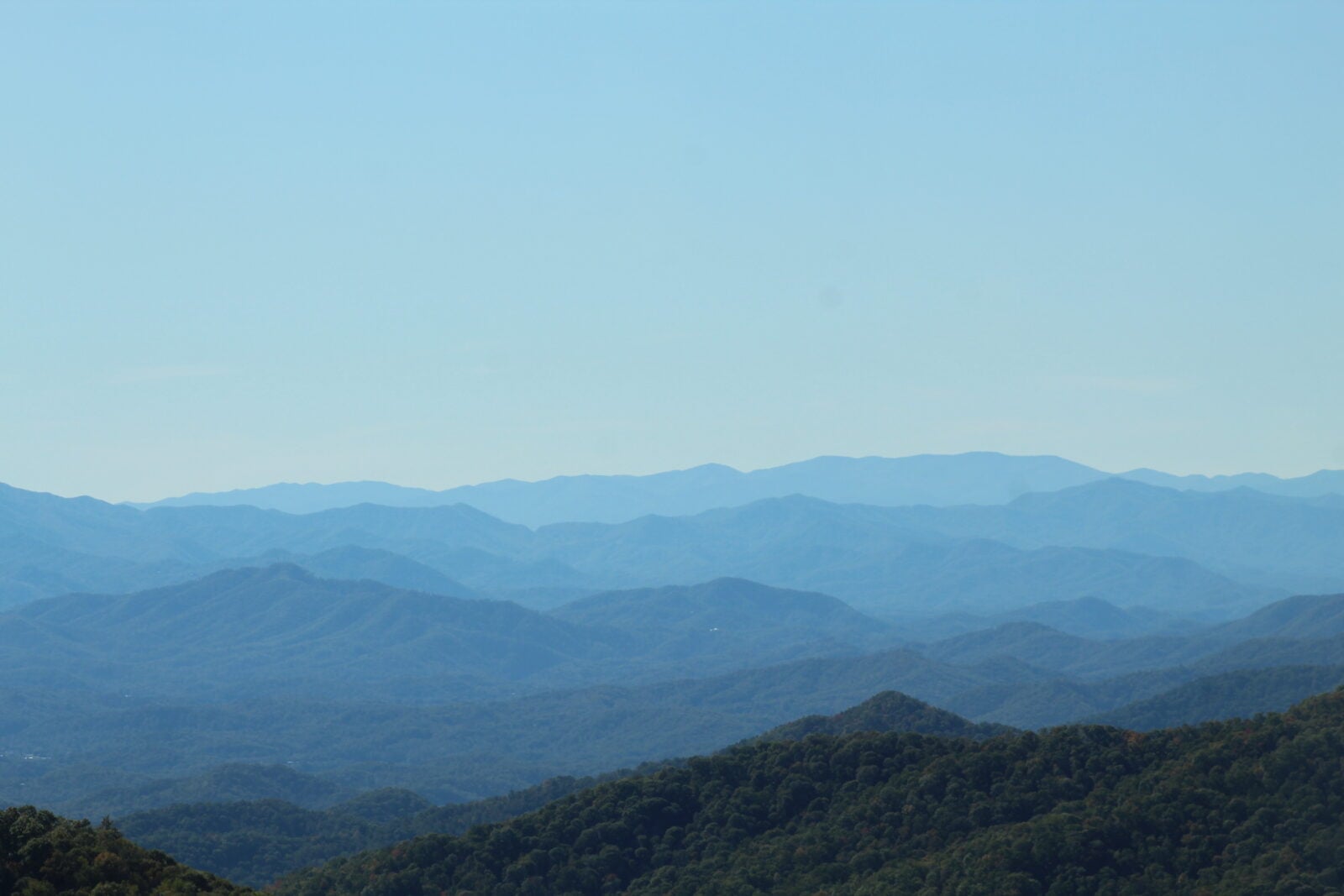
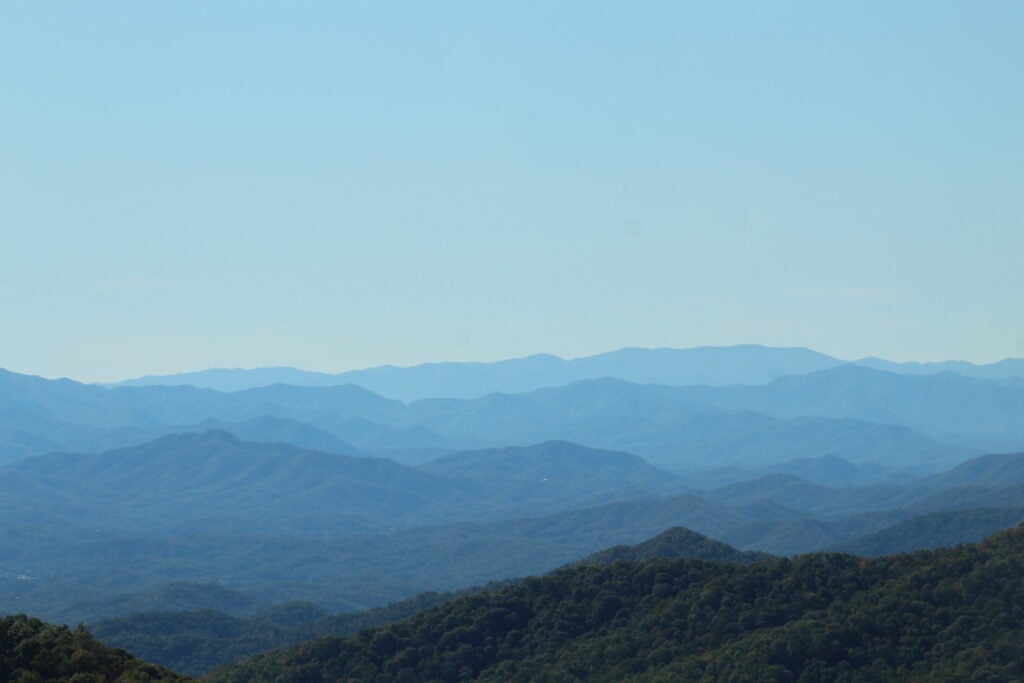
The Great Smoky Mountains National Park is situated on the border of North Carolina and Tennessee. These mountains are not the tallest in America, but due to their thick moderate rain forest and subsequent mist that forms over these mountains, the Great Smoky Mountains National Park is the most visited of all America’s national parks. The mist or fog that forms over these mountains is what gives the Smoky Mountains their name.
It was late afternoon by the time we arrived in the national park, and when we arrived, we were greeted by a herd of elk. We thought this must be the welcoming committee, and it looked as though some of them must be tired after greeting so many visitors all day long. These majestic creatures are very impressive. On a side note, we traveled along the entire east coast of the United States and all of the Maritimes of Canada, including putting our Leisure Travel Van on a ferry and visiting Newfoundland. We never saw a single wild animal until we entered the Smoky Mountains on our way back to Arizona.
We always like to visit the visitor center when we are at a national park to collect information about the park and get our national parks book stamped. Since we also intended to camp here, we needed to find out if there was any space available in the campgrounds. We prefer not to make reservations when we are on the road, as it limits our flexibility and allows us to travel at our own pace, stopping whenever we are ready for the night.
Some would say this isn’t camping unless you’re sleeping on the ground in a sleeping bag or in a tent. I smile and nod, then I go into my Leisure Travel Van and go to sleep in my nice, comfy bed, with my warm furnace or cool air conditioner running, my personal full-size bathroom, and my kitchen, complete with a microwave/convection oven and a large refrigerator/freezer.
There are ten campgrounds throughout this national park, but only two are open year-round: Cades Cove and Smokemont. I don’t think you would want to tent camp in the middle of winter here unless you could use a propane or kerosene heater. Even in our LTV, it would be challenging to camp here during the winter since our van is not a four-season vehicle.

As for things to do while visiting this park, people come here to hike the trails and take the scenic drive through the beautiful mountains. There are 39 hiking trails in the Great Smoky Mountains National Park. Take your pick; each one has something to offer everyone. We will take a closer look at hiking in this national park in part two of this series. There are four scenic drives in the park, and I highly recommend taking advantage of them.
Also, there are two self-guided tours: the Cades Cove Places Tour, which takes one to four hours, and the Elkmont Historic District Tour, which requires one to three hours. There are fees to use the park and enjoy the trails, tours, and campgrounds. The Great Smoky Mountains National Park has three visitor centers as well. (Specific information about this park can be found at the visitors center or on the National Parks phone app.)
Thank you for joining us as we explore God’s amazing creation. Next time, in part two of this series, we will take a closer look at hiking in the Great Smoky Mountains National Park. Until then, safe travels, my friends.
This is a companion discussion topic for the original entry at https://leisurevans.com/blog/the-great-smoky-mountains-national-park-part-one-camping/