Editor’s Note: This post is written by a member of LTV’s sponsored content team, The Leisure Explorers. Do you own a Leisure Travel Van and enjoy writing? Learn more about joining the team.
The mariachi trumpet hits its high note just as a tour boat glides under the stone bridge at your feet. You’re standing on one of 15 miles of walkways that wind through downtown San Antonio, 20 feet below street level, where 13 million visitors each year discover that Texas’s second-largest city guards its past like a sacred trust while serving it up with cold beer and hot salsa.
Most Americans are familiar with one fact about San Antonio: the Alamo. What they don’t know could fill the Bexar County Courthouse—twice. This city is home to five Spanish colonial missions, all of which were designated UNESCO World Heritage Sites in 2015.
The San Antonio River curls through the urban core like a liquid timeline, connecting 300 years of history in a single afternoon walk. And unlike Houston’s concrete or Dallas’s glass towers, San Antonio lets you touch its history, taste it, and hear it echo off limestone walls that predate the Declaration of Independence by 41 years. The best part? You can experience all of this without the headache of downtown parking or the expense of multiple rideshare trips.
At the Texoma Travelers fall rally in early November 2025, 55 LTVs took up spots at the San Antonio/Alamo KOA just 4.7 miles or a 15-minute drive from the Alamo in downtown San Antonio. Most LTV owners have experienced the joys of the city while avoiding traffic and parking hassles, as well as the expense of staying downtown.
Yes, you can pull your RV into any one of a dozen RV parks within 15 minutes of downtown, plug in to shore power, and let an Uber driver handle your visits to downtown. A $15 ride drops you at the heart of everything. No parallel parking a 25-foot motorhome. No stress.
The River That Built A City
The San Antonio River moves like molasses—slow, thick, green as jade in some spots, brown as iced tea in others. Cypress trees lean over the water, their knobby knees poking up through the surface. Mexican free-tailed bats swoop low at dusk, snatching mosquitoes mid-flight. The air smells like river water, grilled fajitas, and the sweet rot of fallen leaves, all mingling with the dust of limestone.
This isn’t the San Antonio River as nature made it. In 1941, after a flood killed 50 people and destroyed 1,500 buildings, the city could have paved it over. Instead, architect Robert H.H. Hugman pitched a wild idea: drop the walkways below street level, add shops and restaurants, and turn a drainage problem into a destination. The city said yes. Workers moved 88,000 cubic yards of dirt, planted 11,000 trees and shrubs, and created what locals now call the River Walk.
Today, you can start at the Pearl Brewery complex on the north end—a 22-acre campus of restaurants, shops, and a farmers’ market inside a 19th-century brewery—and walk south for three miles without ever climbing to street level. The path takes you under 35 bridges, past 200 restaurants, and through three distinct sections that shift from quiet and residential to rowdy and tourist-packed, then back to serene near the Mission Reach — an 8-mile section that connects the city’s historic missions, including the Alamo, through a network of trails for hiking and biking.
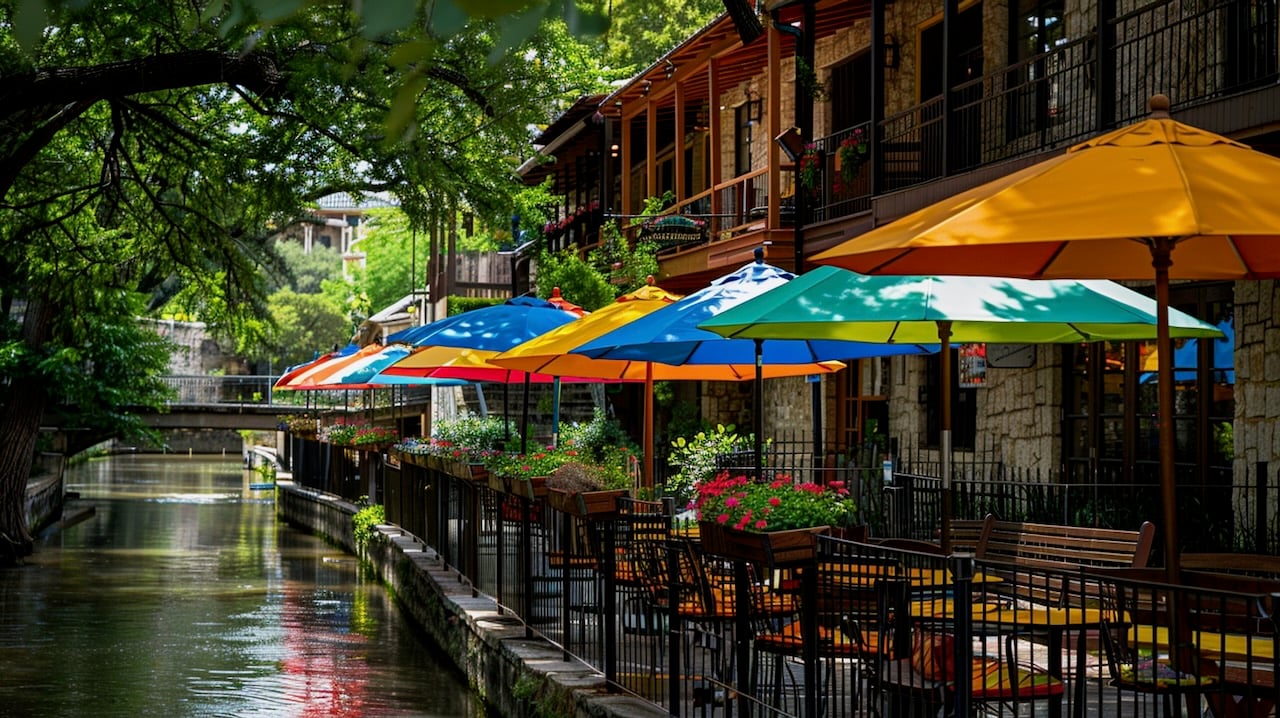
On a weekday morning in November, when the temperature hovers at 78-80 degrees and the summer crowds have returned home, the River Walk reveals its true personality. Herons hunt in shallow water near the River Walk buildings, waiting for breakfast to swim past. Office workers grab tacos from food trucks parked on the upper level, then descend stone staircases to eat on iron benches beside the water.
Tour boats start running at 9:00 am. Rio San Antonio Cruises operates 40 flat-bottomed barges, each carrying 40 passengers and one guide who delivers 35 minutes of history, gossip, and jokes. The guides point out where John Wayne filmed The Alamo (wrong: he filmed at a replica ranch 120 miles away); where Teddy Roosevelt recruited his Rough Riders in 1898 (correct: at the Menger Hotel bar, one block east); and where couples get engaged most often (the Marriage Island bridge, which hosts 300 proposals each year).
The Drury Plaza Hotel, a 24-story tower converted from a 1929 bank building, features purple lights. It is where Bonnie and Clyde hid out in 1934.
The Church-Fortress That Defines a Nation
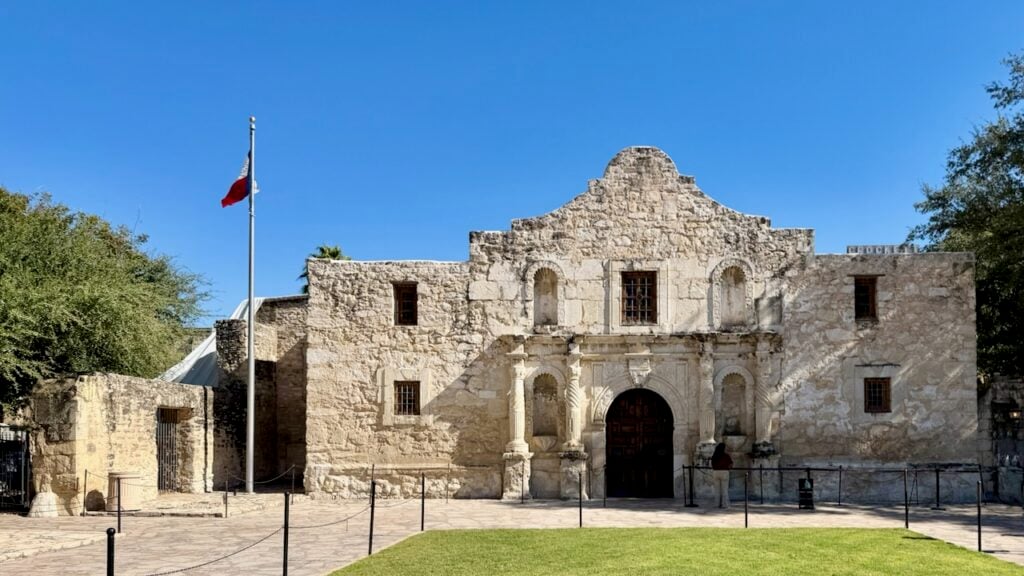
The Alamo sits like a thumb in the eye of modern San Antonio. Shopping malls press against the back wall. Hotels tower over the left flank. Tourists in shorts and sneakers stream across Alamo Plaza, taking selfies while site monitors politely ask them to remove their hats inside the mission church.
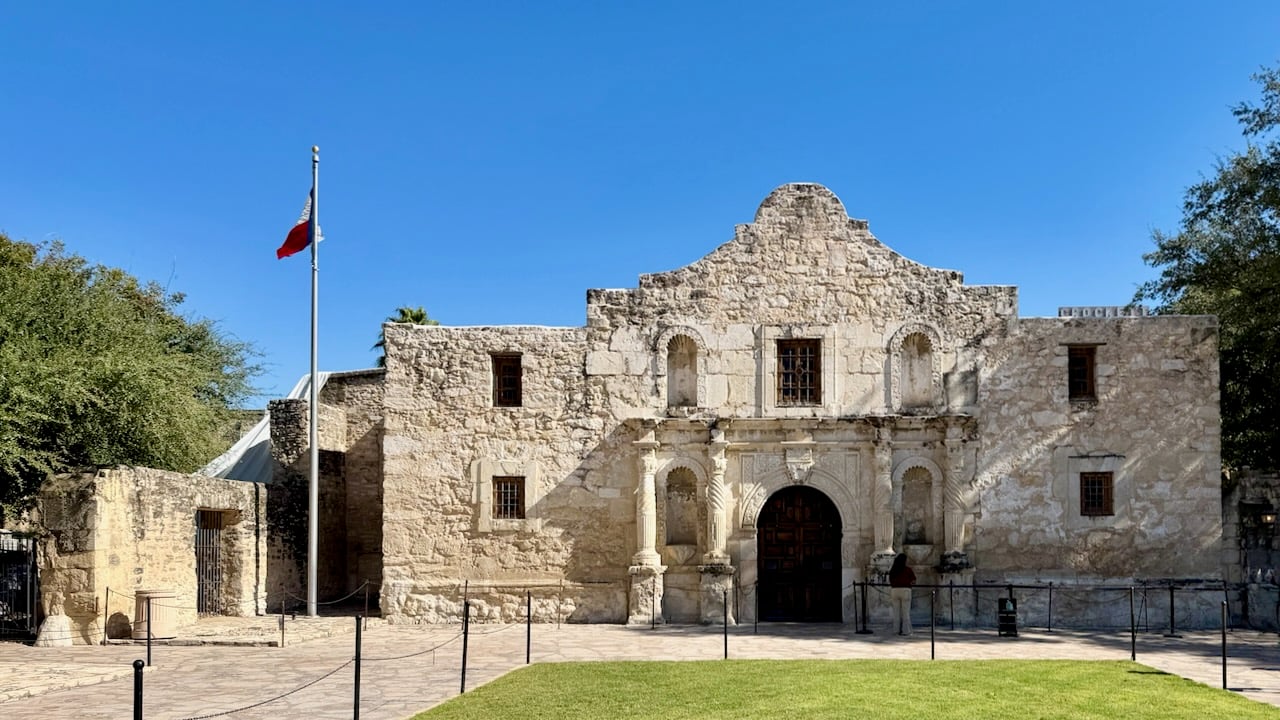
The Alamo is smaller than many might expect. The famous limestone facade—the curved parapet, the arched entrance, the niche that once held a statue of Saint Anthony—measures just 30 feet wide. The entire compound covers 4.2 acres, about the size of three football fields.
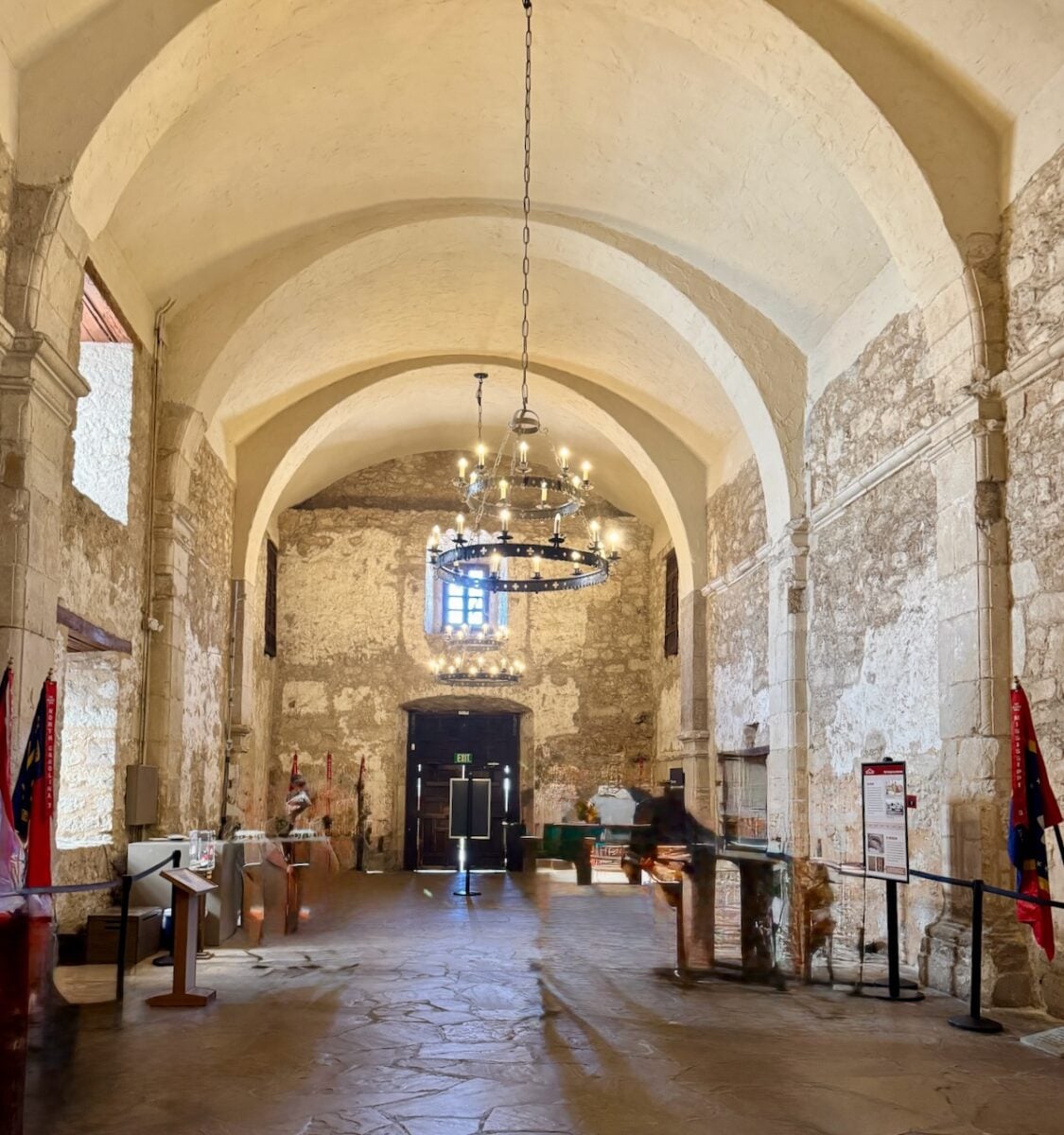
If you stand at the entrance, you can see the entire mission grounds, including the church, the long barracks, the gift shop, and the reconstructed walls where they once stood. The chapel interior stays dark and cool, even when the outside temperature hits 95 degrees. Limestone walls 30 inches thick block the heat. The air smells like old stone and candle wax. Light filters through windows positioned high on the walls, creating shafts that illuminate dust motes drifting like snow.
A Texas flag hangs behind the altar in the chapel. Visitors whisper without being asked to whisper. Something about the space demands reverence.
The Famous Battle
On February 23, 1836, between 1,800 and 6,000 Mexican soldiers (historians still argue about the number) surrounded this mission. Inside, 189 defenders held out for 13 days against artillery bombardment, infantry assaults, and dwindling supplies. The defenders had 21 cannons but struggled to move them. They had plenty of gunpowder but not enough experienced soldiers to use it effectively. They hoped reinforcements would arrive, but only 32 men managed to make it through enemy lines.
On March 6, before dawn, the final assault began. It lasted 90 minutes. Every defender died. The names of the dead read like a roster of American mythology: William Barret Travis, 26 years old, shot through the forehead while commanding the north wall. James Bowie, 40 years old, was killed while sick in bed, possibly shot, possibly stabbed. David Crockett, 49 years old, died in a manner historians still debate—some say fighting, some say captured and executed.
“Remember the Alamo” became the battle cry six weeks later at San Jacinto, where Texan forces defeated the Mexican army in 18 minutes and won independence for the Republic of Texas. The phrase stuck. The story grew. Hollywood made 12 movies about the battle, each one adding layers of legend that historians now spend careers trying to peel away.
The truth? The defenders knew they would probably die. Travis wrote a letter, “To the People of Texas & All Americans in the World,” declaring that he would “never surrender or retreat,” and signed it “Victory or Death.” They stayed anyway. That’s the part worth remembering.
Where Davy Crockett Meets Duck Confit
Walk three blocks east from the Alamo and you’ll find the Crockett Tavern, tucked inside the Crockett Hotel at 320 Bonham Street. The restaurant sits in a building that shares a wall with the Alamo compound—close enough that defenders in 1836 could have thrown rocks at the spot where diners now cut into ribeyes and sip bourbon.
The dining room seats 85 under exposed limestone arches, original to the 1909 building. Edison bulbs hang from iron fixtures. The bar stocks 47 bourbons arranged by price from $8 a pour to $65 for a two-ounce shot of Pappy Van Winkle 23-year. A chalkboard lists daily specials written in careful cursive: Gulf redfish with crawfish étouffée, wild boar chop with apple chutney, lobster mac and three types of cheese with names difficult for some to pronounce.
We stopped in for an early dinner. The name of this restaurant promises frontier swagger and maybe a plate of enchiladas. What you get instead is something San Antonio rarely offers: food that ignores the Tex-Mex playbook entirely. The chef runs the kitchen like he’s cooking in Tennessee, not Texas. The menu reads like a love letter to American comfort food filtered through French technique.
On The Menu
One might become confused looking at the menu in this place. Davy Crockett was from Tennessee. He ate cornbread, whatever he shot in the morning, and drank whiskey. He didn’t eat tacos.
The food at Crockett’s isn’t akin to what you’ll find on the River Walk, where 90% of restaurants serve the same menu: fajitas sizzling on cast iron, enchiladas drowning in Chile con queso, and margaritas the size of fish bowls. Those restaurants serve a purpose—they cater to tourists’ expectations. But after three days of melted cheese and tortilla chips, your palate may want something different.
The Crockett Tavern delivers that difference. Order the bone-in pork chop—14 ounces, brined for 12 hours, grilled over mesquite, served with roasted Brussels sprouts and sweet potato mash. The meat pulls away from the bone with ease, even with just a fork. The Brussels sprouts taste like they’ve been kissed by bacon fat and finished with balsamic reduction. Nothing on the plate resembles anything served three blocks away at the tourist traps lining the river. Duck confit is served alongside shrimp and grits. Braised short ribs come with truffle mashed potatoes instead of rice and beans. The chicken-fried steak—the one concession to Texas tradition—gets topped with a cognac peppercorn sauce instead of cream gravy.
Or you can try the tavern burger: eight ounces of brisket-chuck blend, topped with caramelized onions, aged white cheddar, and a garlic aioli that could make cardboard taste good. It arrives on a brioche bun with hand-cut fries that stay crispy, unlike those that go limp after three minutes.
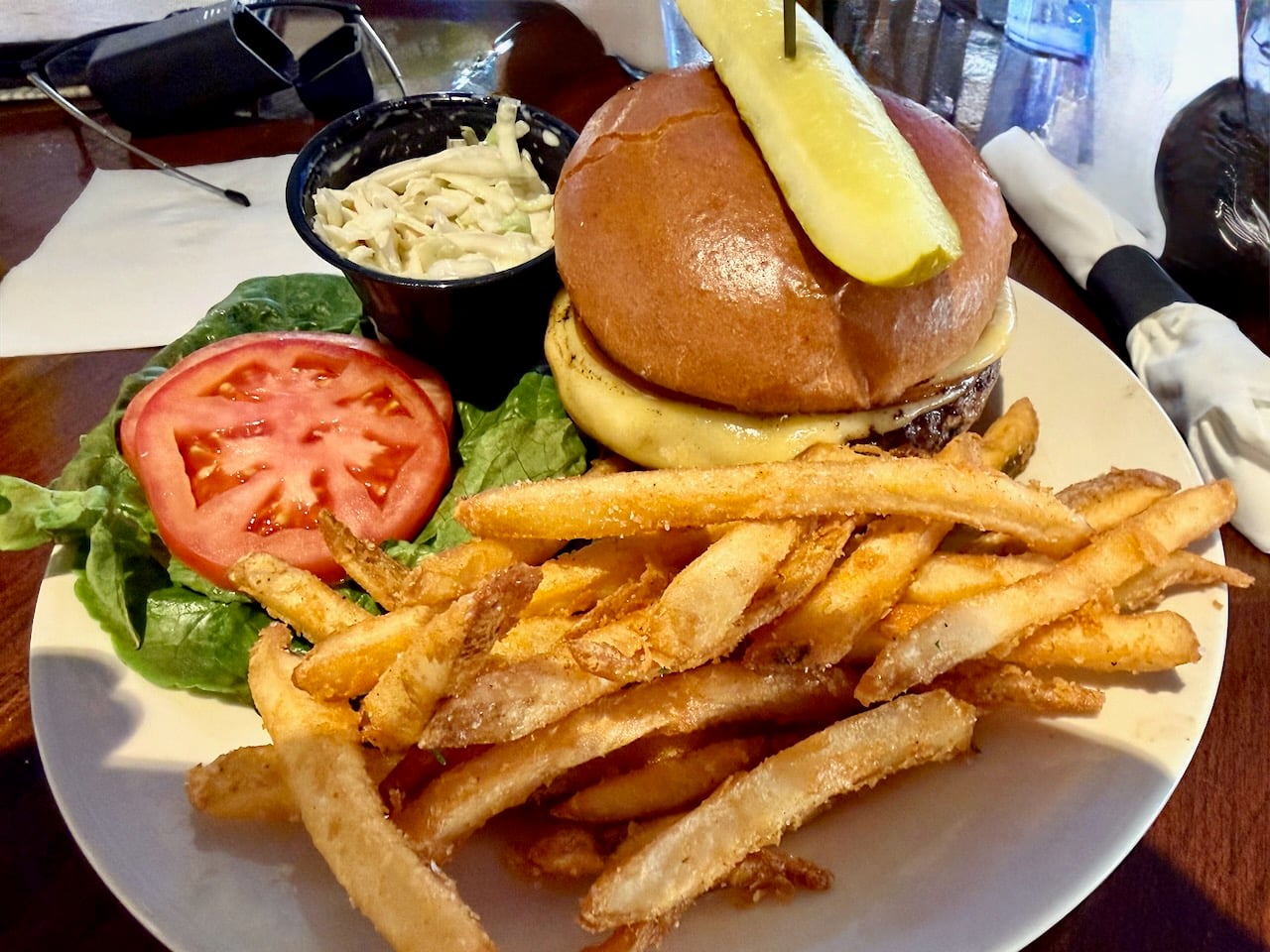
We tried the Bowie Beast Burger, a custom-ground patty of elk, bison, wild boar, and Wagyu beef, topped with smoked Gouda cheese, fried onions, and a house Tavern sauce. It was so good that it was enough for Tom to swear off his mostly vegan diet for the day.
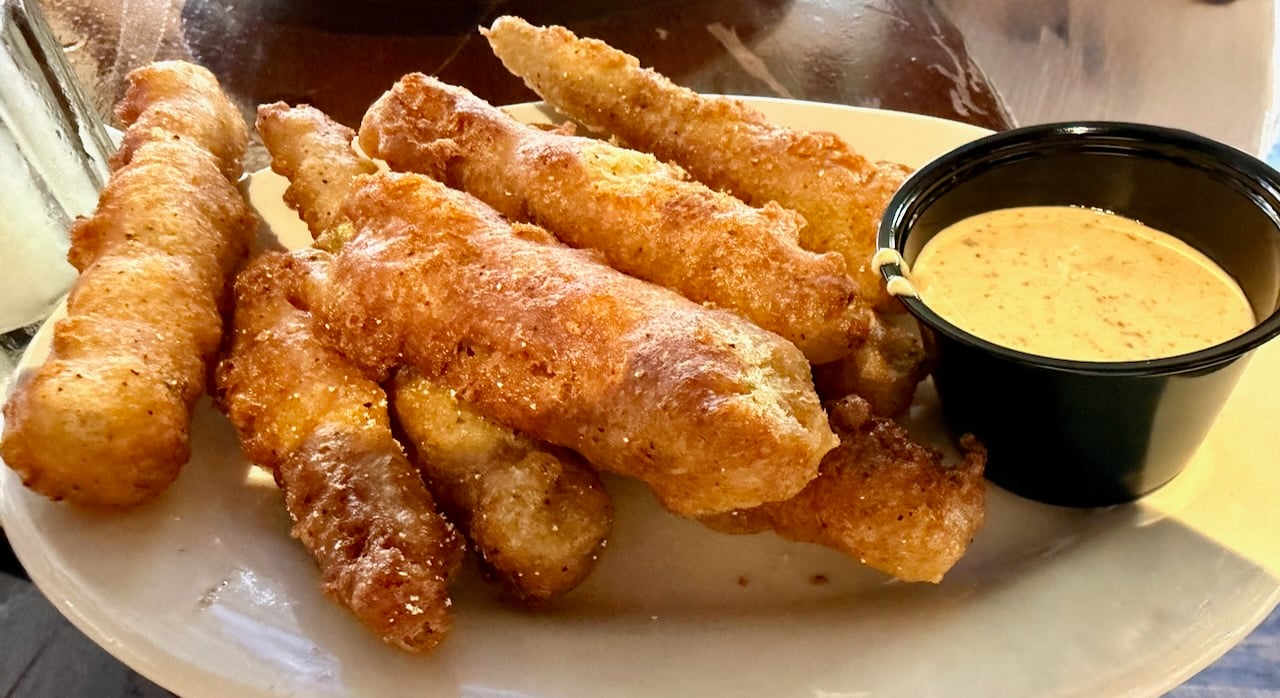
We asked the waiter about the fried Cactus pedals. His response? “Eh, some like it, some don’t.” It was delicious with the accompanying sauce.
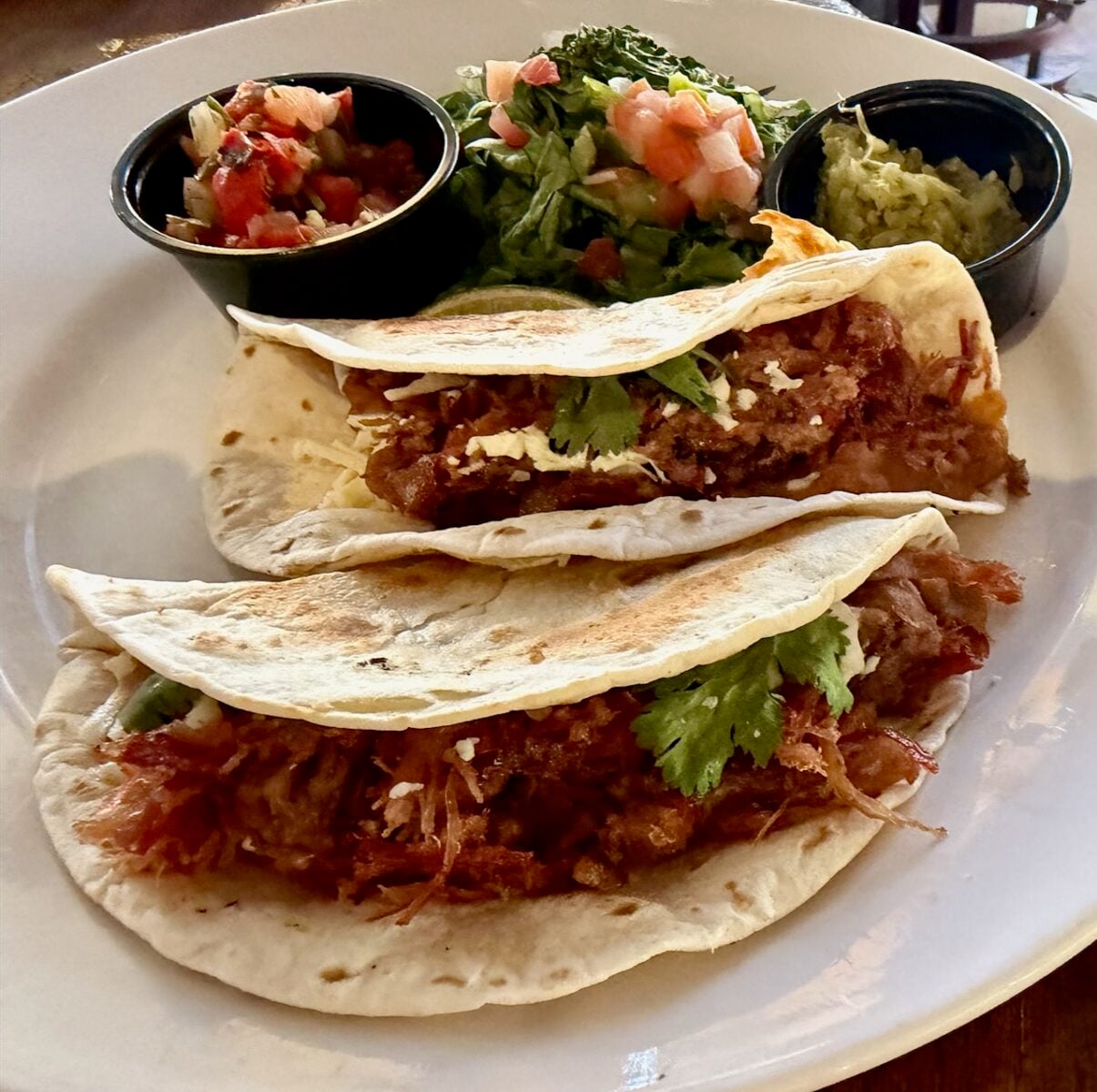
We also tried the Brisket and Bean Tacos, another exception to the standard menu, which consists of two tacos with espresso-rubbed brisket, refried beans, charred green tomato salsa, Cotija cheese, and fresh chopped cilantro—tasty.
Four Missions “Nobody” Visits
Most tourists who visit San Antonio stop at the Alamo, buy a coonskin cap in the gift shop, and consider their mission education complete. This is akin to visiting France, seeing the Eiffel Tower, and skipping the Louvre.
San Antonio is home to four other Spanish colonial missions, all sitting within eight miles of downtown along the Mission Reach section of the San Antonio River. All four still function as active Catholic parishes. All four survived 290 years of Texas weather, warfare, and neglect. All four were designated UNESCO World Heritage Sites alongside the Alamo in 2015, making San Antonio the only American city with a World Heritage Site within its city limits.
Yes, all the Missions are, in a sense, just a bunch of rocks. But each of them has a backstory, and we saw several with our colleagues at the Texoma Travelers Fall Rally.
Mission Conceptión
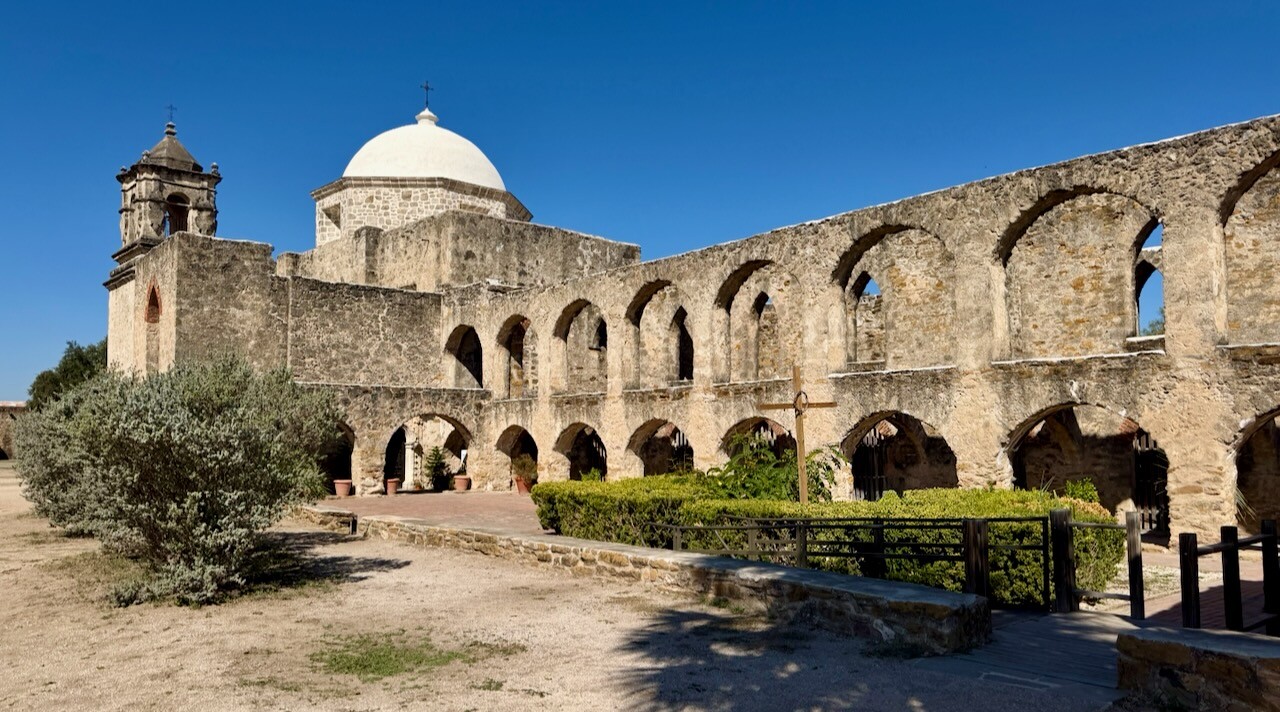
Mission Concepción, established in 1731 and just three miles south of the Alamo, projects twin towers that rise 50 feet above mesquite trees and power lines. The walls, built from volcanic tuff blocks quarried 90 miles away and hauled back in the day by ox-drawn carts, glow honey-gold in sunlight. When you step inside the church and look up, the walls still show traces of the original geometric frescoes painted in 1755 using red, yellow, blue, and black pigments made from ground minerals mixed with cactus juice.
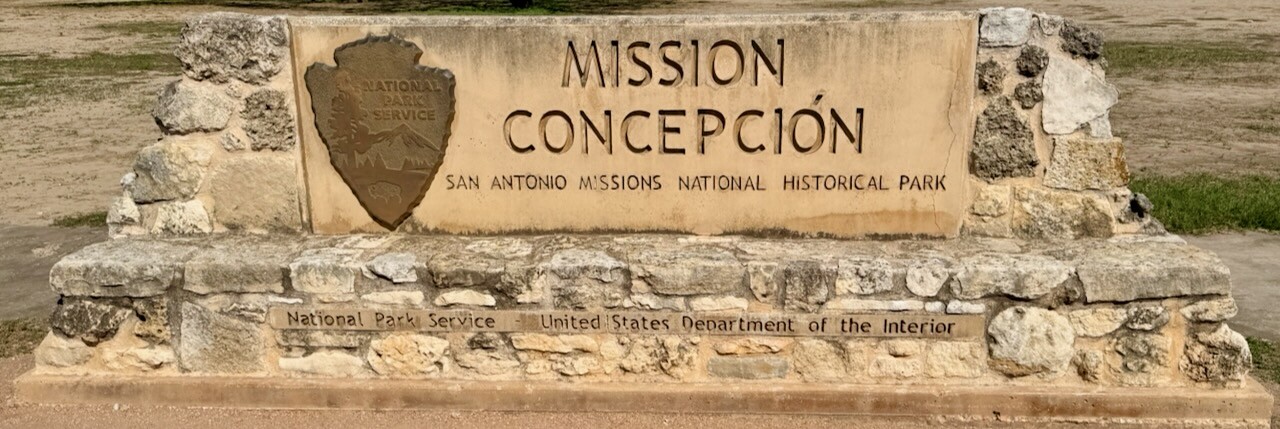
Spanish priests installed a solar calendar in Mission Concepción — a small hole positioned so sunlight strikes the floor at specific points during equinoxes. Thick limestone walls and limited windows create a natural air conditioning system that keeps interior temperatures 15 degrees cooler than outside.
Mission San José
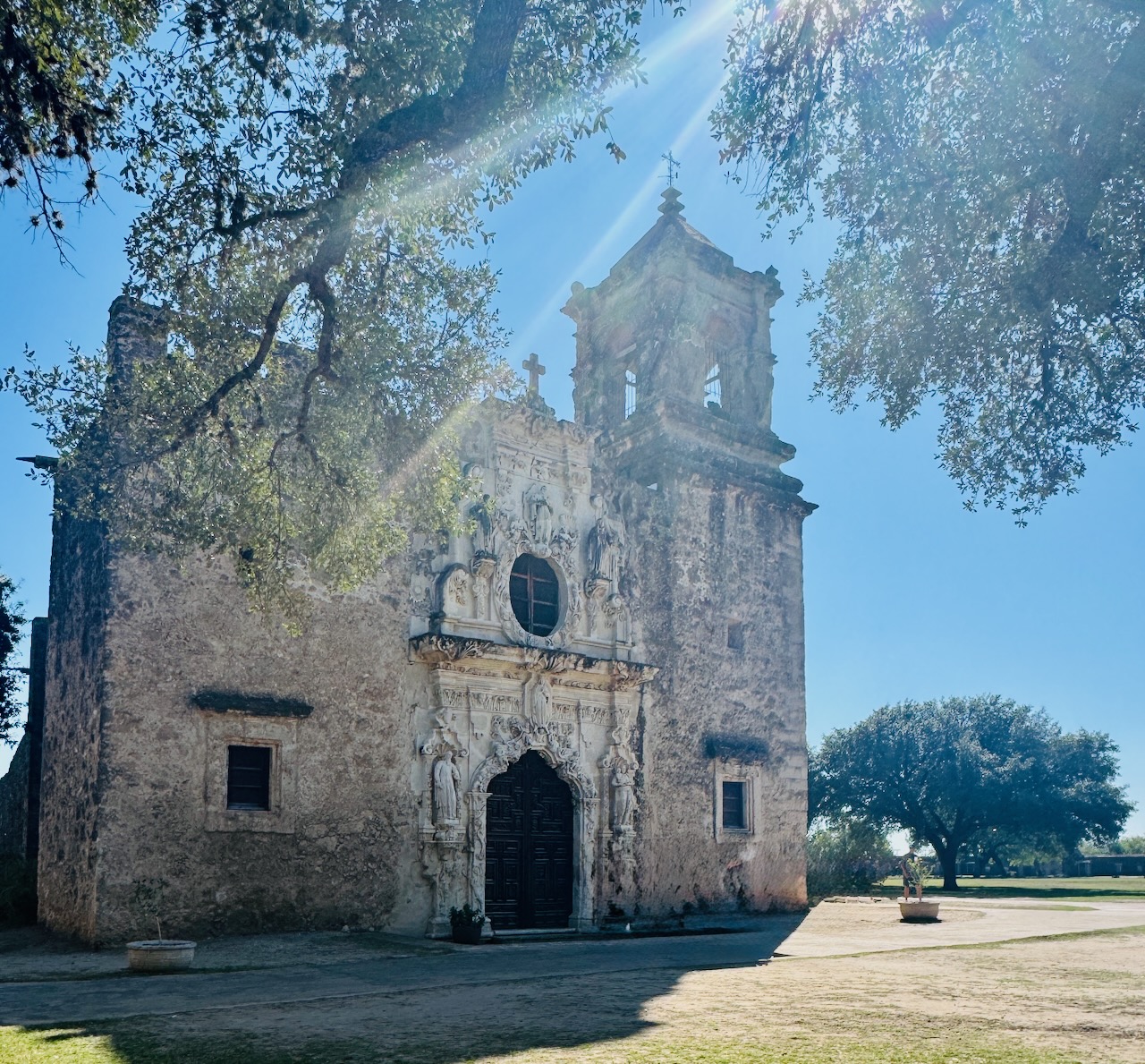
Two miles south, you’ll find Mission San José, established in 1720 and rebuilt in stone in 1768. This compound covers 12 acres and is surrounded by walls eight feet tall and four feet thick.
The church facade explodes with carved limestone details: saints, angels, vines, flowers, all chiseled by Spanish and Indigenous craftsmen who spent years on scaffolding with hammer and chisel. One window—the Rose Window—has achieved near-celebrity status among architecture students. The carved limestone frame depicts the Virgin Mary, surrounded by a pattern so intricate it appears to be lace frozen in stone.
Grackles chatter in the oak trees, and lizards skitter across the limestone granary that once stored corn, beans, and squash to feed 350 residents. Rooms that once housed Indigenous families learning Spanish trades—such as blacksmithing, carpentry, weaving, and farming—now stand empty, except for interpretive signs that explain what happened here.
Mission San Juan
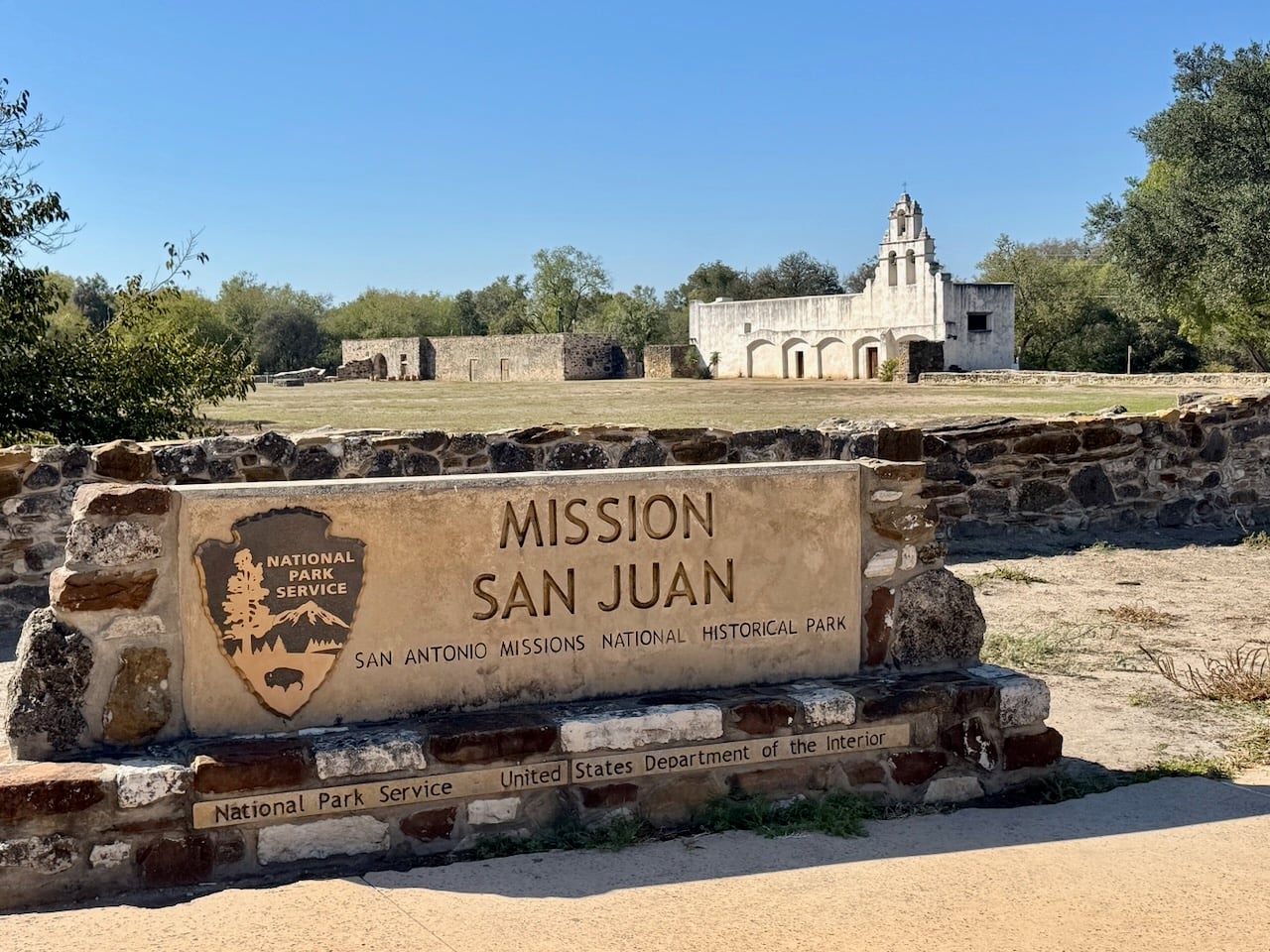
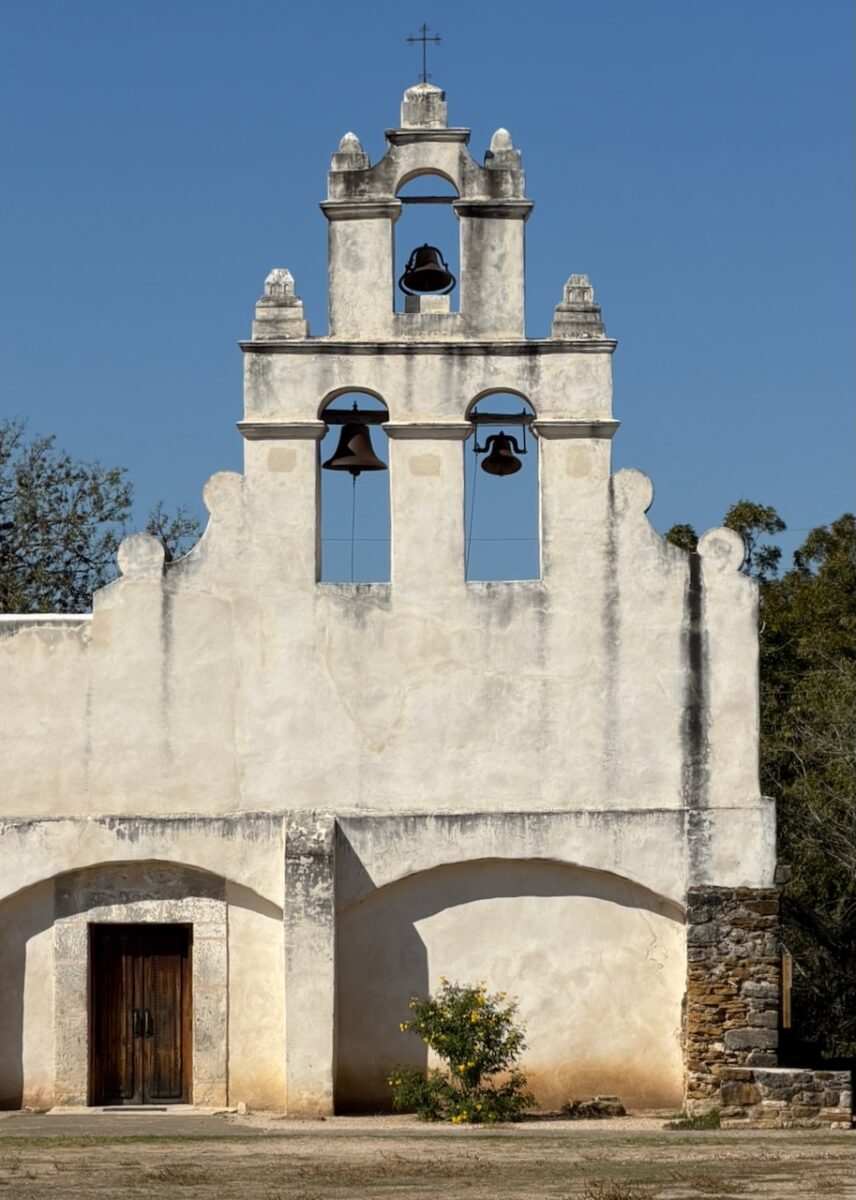
Mission San Juan, one mile south, sits quieter still. The church exterior remains rough and unfinished—the builders never added the decorative facade. Inside, the altar features a statue of Saint John brought from Mexico in 1731. Olive and pecan trees planted by priests 200 years ago still produce fruit. The acequia—an irrigation canal dug in 1731—still carries water to fields where National Park Service staff grow corn, squash, and peppers using 18th-century farming techniques.
Mission Espada
Mission Espada, the southernmost mission, established in 1690 and relocated in 1731, operates the oldest functioning aqueduct in the United States. The Spanish Aqueduct, built in 1745, continues to carry water across Piedras Creek. If you stand on top of the limestone structure, you can watch water flow through the channel exactly as it did when Benjamin Franklin was 39 years old.
These Missions weren’t just churches. They were economic engines during the 17th-century mission period, serving as military outposts and cultural hubs where Spanish priests and Indigenous Coahuiltecans negotiated treaties. This arrangement worked for some, failed for others. Disease killed many Indians. Others left. Some stayed and built the foundation of modern San Antonio.
You can walk the entire Mission Trail—a 15-mile path connecting all five missions—or bike it in three hours. The route follows the river, passing under Interstate 37, through neighborhoods where roosters crow at midday, past murals depicting Aztec warriors and Catholic Saints side by side.
The Math That Makes San Antonio Work for RVers
Here’s the calculation that turns San Antonio from a weekend stop into a week-long base camp. Pick an RV park within 15 miles of the city. The KOA for our Texoma Travelers rally is only 4.7 miles from the Alamo. An Uber from the park to Alamo Plaza costs $15-18, depending on the time of day. Full-hookup sites run $70 to $104 per night, but are cheaper when you book on a group rate.
Downtown parking lots charge $20 to $30 per day. Downtown hotels start at $150 per night, climbing to $300 during Fiesta in April or when the Spurs play home games.
The numbers favor the RV traveler. Stay seven nights, for example, at the KOA for $490 ($70 x 7). Take Uber downtown four times for $100 round-trip. Total: $590 for a week. Compare that to downtown hotels at $1,050 for the same week, plus parking and restaurant meals, because hotel rooms don’t have kitchens.
Thirteen RV parks circle San Antonio within 15 miles of downtown. Alamo Fiesta RV Resort offers 116 sites with 50-amp power, concrete pads, and a Texas-shaped pool. Admiralty RV Resort provides 211 sites with fiber-optic internet that streams Netflix without buffering. Blazing Star RV Resort includes a dog park, pickle-ball courts, and monthly pancake breakfasts where full-timers swap stories about tire blowouts on I-10.
So, pick a park. Park your rig. Set up once. Use it as your hotel, restaurant, and living room. Take Uber when you want downtown action—mariachi bands, margaritas, river boats, missions. Return when you’ve had enough crowds and need your own bed, your own bathroom, your own refrigerator stocked with your favorite stuff.
When to Visit, What to Skip
San Antonio suffers through summers like a boxer taking body punches. June, July, and August deliver temperatures between 95 and 102 degrees, accompanied by humidity that makes your shirt stick to your back three minutes after you leave an air-conditioned building. The River Walk stays crowded because it’s 10 degrees cooler down there than at street level. Still, even the locals admit: summer in San Antonio is something you endure, not enjoy.
The best months to visit are October through April. Daytime temperatures range from 65 to 78 degrees. Rain falls occasionally but rarely ruins travel plans. Winter nights drop into the 40s—cold enough for a fleece jacket, warm enough that you won’t need your RV’s furnace running all night.
Skip Fiesta week in April unless you love crowds. This 11-day celebration draws 3.5 million people to 100 events, including parades, carnivals, concerts, and the NIOSA (Night in Old San Antonio) street party that consumes four blocks and serves enough fajitas to circle the Alamo 16 times if you laid them end to end (someone calculated this; San Antonio loves its statistics).
Skip the Fourth of July weekend unless you book your RV site six months in advance. Every park within a 20-mile radius fills up. Uber wait times triple. The River Walk becomes a human traffic jam moving at the speed of a funeral procession.
Visit in early November for Día de los Muertos, when the missions host altars honoring the dead with marigolds, sugar skulls, and photographs of ancestors who helped build this city. Do visit in December when 122,000 lights transform the River Walk into something between a fairy tale and a fever dream.
The Detail That Matters
San Antonio doesn’t try to be Austin’s weird younger sibling or Dallas’s sophisticated cousin. It stands alone as Texas’s cultural soul, the place where Spanish, Mexican, German, Indigenous, and American influences collided, creating a city that remembers its battles, celebrates its survivors, and invites strangers to join the party.
The Battle of the Alamo lasted about 13 days in 1836. The River Walk demonstrates how a city learned to dance with its geography rather than fight against it. The missions prove that faith, architecture, and farming techniques can survive for three centuries if they are built correctly, and the RV parks scattered around the perimeter? They prove you don’t need to spend $300 a night to experience it all.
Pack your RV with your favorite foodstuffs. Choose a park with good reviews. Let Uber be your downtown shuttle service. You’ll have more money to spend on mission tours, river cruises, and eateries downtown.
San Antonio waits below street level, 20 feet down, where the river flows green and slow, where history echoes off limestone walls, where 13 million visitors each year discover what Texas was before it became a bumper sticker.
Your spot in the RV park is waiting. The city’s ready when you are.
This is a companion discussion topic for the original entry at https://leisurevans.com/blog/the-city-where-texas-history-flows-past-your-margarita-glass/