Editor’s Note: This post is written by a member of LTV’s sponsored content team, The Leisure Explorers. Do you own a Leisure Travel Van and enjoy writing? Learn more about joining the team.
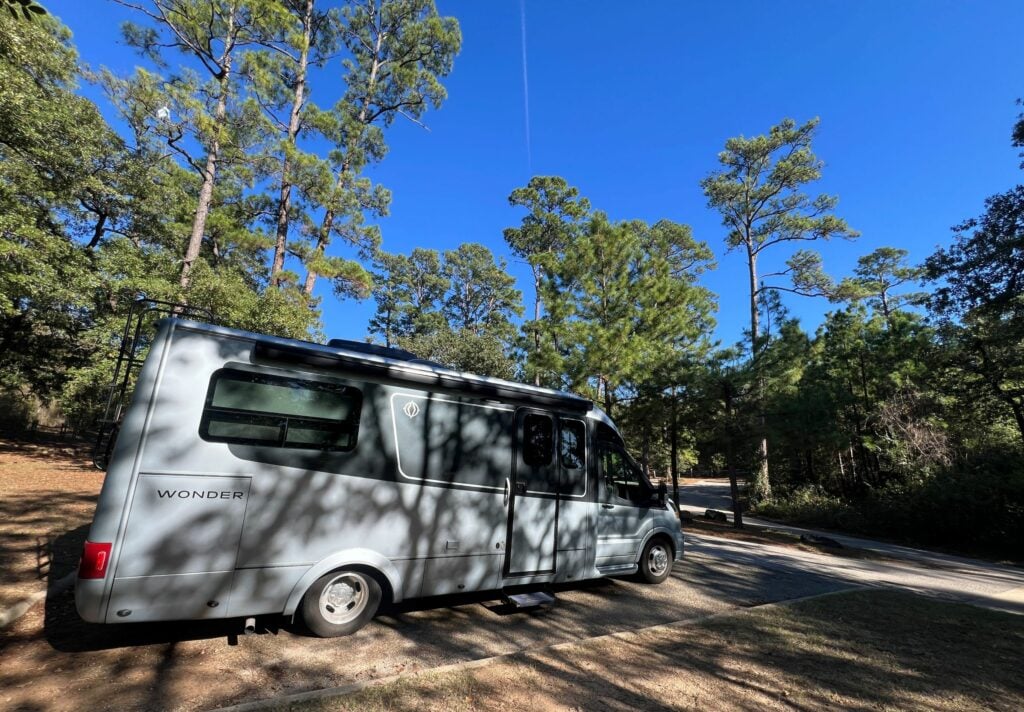
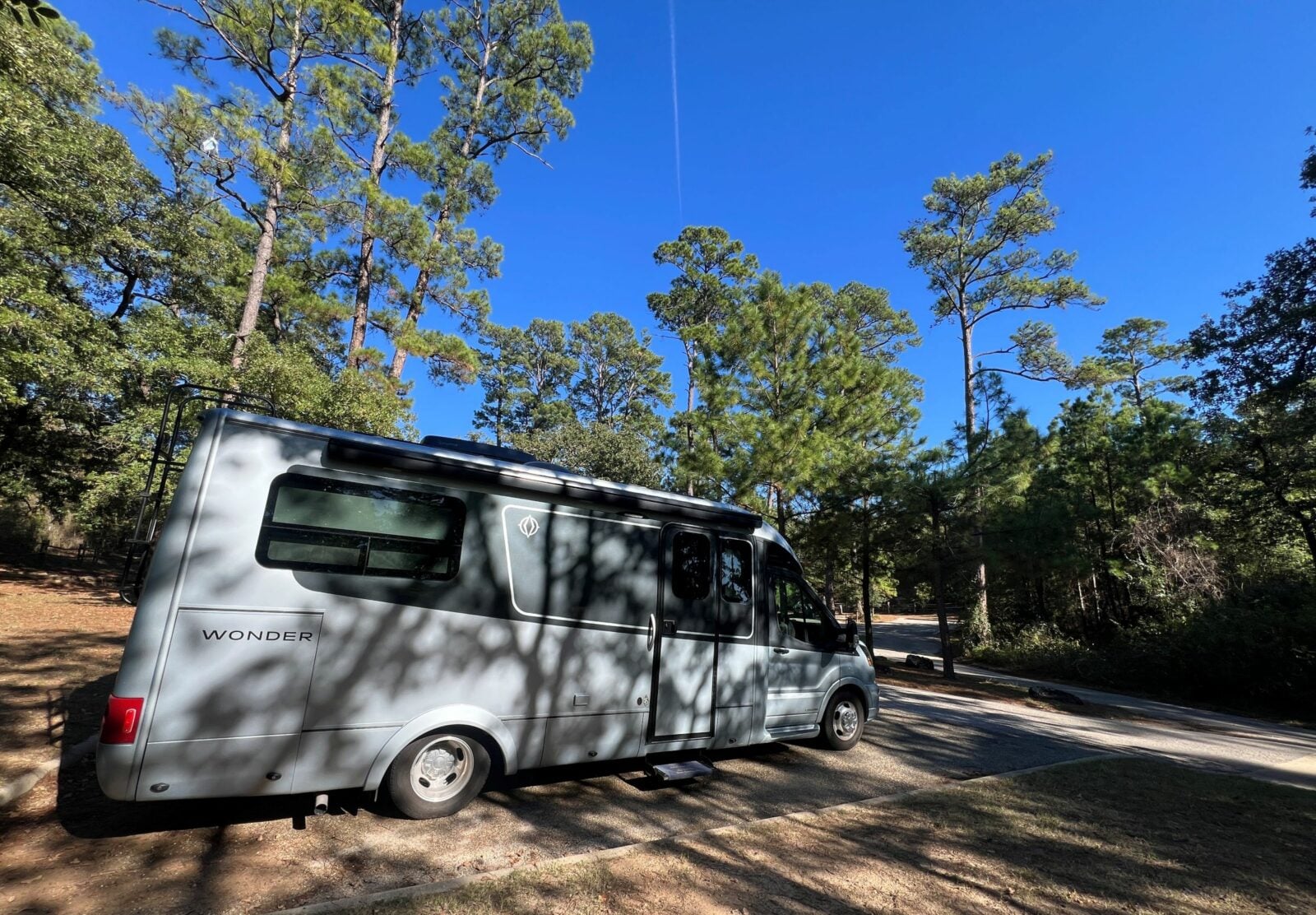
In 2011, a major wildfire consumed most of Bastrop State Park and Texas’ Lost Pines Forest. An invitation to visit a friend who had moved nearby triggered the next adventure in our 2025 Wonder Rear Twin Bed. We spent four nights in one of the park’s fine campgrounds and enjoyed a relaxing visit to the well-recovered park while catching up with an old friend.
Location
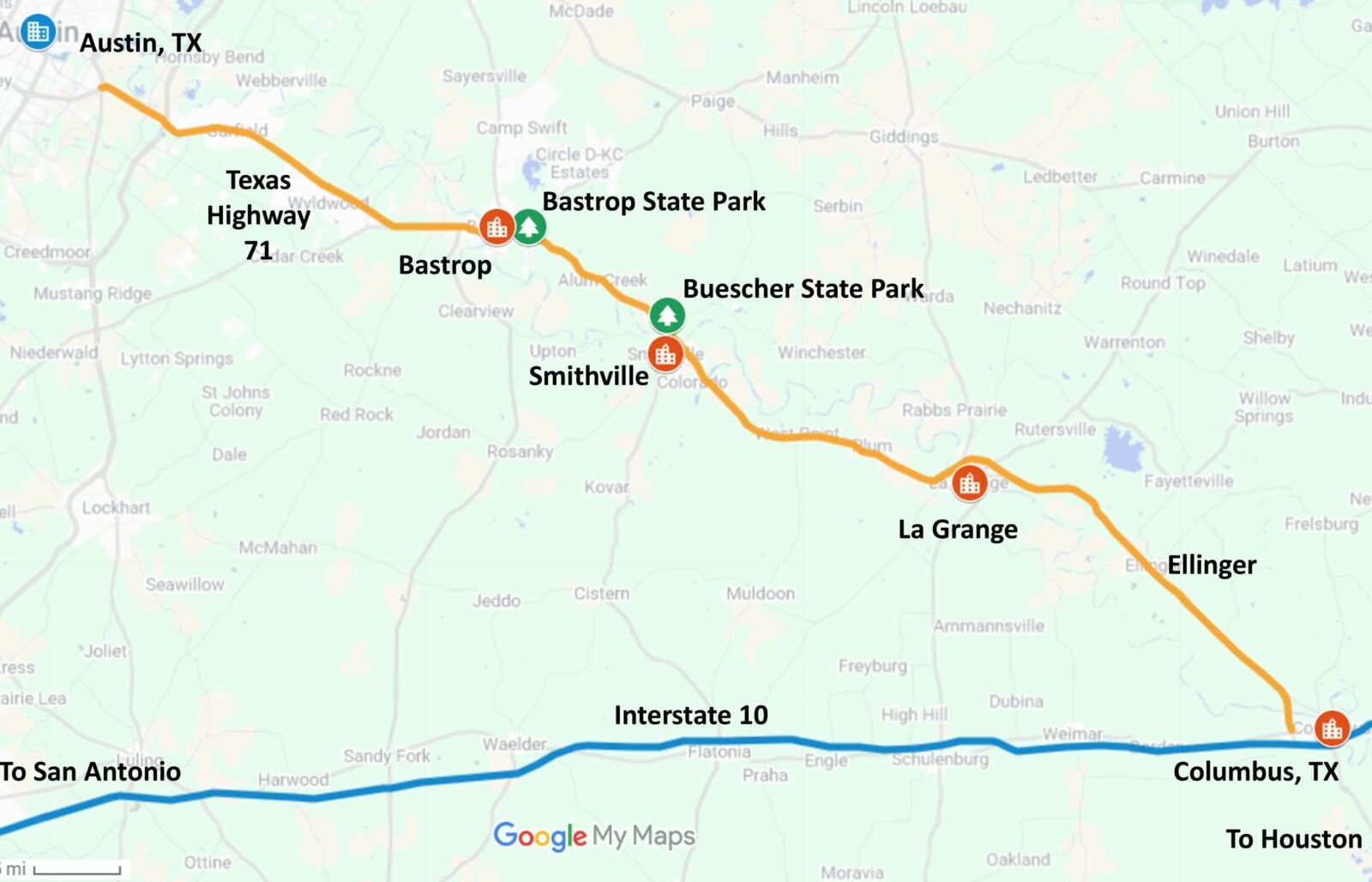
I cannot count the number of times we have driven along Texas Highway 71 between Austin and Houston, whizzing past the exits to various small towns. Our habitual stop has always been Hruska’s in Ellinger, which sells the best kolaches and has a mean speed trap. Development has changed the roadside scenery since we first drove through it, shortly after “Hope Floats,” starring Sandra Bullock and Harry Connick Jr., used Smithville as its filming location in 1997. Changes visible from the road include the quintessential Texas gas station, Bucee’s, and housing developments that are transforming Bastrop into an Austin commuter town. However, some changes hide from motorists speeding by on the highway.
Where We Stayed
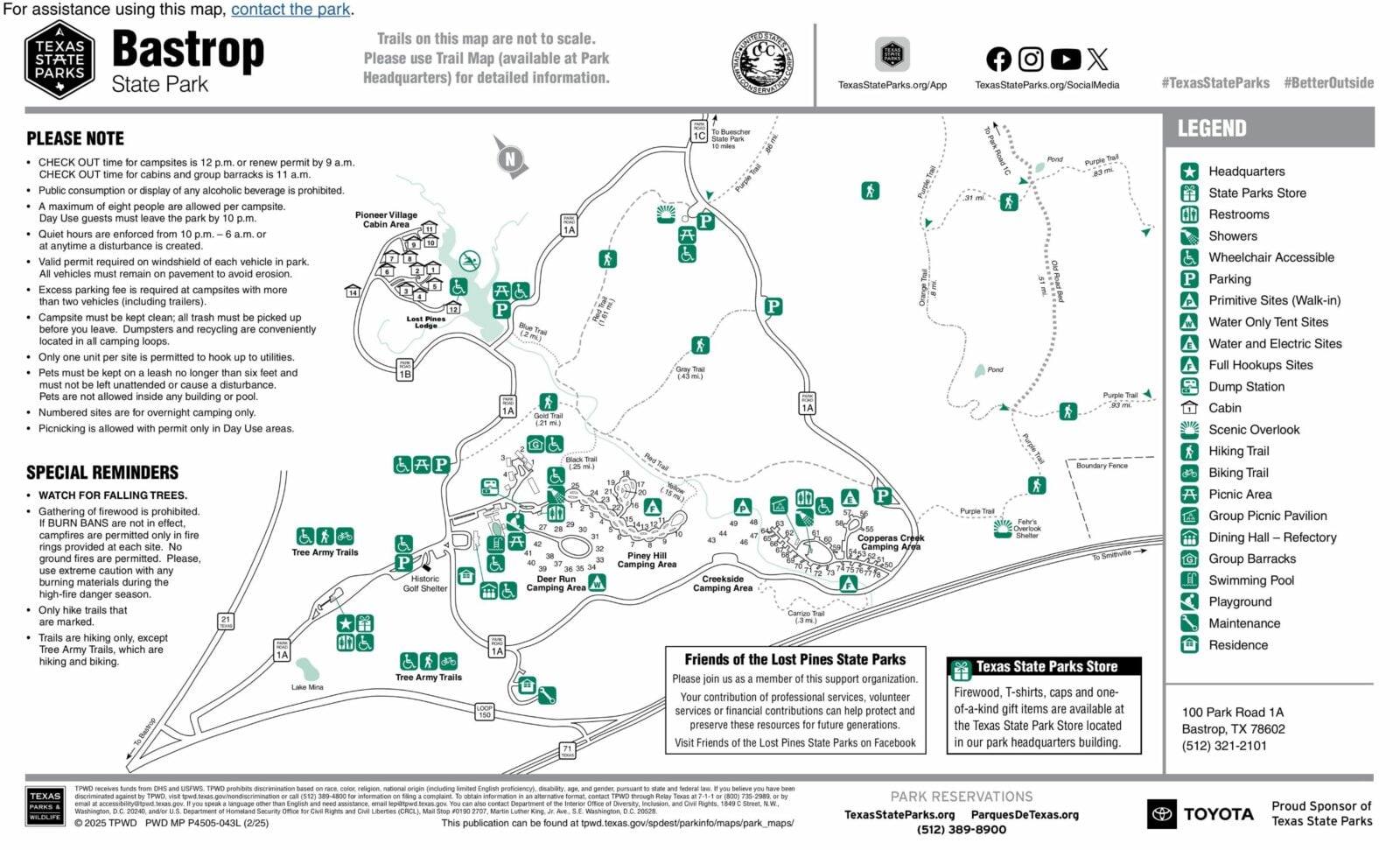
I booked site 58 in the Copperas Creek Camping Area online just a couple of weeks before our visit in early November 2025. We stayed Sunday through Thursday, and there was plenty of availability. The park’s proximity to large Texas cities means that it fills up on weekends. I chose the site because it had water and electricity, but no sewer, thinking that this would reduce the possibility of a large, noisy unit with full hookups being next to us.
The site worked well for us, was sufficiently flat for us not to need Lego blocks, and was right in the trees.
From our site, we hiked the Carrizo Trail and the Purple Trail to Fehr’s Overlook Shelter. There were a few other visitors to the park. However, the proximity to Highway 71 meant that there was always noise from traffic. This did not prevent us from sleeping with the windows open, but it might have discouraged wildlife.
Forest and Fire
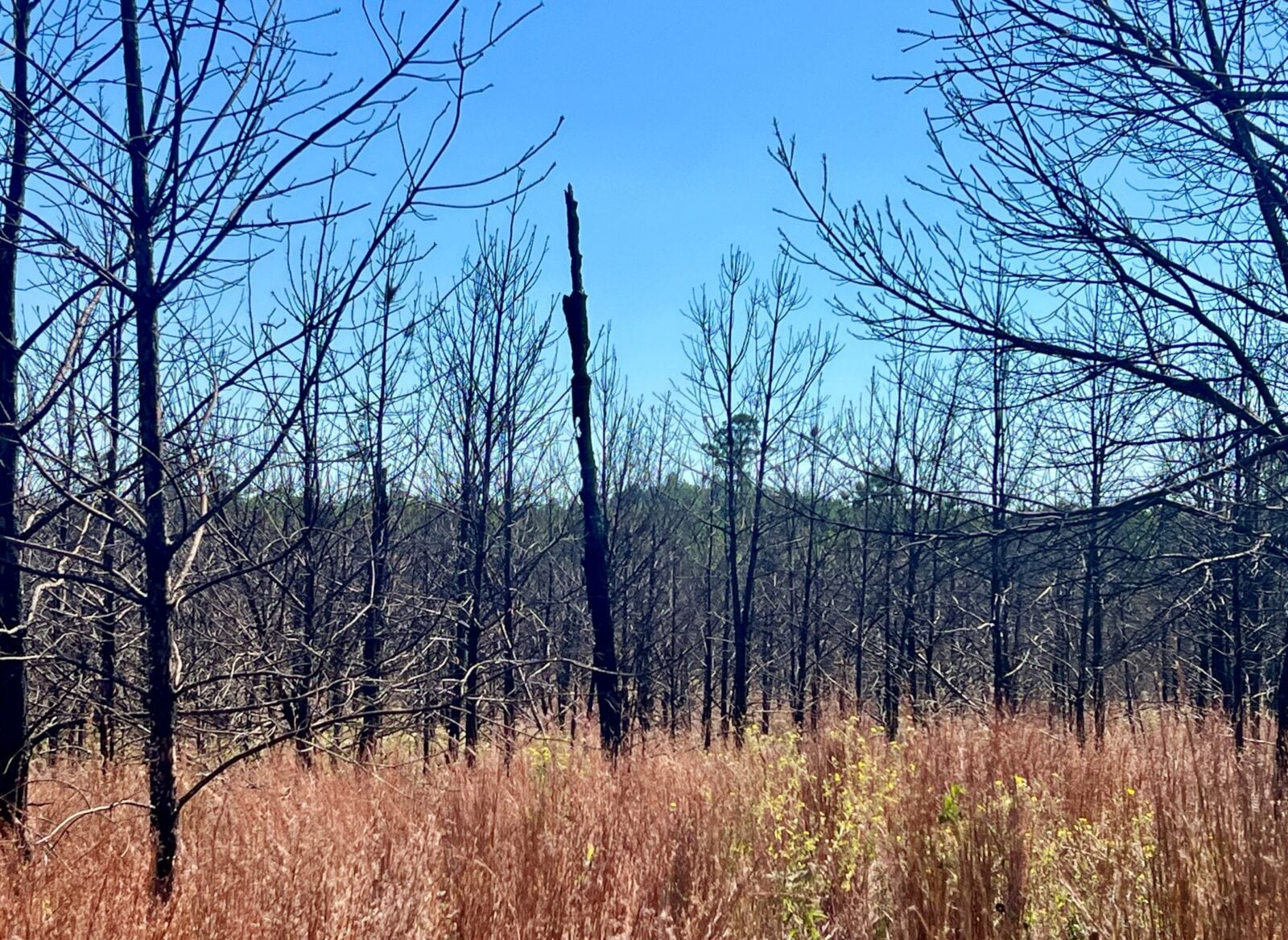
Fire provides an ecological benefit to forests, though, when uncontrolled, it is devastating. Bastrop’s wildfire claimed two lives, destroyed 1700 structures, and caused $350 million in damage. Firefighters saved the park’s Civilian Conservation Corps (CCC) buildings, which the CCC built during the Great Depression in the 1930s. 14 years later, the residual fire damage had many similarities to the impact of controlled burns that I had seen in National Forests. Such controlled events burn the fuel that accumulates on the forest floor, preventing uncontrolled fires when conditions are less favorable. Soon after a fire, the forest grows back rapidly. Uncontrolled fires cause immediate catastrophic damage, but nature often recovers remarkably well.
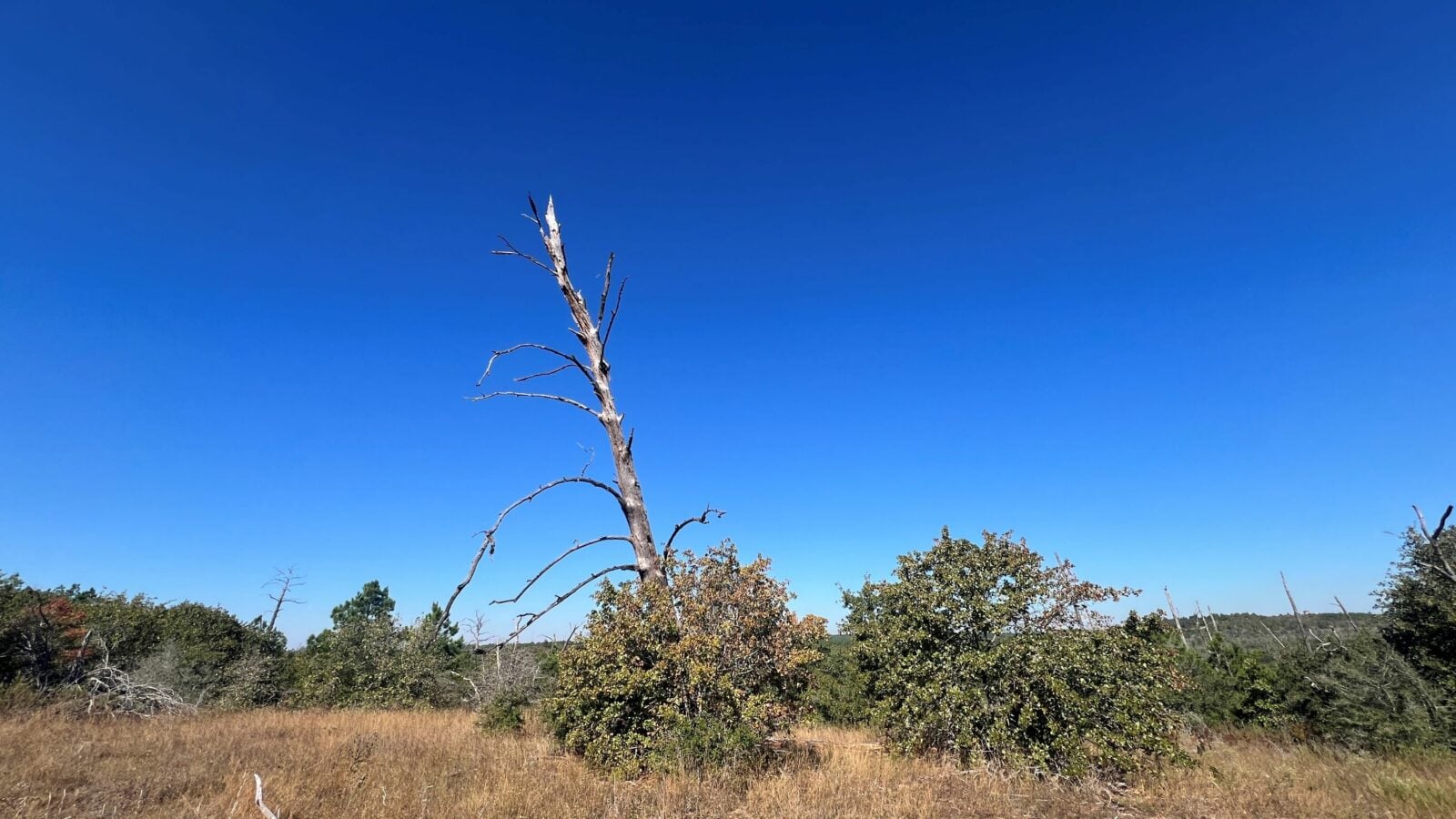
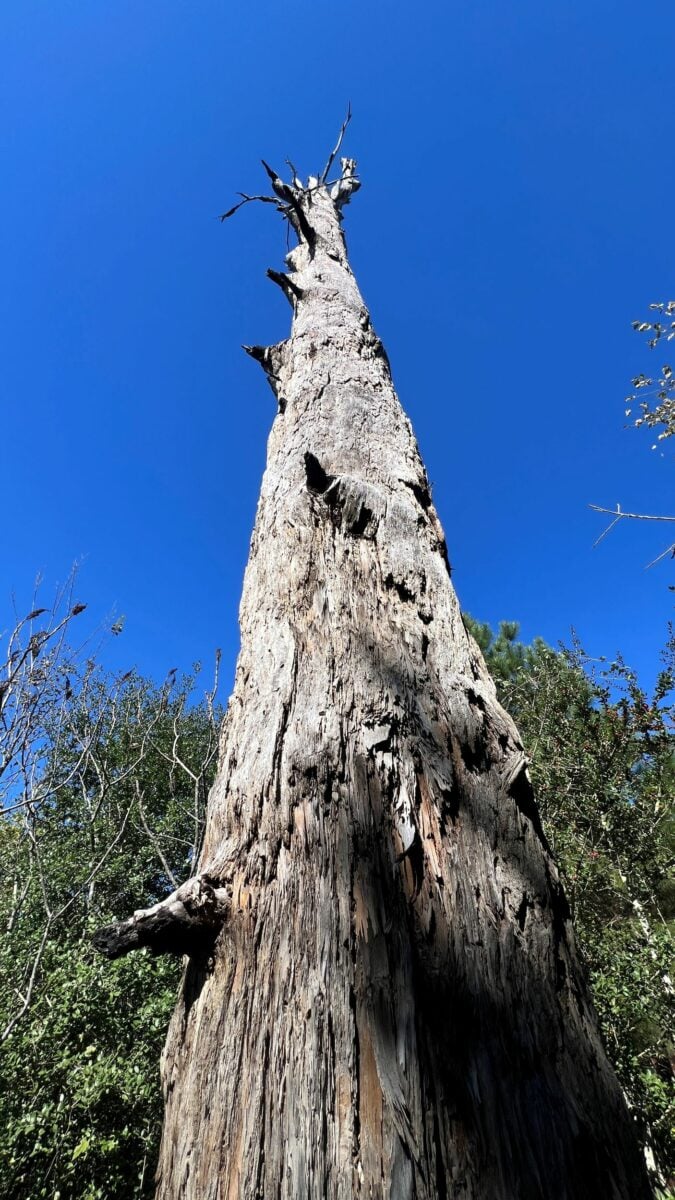
The Pines
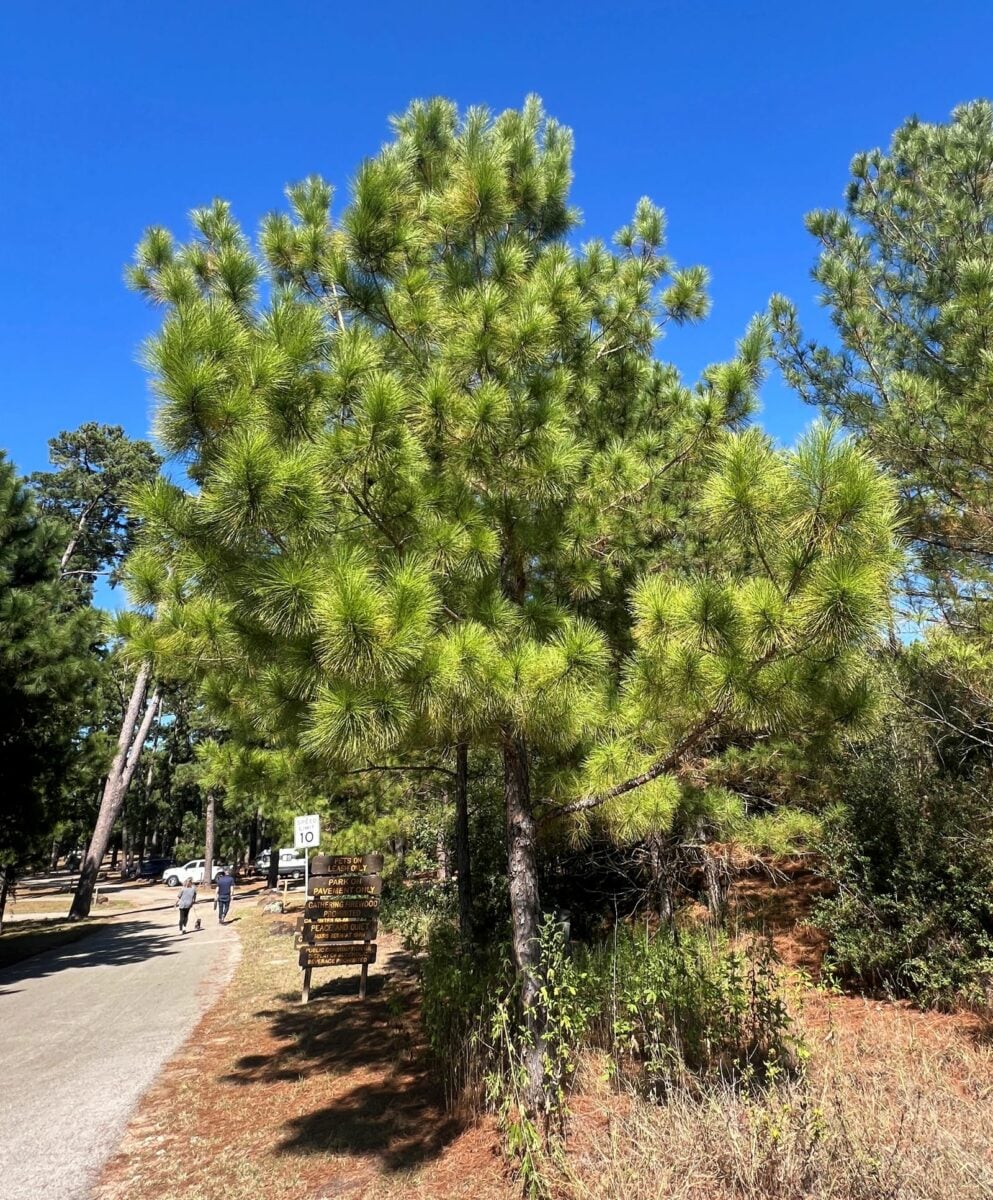
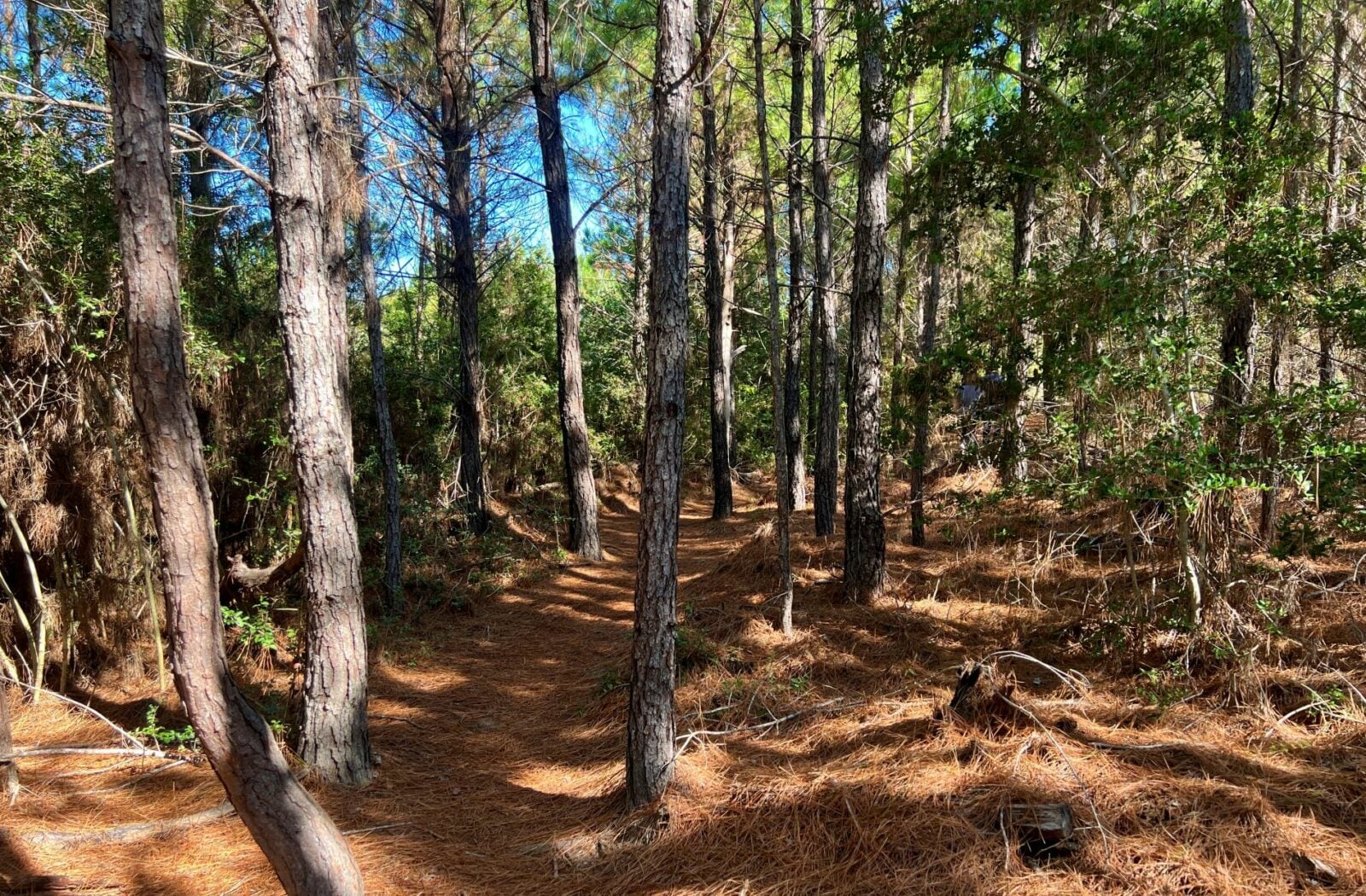
The “Lost Pines” label suggested that Bastrop’s pine trees are special. The Lost Pines Forest was a 13-mile stretch of loblolly pines, over one hundred miles from similar trees in East Texas’s Piney Woods, where town names like Pineland and Yellowpine recognize their dominance. After the 2011 fire, Texas A&M University led significant efforts to restore the Lost Pines Forest, and we enjoyed the fruit of their labors when we walked through Bastrop’s thriving pine forest. While Bastrop’s trees were similar to those in East Texas, their history made me think of them as special. The 2011 fire, coupled with the trees’ protected status, contrasted Bastrop’s trees with those of the commercially harvested, control-burned Piney Woods. I celebrated Bastrop’s healthy pines!
Terrain and Vistas
Bastrop’s undulations provided multiple scenic viewpoints throughout the park. We hiked the Purple Trail up to Fehr’s Overlook Shelter, which had views across Highway 71. The 2011 wildfire crossed the highway but was quickly controlled on the other side before it spread.
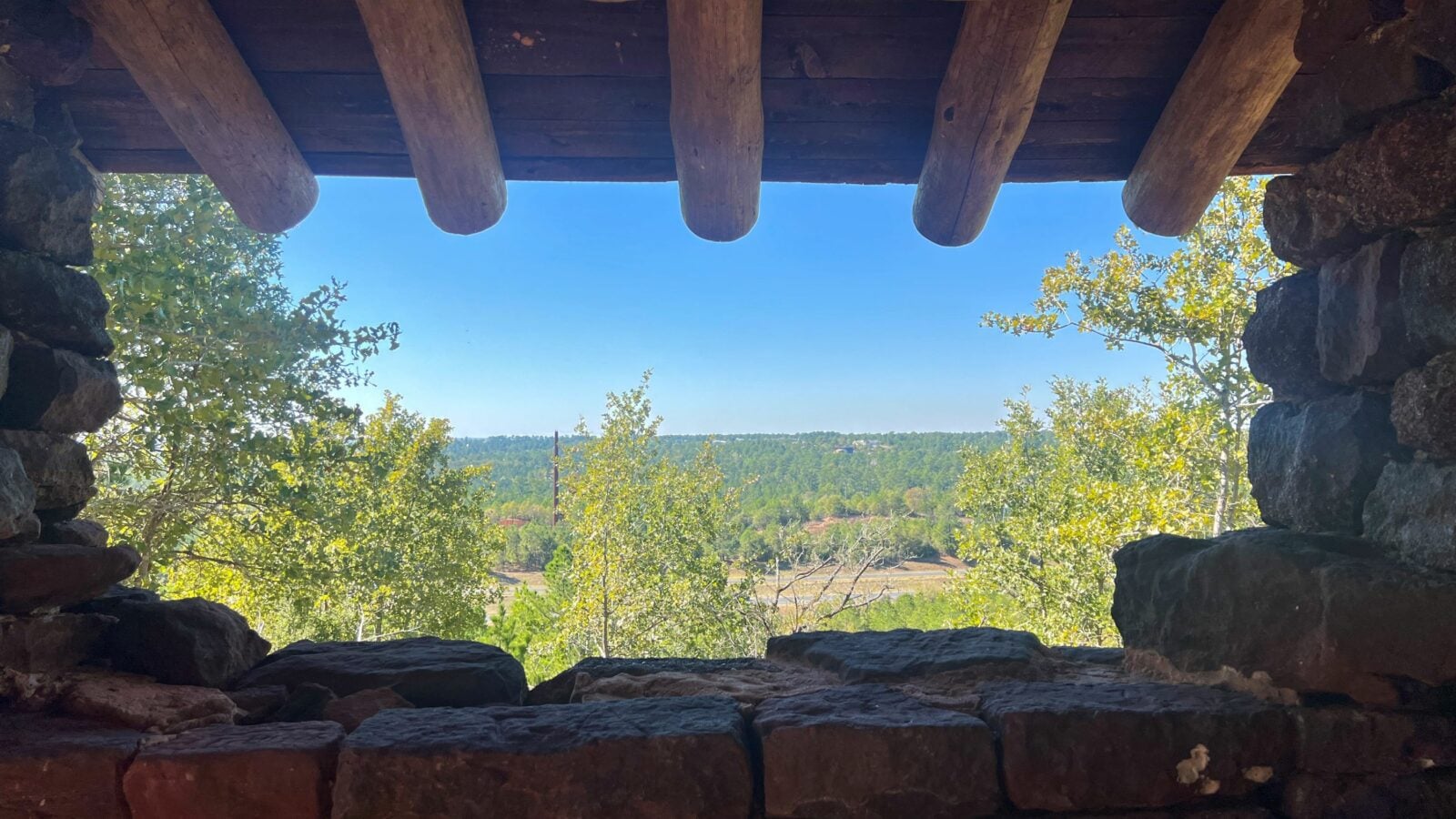
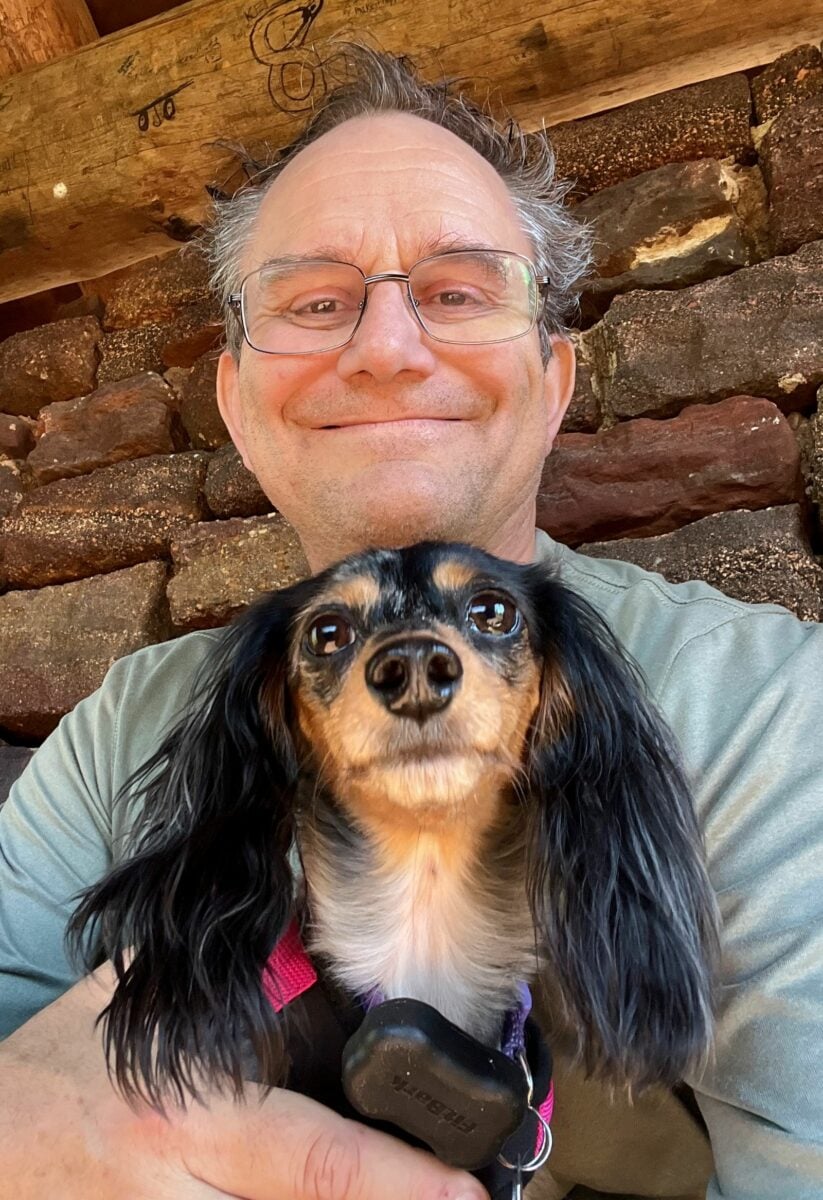
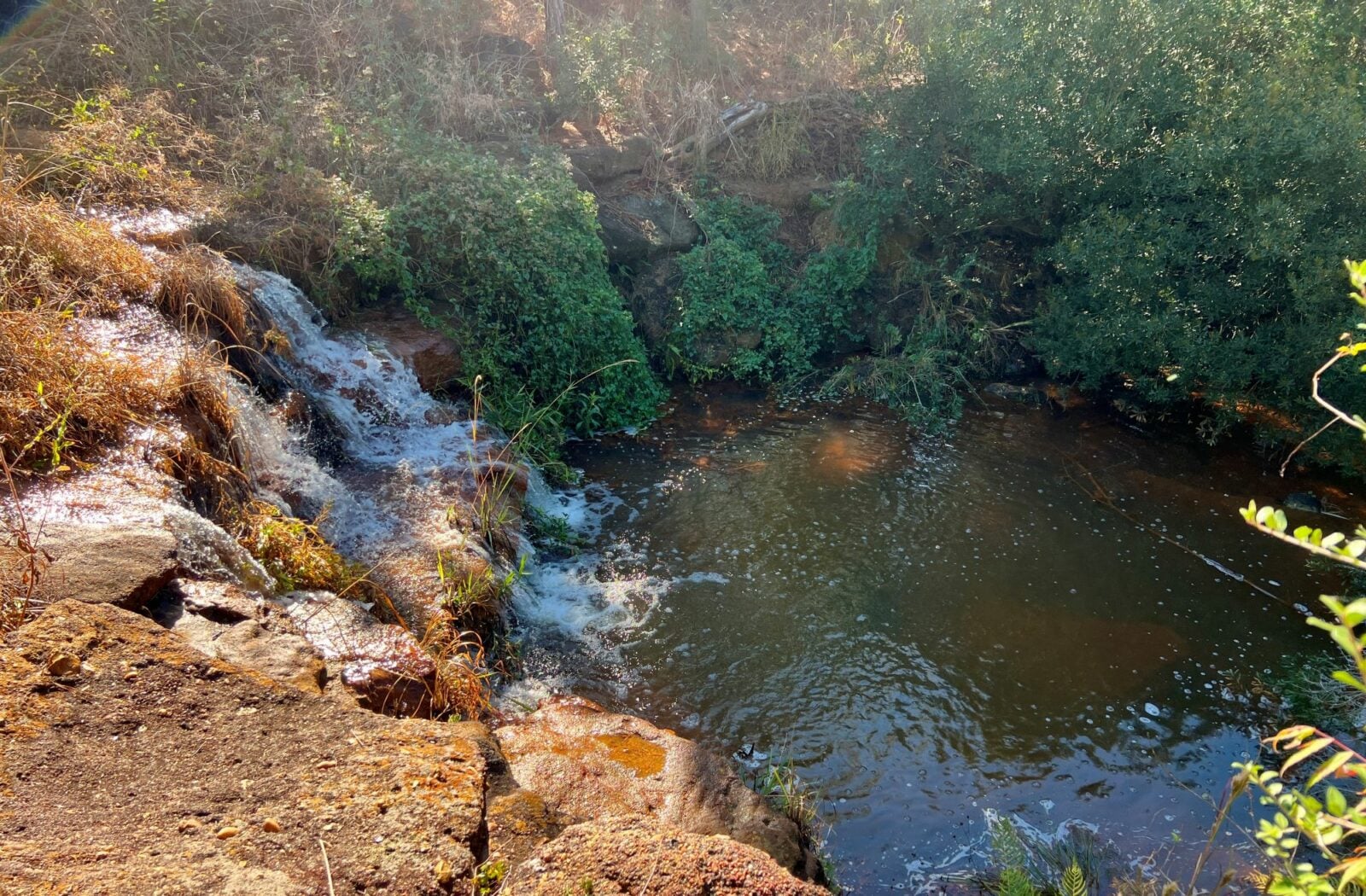
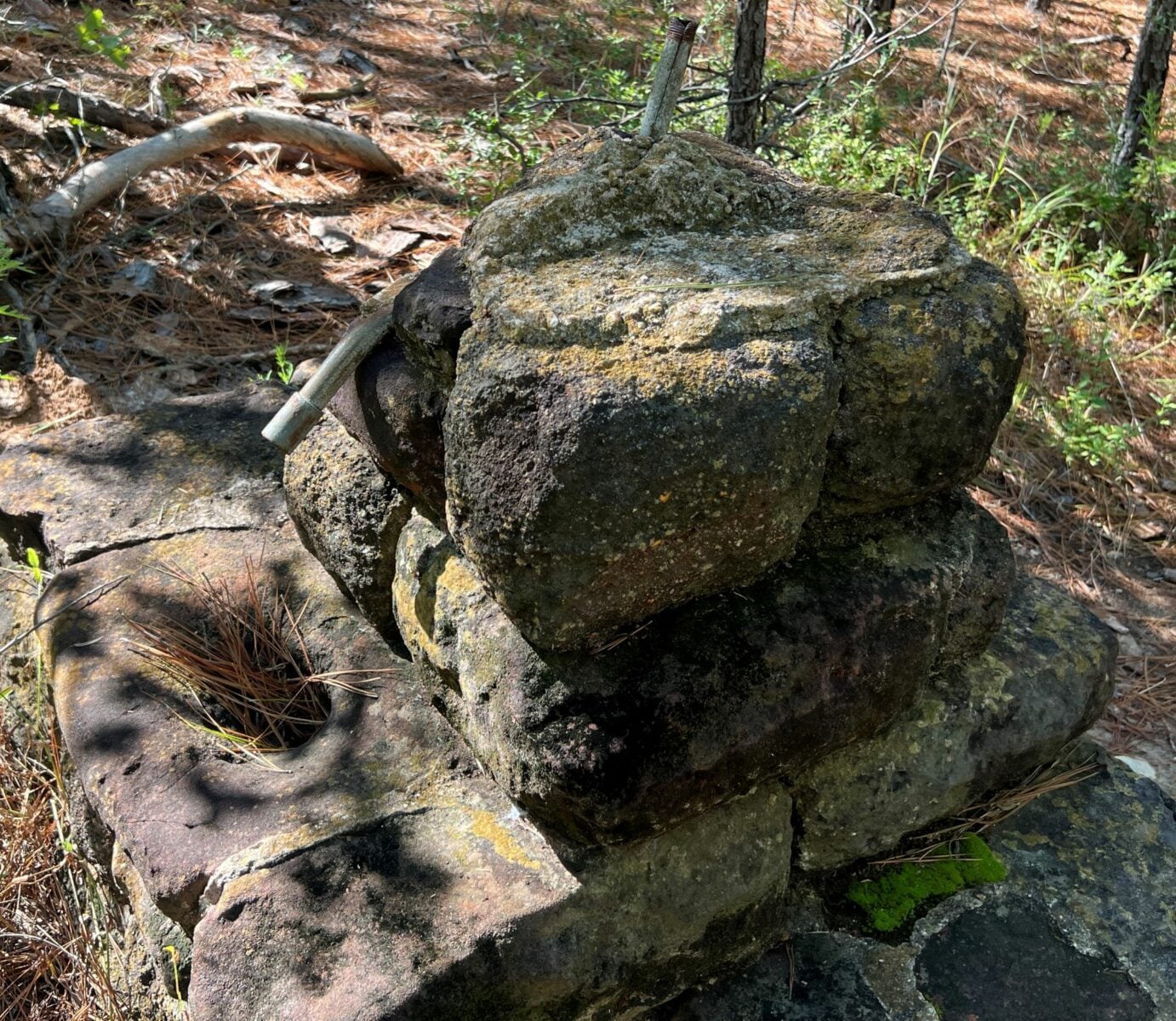
The trails had a variety of interesting views, which made the walk seem easy.
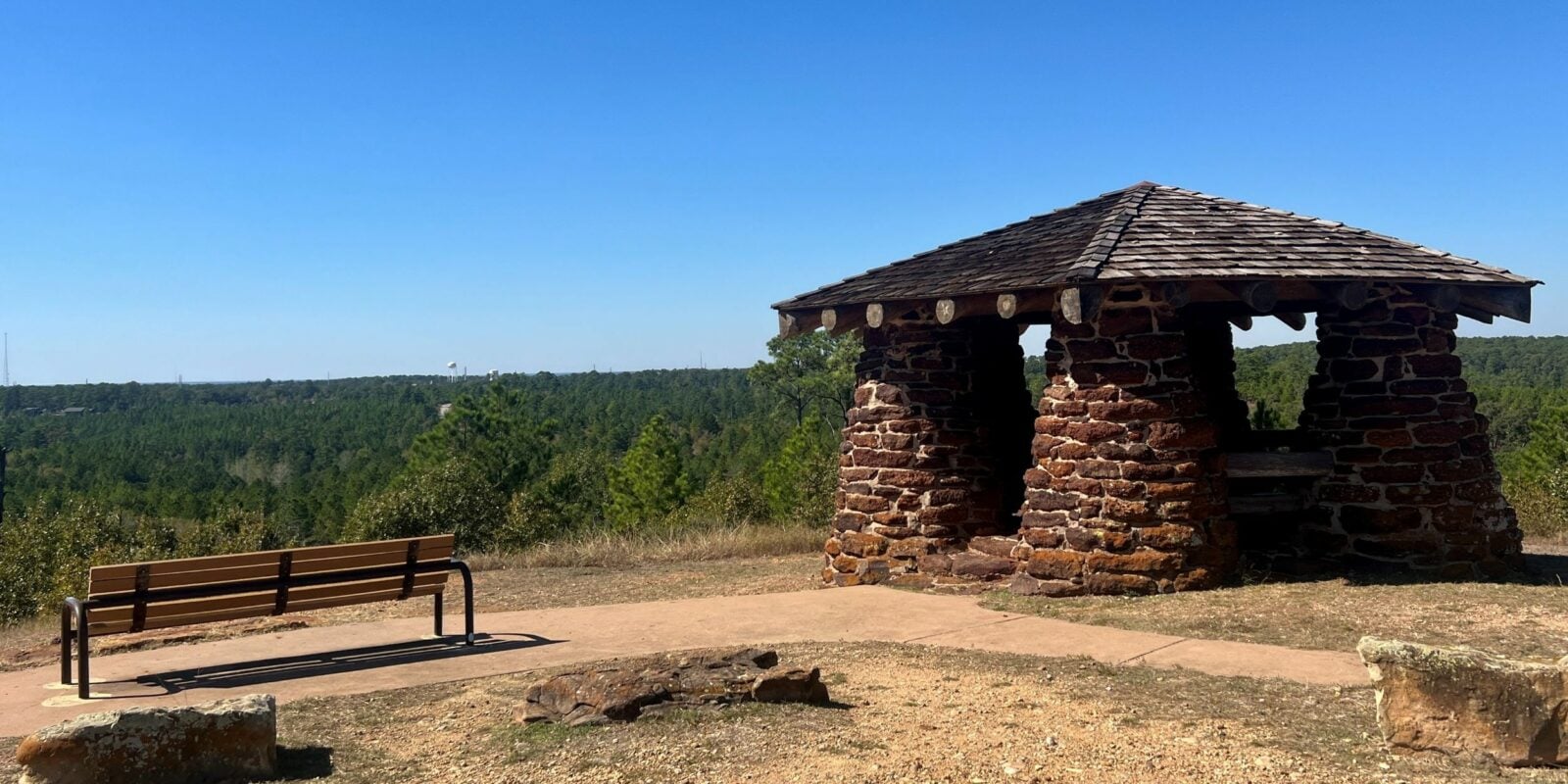
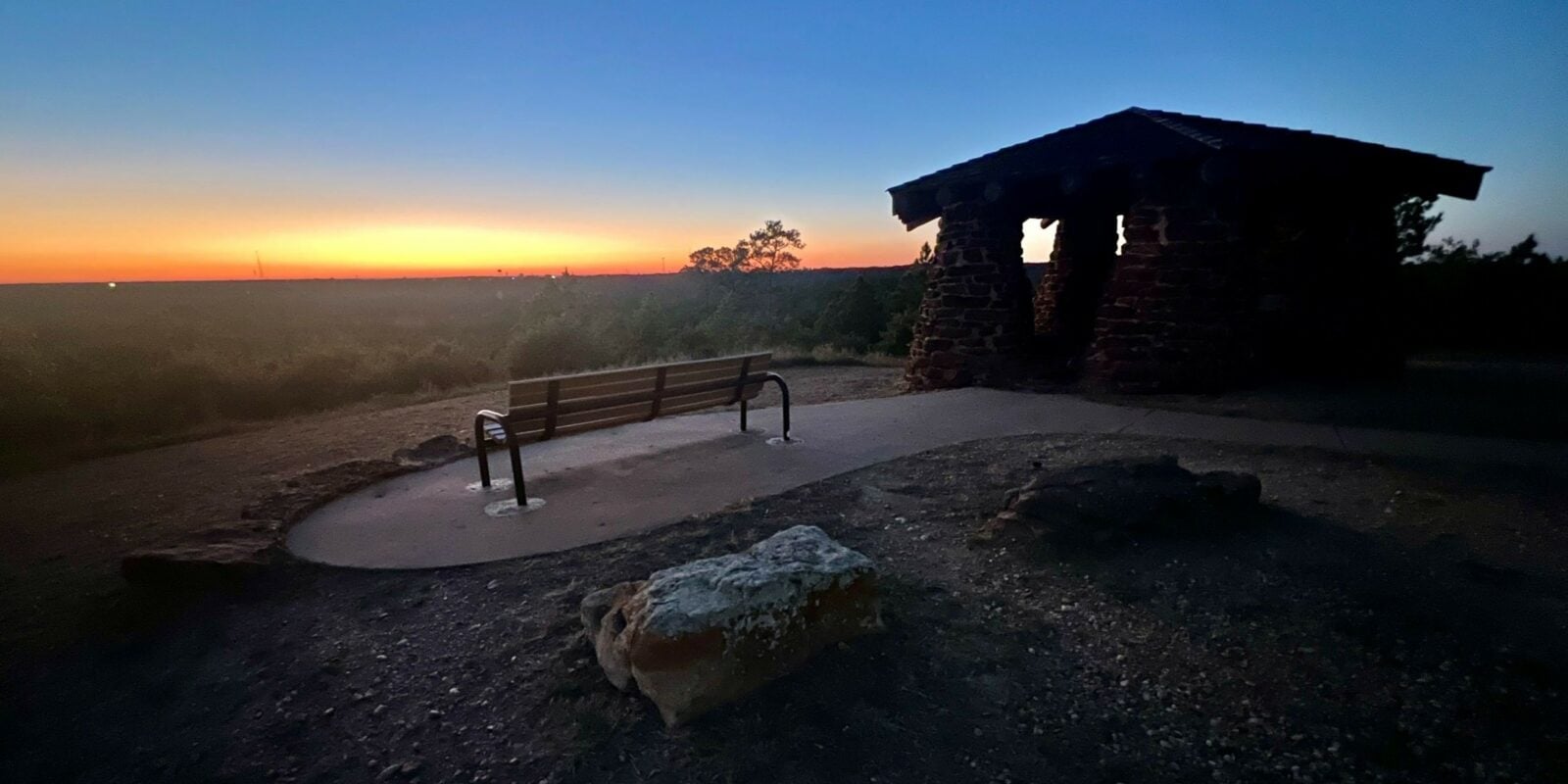
We also drove to the park’s main scenic overlook, which was imaginatively named “Scenic Overlook.” The contrast between the middle of the day and sunset made it feel like a different place.
We wanted to enjoy scenic lakes. As if the wildfire hadn’t been enough for Bastrop State Park, its lake’s dam failed during the 2015 Memorial Day floods. The lake was still closed during our visit while they continued to repair the dam. However, we were able to enjoy Lake Mina in the state park and the nearby Lake Bastrop. In town, there were steps down to a paved walkway along the Colorado River.
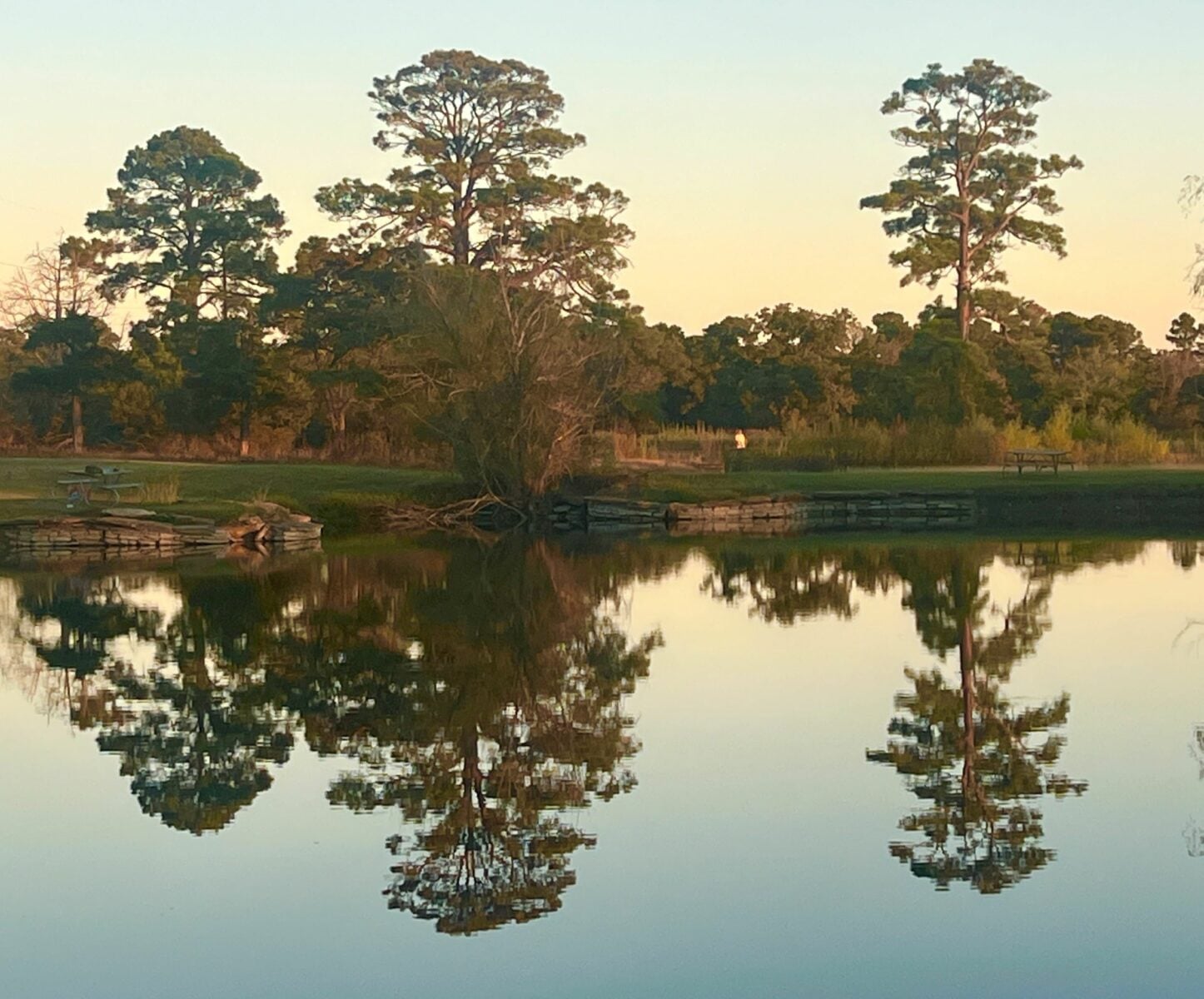
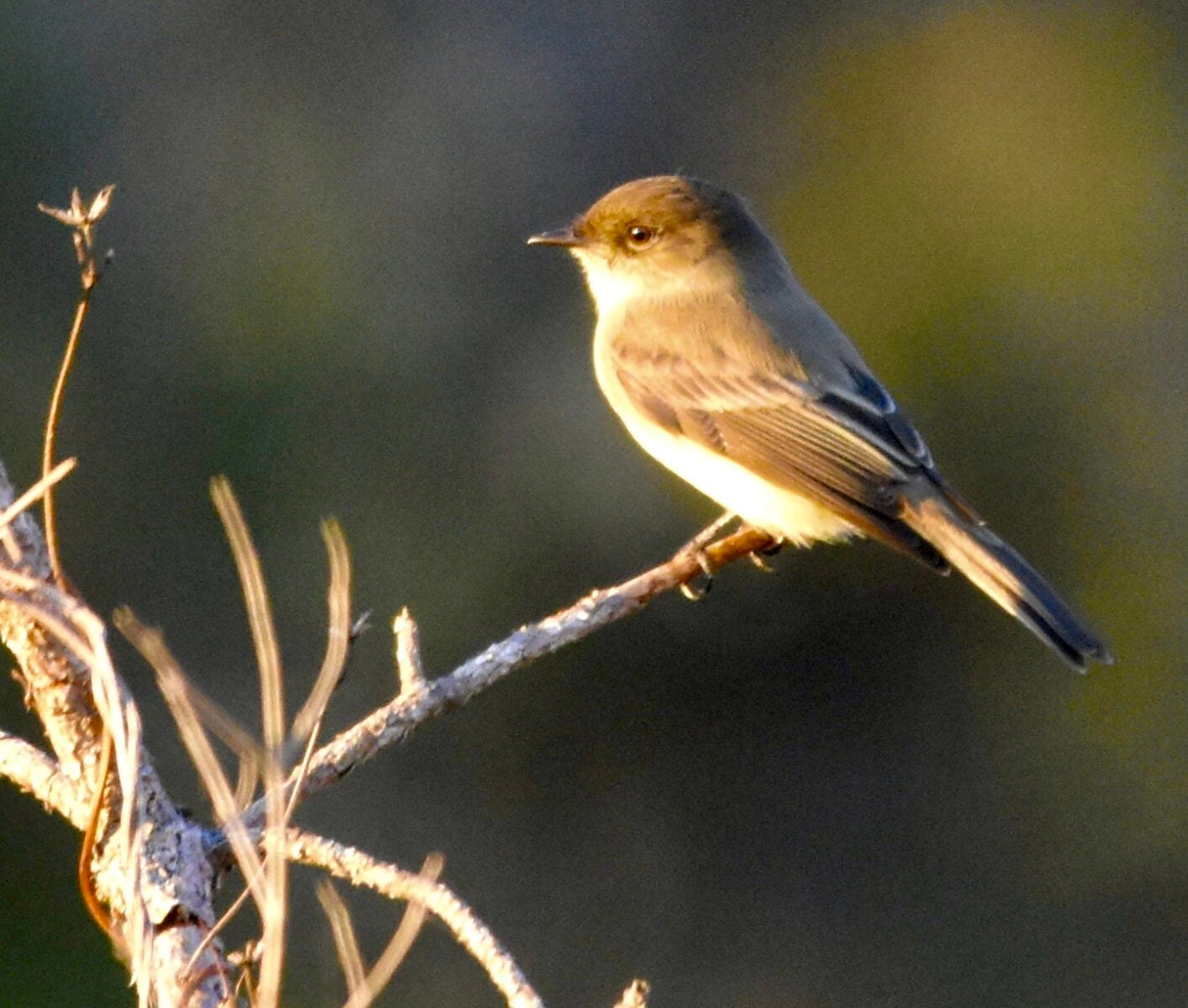
Checking Out a New Camera Lens
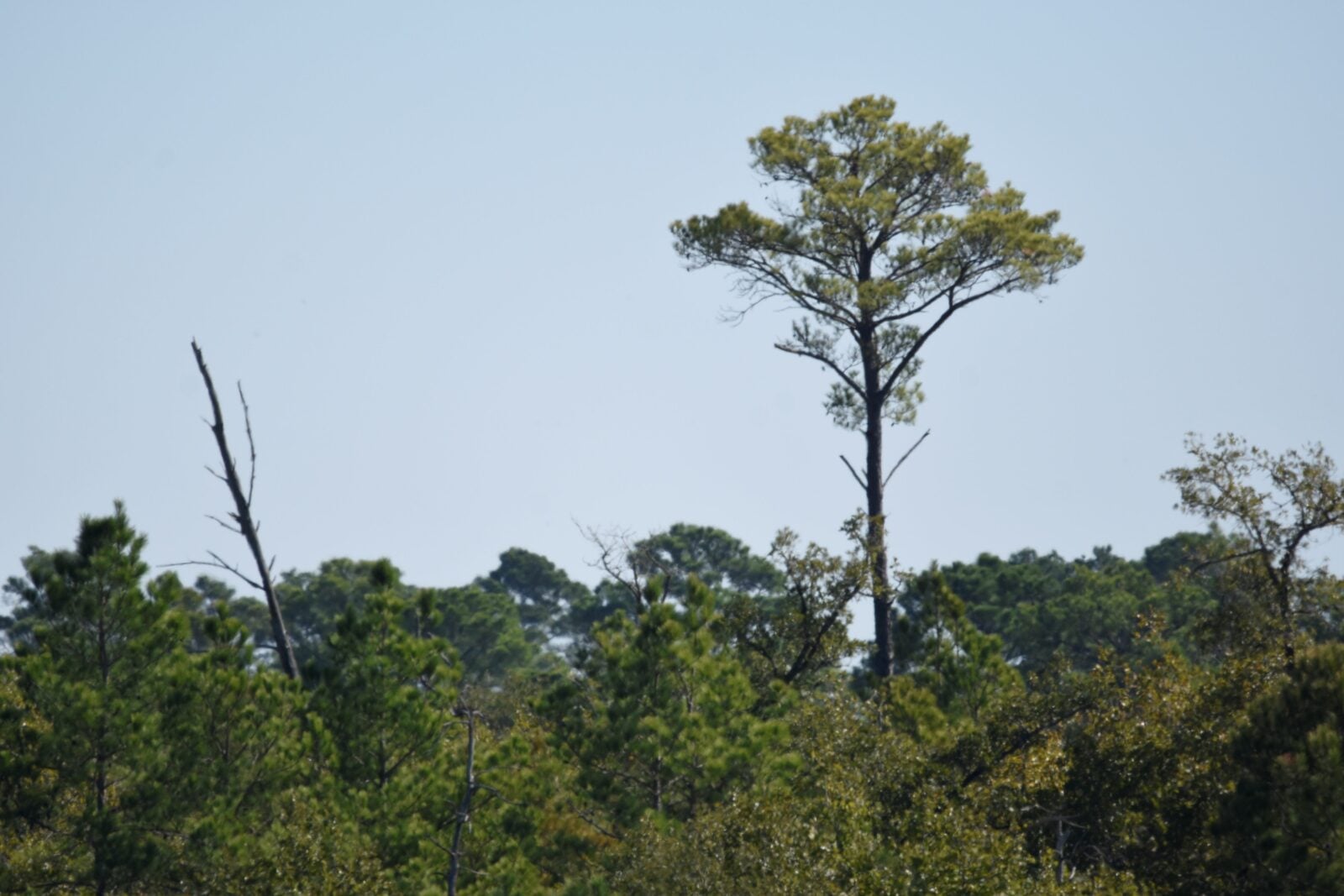
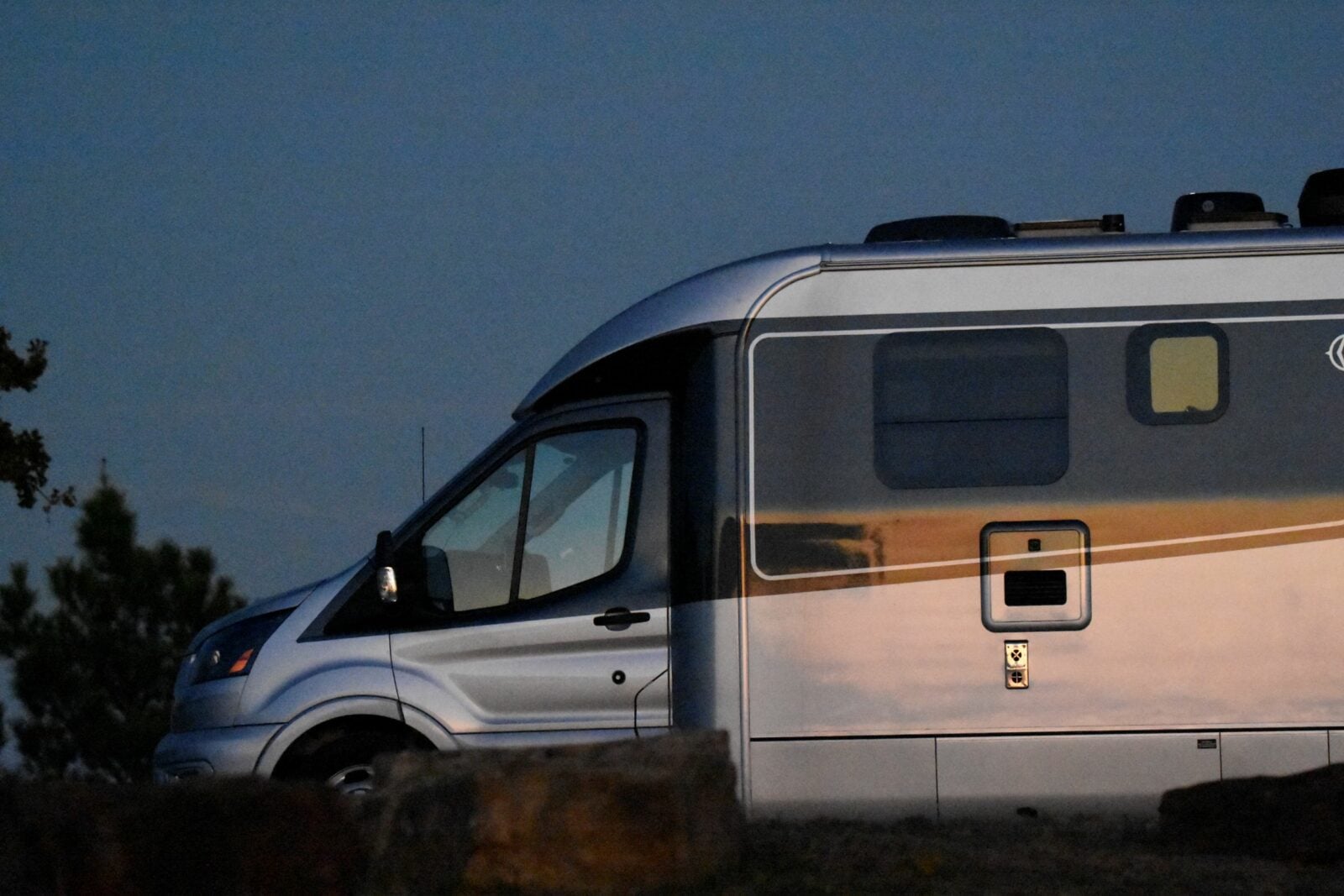
Having loved taking many photos with my Nikon DSLR camera and its lenses up to 200mm, I’d investigated getting a “bigger” lens. I rented a 150-600mm lens for a week to evaluate on this trip, and below are some of my quick results. Camping in nature in our LTV gave me easy access to fresh things to photograph. Although we were disappointed by the limited wildlife we saw on the trip, I was sufficiently confident that future LTV trips would provide numerous opportunities, so I went ahead and bought the lens. I need to practice more, which provides another excuse to go camping in Arvan! Below are some results from my test run. I have come to appreciate that wildlife photography has parallels to fishing – it’s not so much about the result as it is about the enjoyment of being there.

Quaint Small Towns
Close to Bastrop State Park are several small towns that are undergoing a reawakening. These include Bastrop, Smithville, and La Grange. Local businesses are giving their main streets a new lease on life, with a variety of coffee shops, restaurants, and eclectic stores that attract a full range of visitors. In Bastrop, we enjoyed coffees from the Sunshine Sister food truck, and our highlight was Maxine’s Cafe and Bakery. We enjoyed our healthy breakfasts sitting outside with Saydee as the local forest firefighting team tucked into their large breakfasts inside. La Grange has undergone a similar renaissance, and Smithville has built on its fame as the filming location of Hope Floats.
Parking an LTV in these town centers was challenging due to the limited space, and visiting midweek would be advisable. Bastrop State Park was a convenient base for the area, and Park Road 1C provided a scenic connection between Bastrop State Park and Buescher State Park, which was conveniently located just outside Smithville.
Conclusion
Bastrop State Park had campsites that were convenient for us to visit with our friend in town. The park was well-equipped, but the proximity to Highway 71 meant there was a persistent background noise from the road. The park’s proximity to major metropolitan centers, especially Austin, makes it busy with the campsites selling out on weekends. We saw little wildlife, perhaps due to the park’s busyness and proximity to a noisy highway. It was satisfying to see the Lost Pines’ recovery from the devastating wildfire, and heartwarming that the CCC buildings remained intact. Austin is growing along Highway 71 toward Bastrop, but the park and surrounding small towns are successfully fighting to maintain their unique identities.
This is a companion discussion topic for the original entry at https://leisurevans.com/blog/risen-from-its-ashes-bastrop-state-park-in-texas/