Editor’s Note: This post is written by a member of LTV’s sponsored content team, The Leisure Explorers. Do you own a Leisure Travel Van and enjoy writing? Learn more about joining the team.
An LTV is not just for the big trips!
I love reading blog posts that describe ambitious adventures with LTVs, ranging from Alaskan trips to full-time living. Owners take pride in their multi-thousand-mile trips and the exciting sights they encounter along the way. These are cool, and we have a wish list of similar long trips, but aiming for the big trips risks missing out on simple pleasures.
I recently completed an adventure with our 2025 Wonder Rear Twin Bed, which helped me on a multi-day hike while developing new bird photography skills. The luxury of having our “second home” on the excursion makes me want to do it frequently!
The Destination: Lakeview Campground
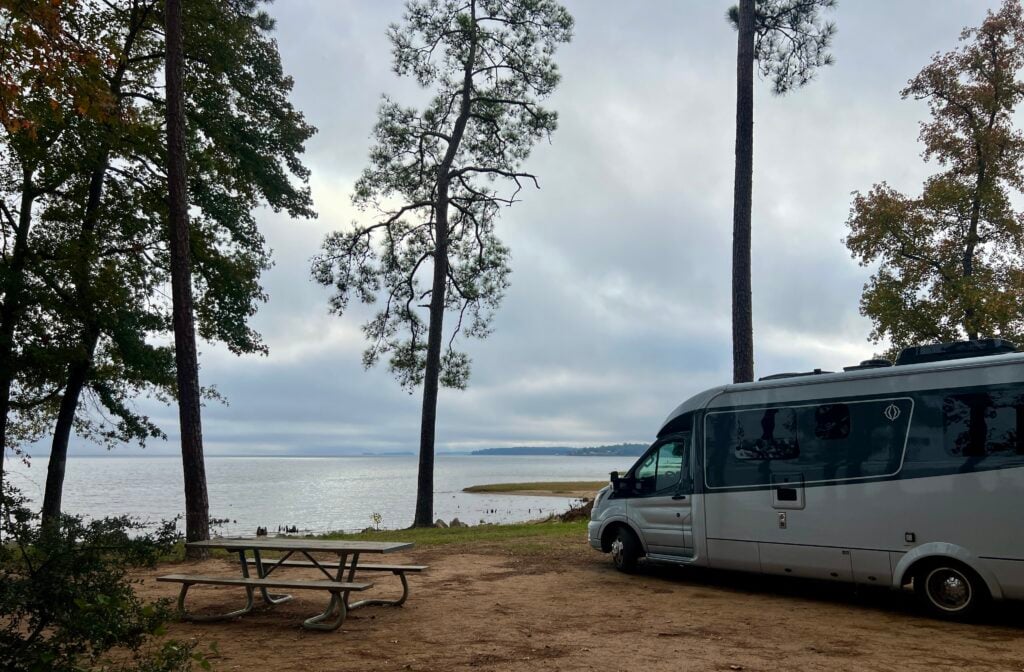
My restless nature always draws me to new experiences, and it led me to hiking opportunities in the Sabine National Forest of East Texas. Tucked away on the shores of Toledo Bend Reservoir, at the end of a dirt road, is Lakeview Campground, a three-and-a-half-hour drive from Houston. It has ten sites with no electricity or water hookups, but a central water faucet and pit toilets.
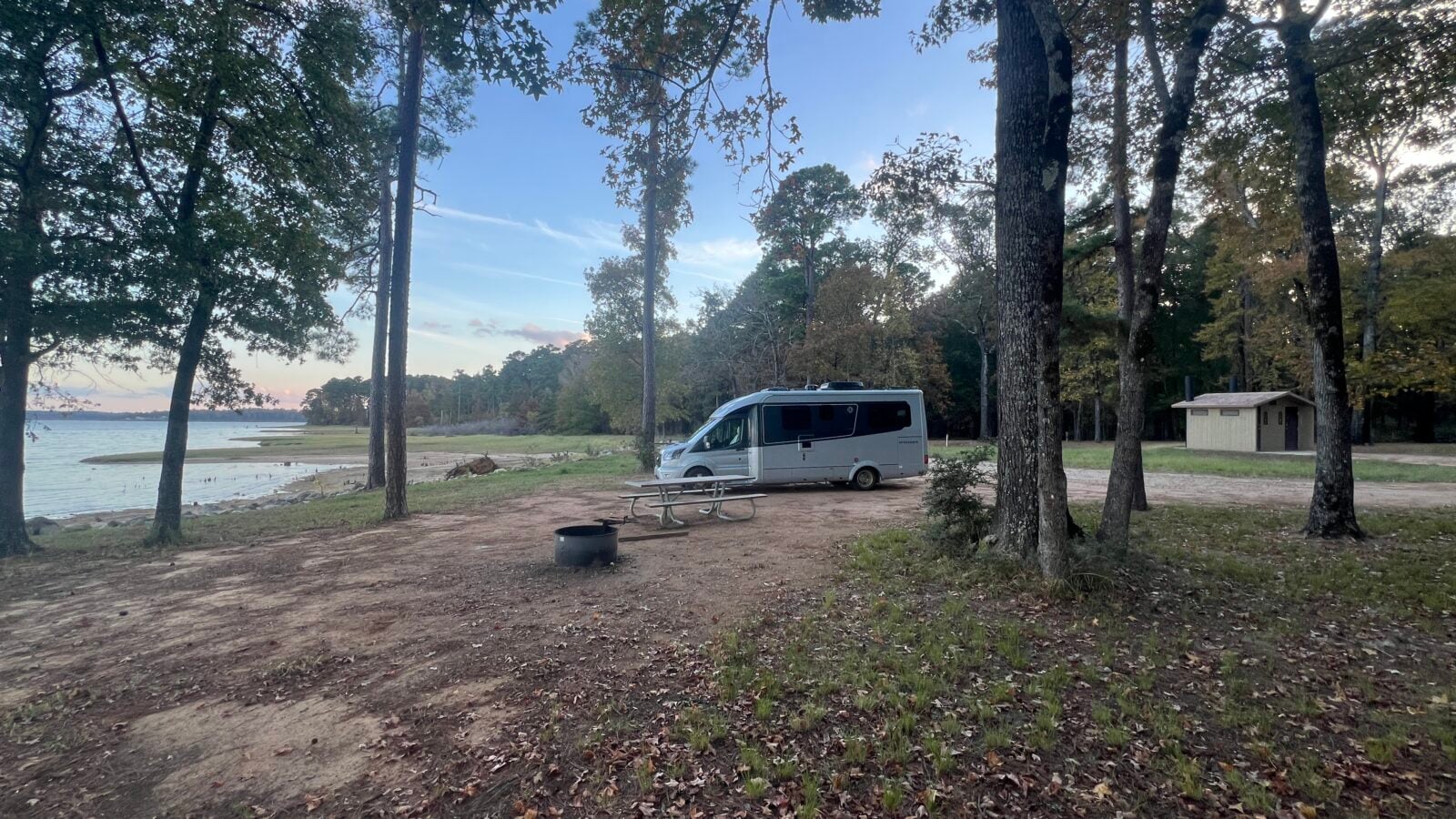
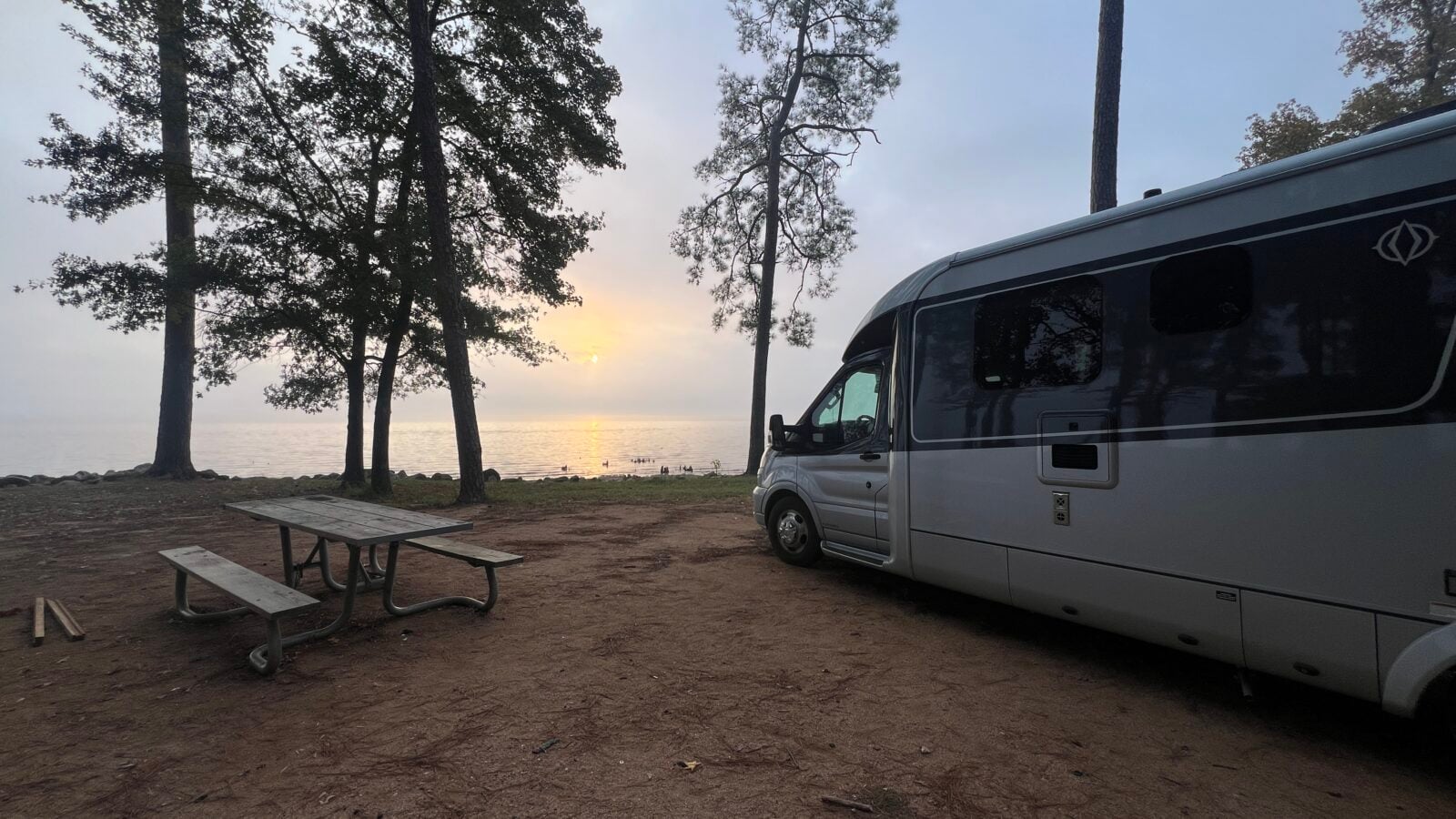
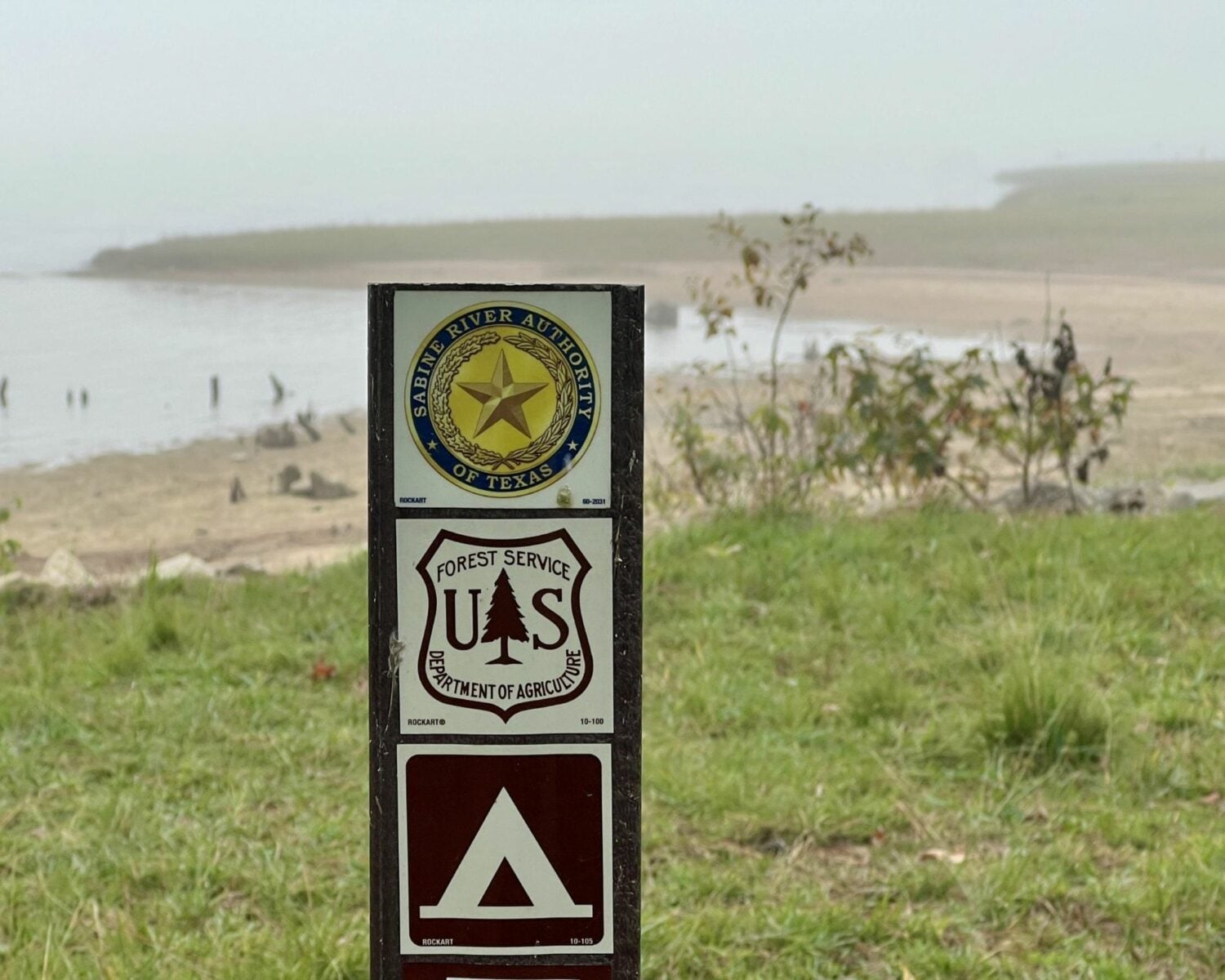
I had previously tent-camped to explore the area, and I had been looking forward to returning with Arvan (our van). We love camping in the most natural surroundings that we can find. Site five was perfectly level and situated next to the water, with Louisiana visible on the opposite shore of the lake. During this midweek trip in November, I was the only camper for my three nights. The sites were well-kept for a self-serve, $3-a-night campsite, managed by the Sabine River Authority under a permit from the US Forest Service. I discovered that the entry on RVLife for Lakeview Campground had no reviews, so I remedied it.
Hobby #1: Hiking
Lakeview Campground is at the eastern terminus of the Trail Between The Lakes. This trail meanders for 28 miles within the National Forest, located between Sam Rayburn and Toledo Bend Reservoirs, showcasing the highlights of East Texas’s Piney Woods to adventurers. Here is a link to a Google Map of the trail.
Volunteers maintain the trail by removing fallen trees, mowing the undergrowth, and placing blazes to mark the way. It’s a bit wilder than the manicured trails you find in National or State Parks, which accentuates the experience. While there are no significant hills along the trail, it undulates significantly in and out of dry creeks except after heavy rains; however, some have steep banks. Alternatively, there is easy access around mile 14.8 to Jones Cemetery, with gravestones over one hundred years old and a rare grave shed over an infant’s final resting place.
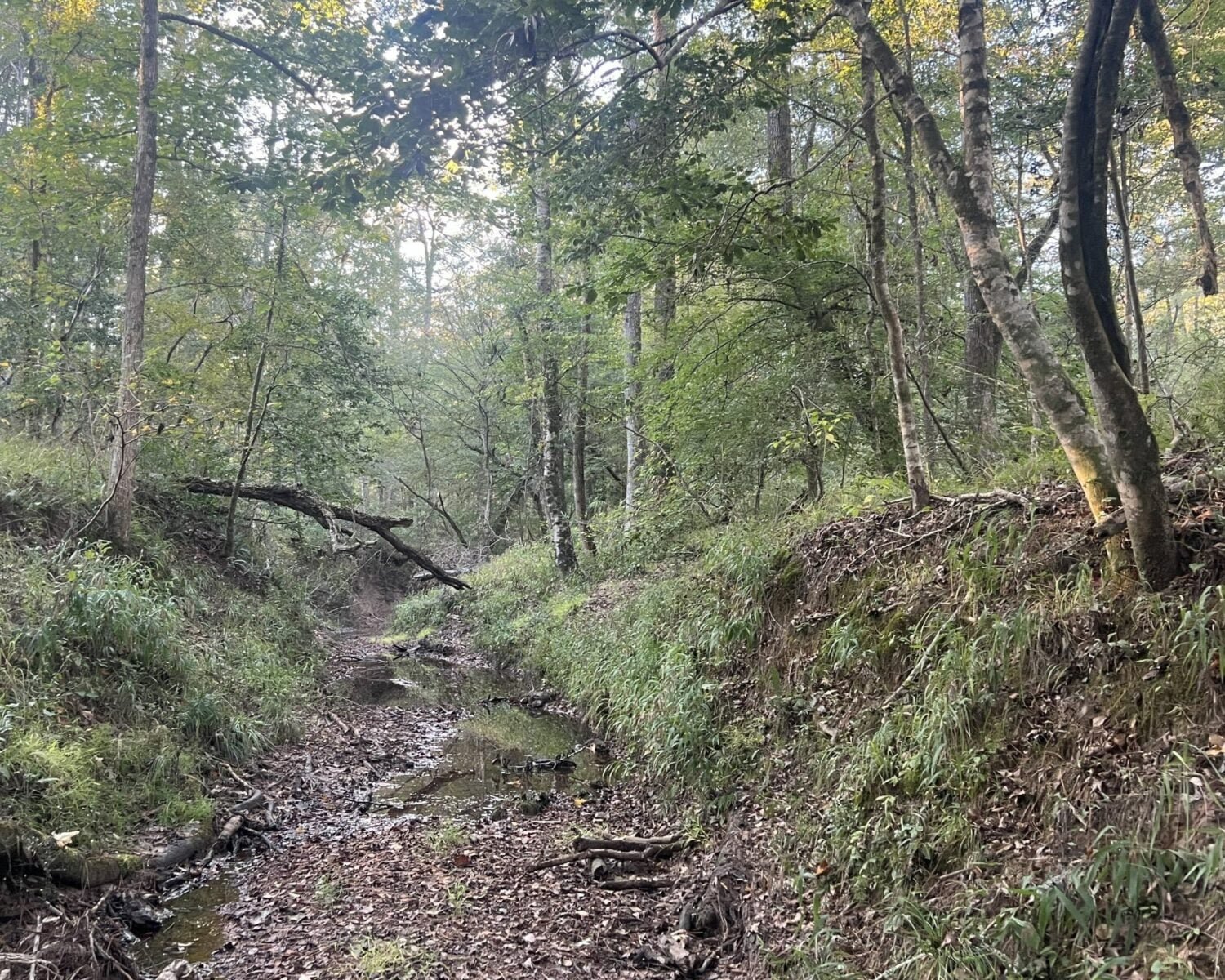
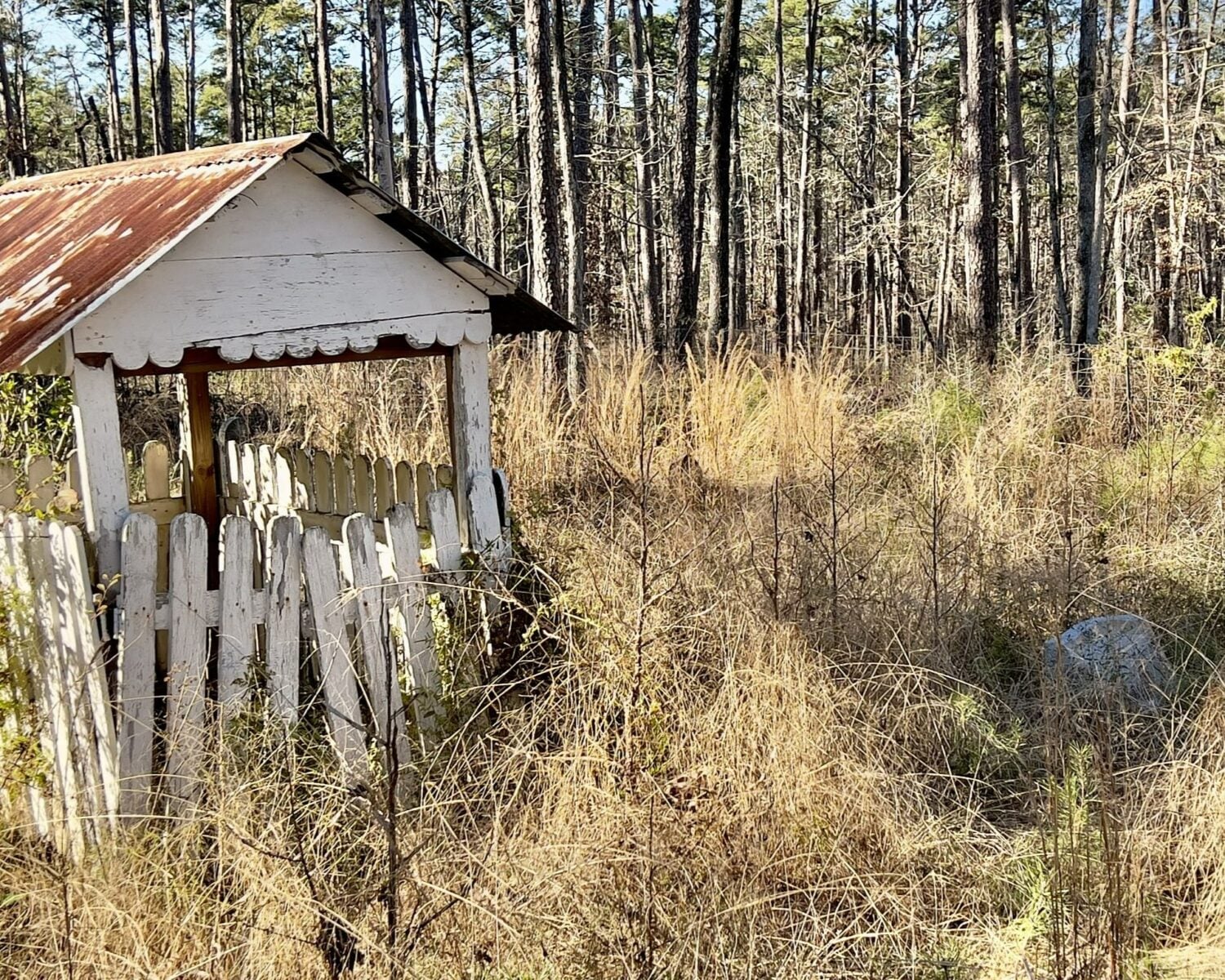
It is a fantastic escape from the hustle of modern life, where you are more likely to hear cardinals chirping or coyotes barking than see other humans. While hiking along the trail feels remote, forest roads intersect with it about every mile, facilitating access to different sections. I parked Arvan at four different locations along the trail so that I could explore other sections of the trail. While the Wonder’s AWD gave me confidence, the recent dry weather meant that there was no risk of losing traction. Small towns such as Six Mile, Pineland, or Hemphill are nearby, offering shops and restaurants for your convenience if you need supplies.
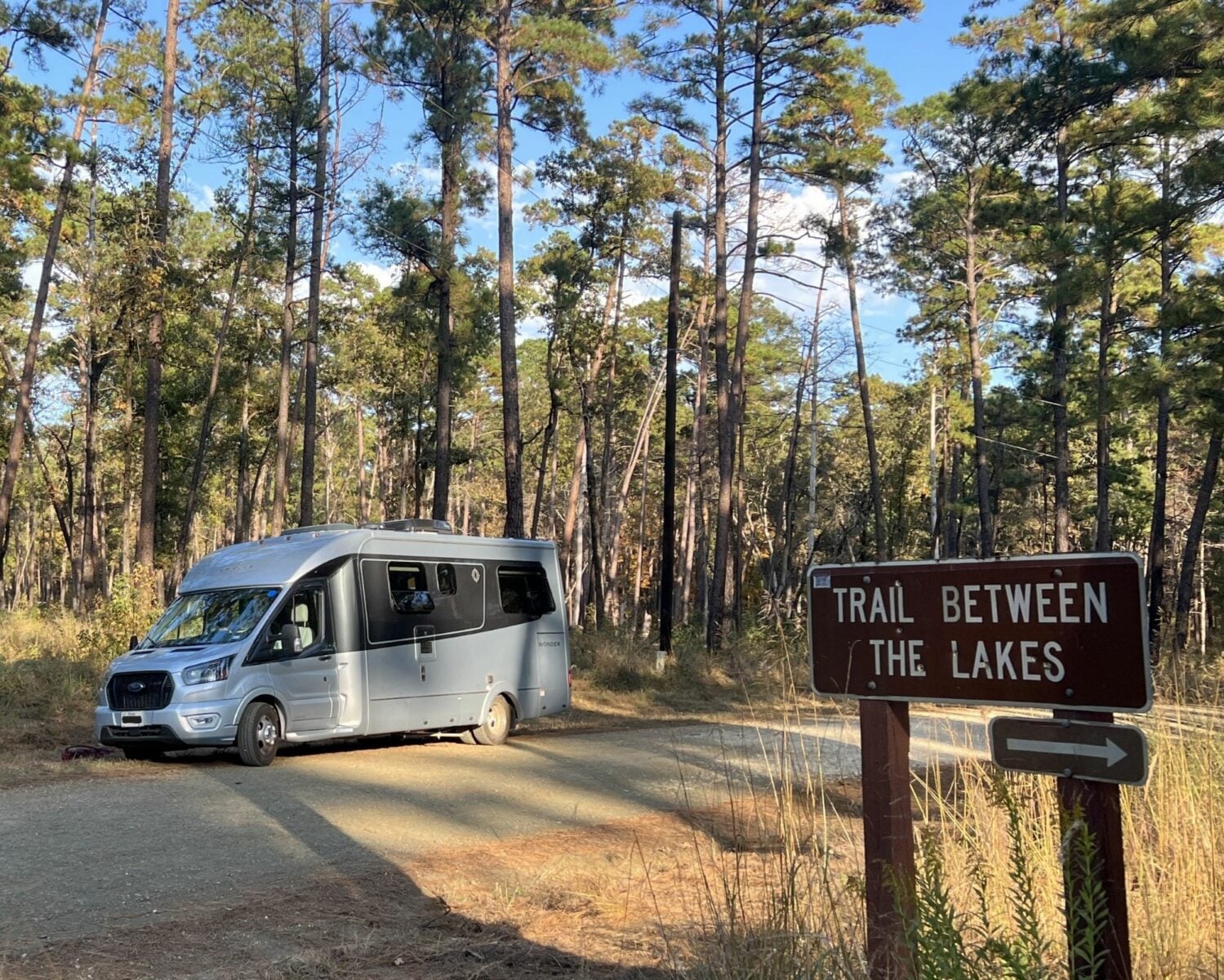
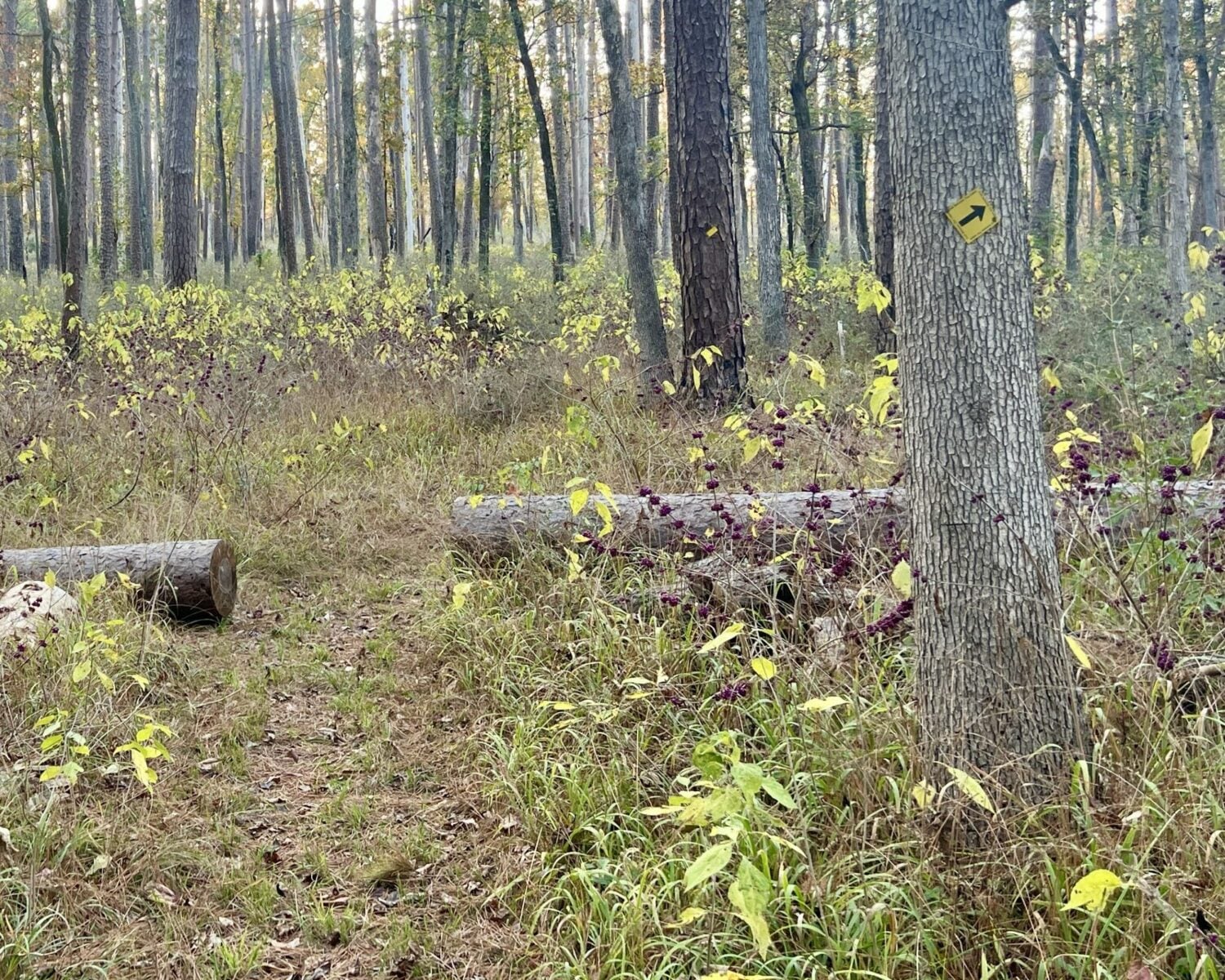
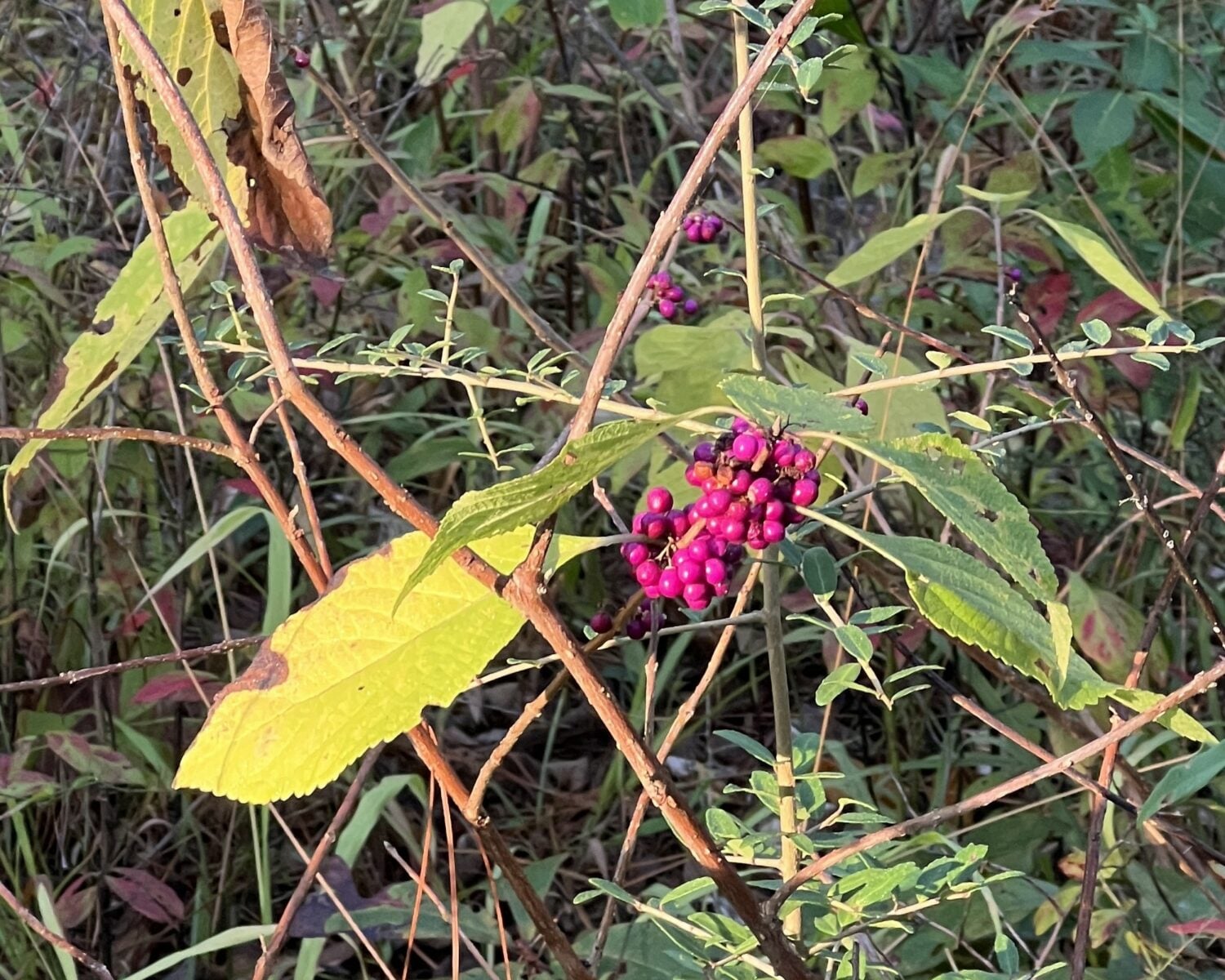
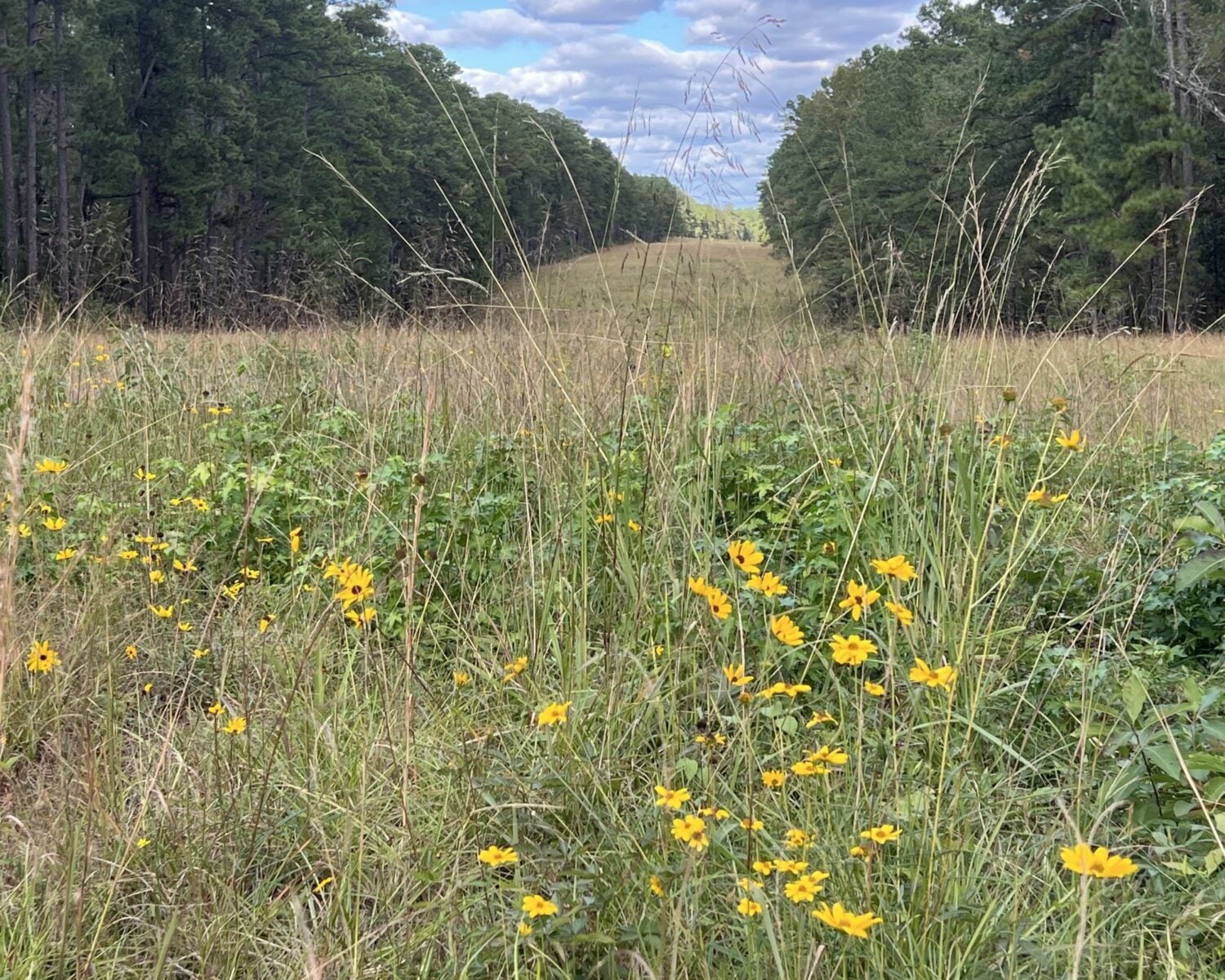
The trail shows off the region’s tremendous variety of life, which changes throughout the seasons. During my visit, some areas were covered with beautyberries, while others were adorned with miniature sunflowers. I plan to return in the spring when the wild azaleas, dogwoods, and magnolias bloom.
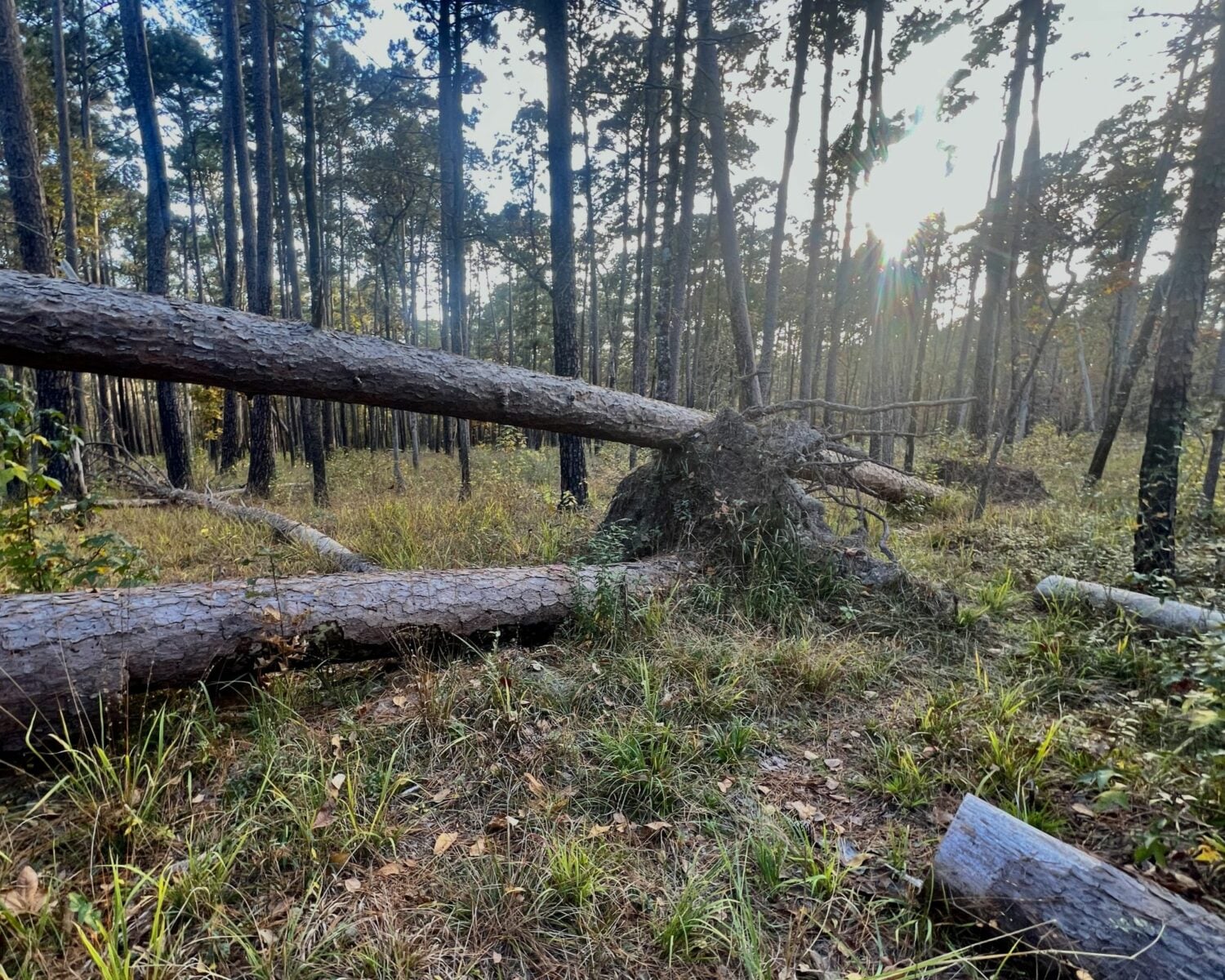
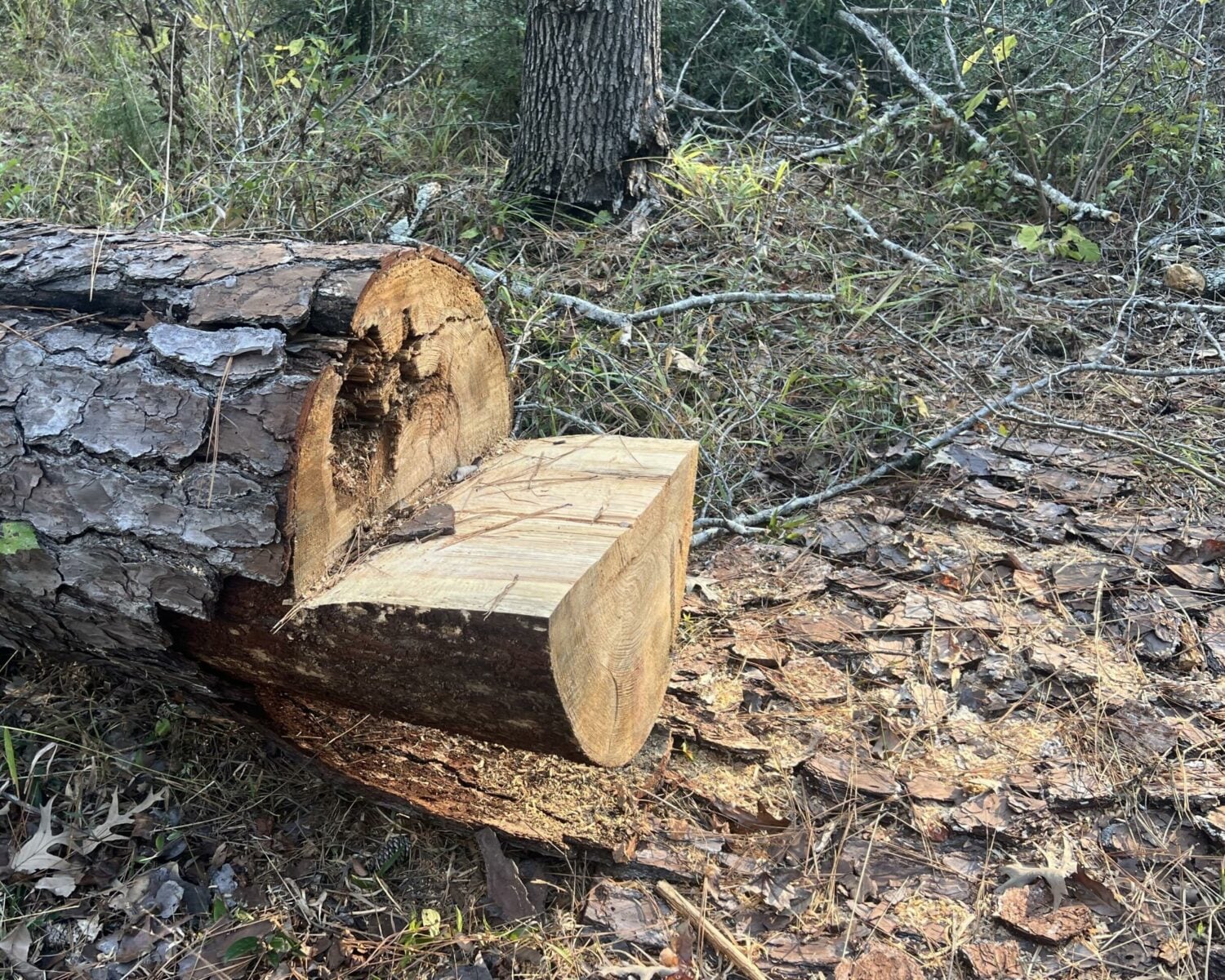
Throughout the forest are fallen trees. Walking alongside these magnificent pines when they are lying on their side emphasizes their large diameters and the severity of storms that knock them over. Often, a falling tree takes down others with it. The trail weaves around the most significant falls, and volunteers have converted some of them into convenient seats.
My favorite spot is the pond at mile 14.1, which is conveniently located near a forest road. I love how it reflects the evening sun. Another favorite view of mine is upwards. There is something special about lying on a bed of pine needles and watching the canopy sway in the breeze.
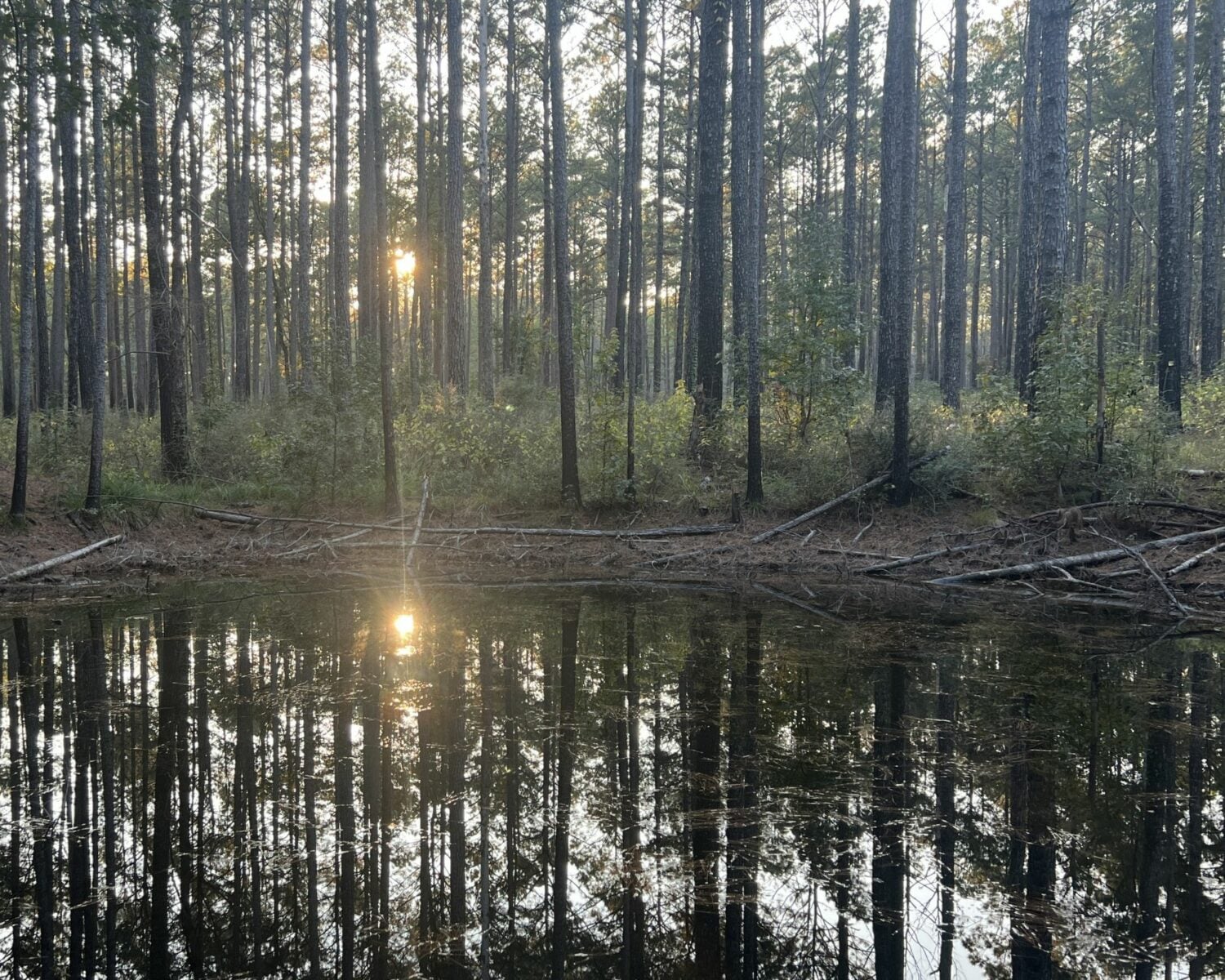
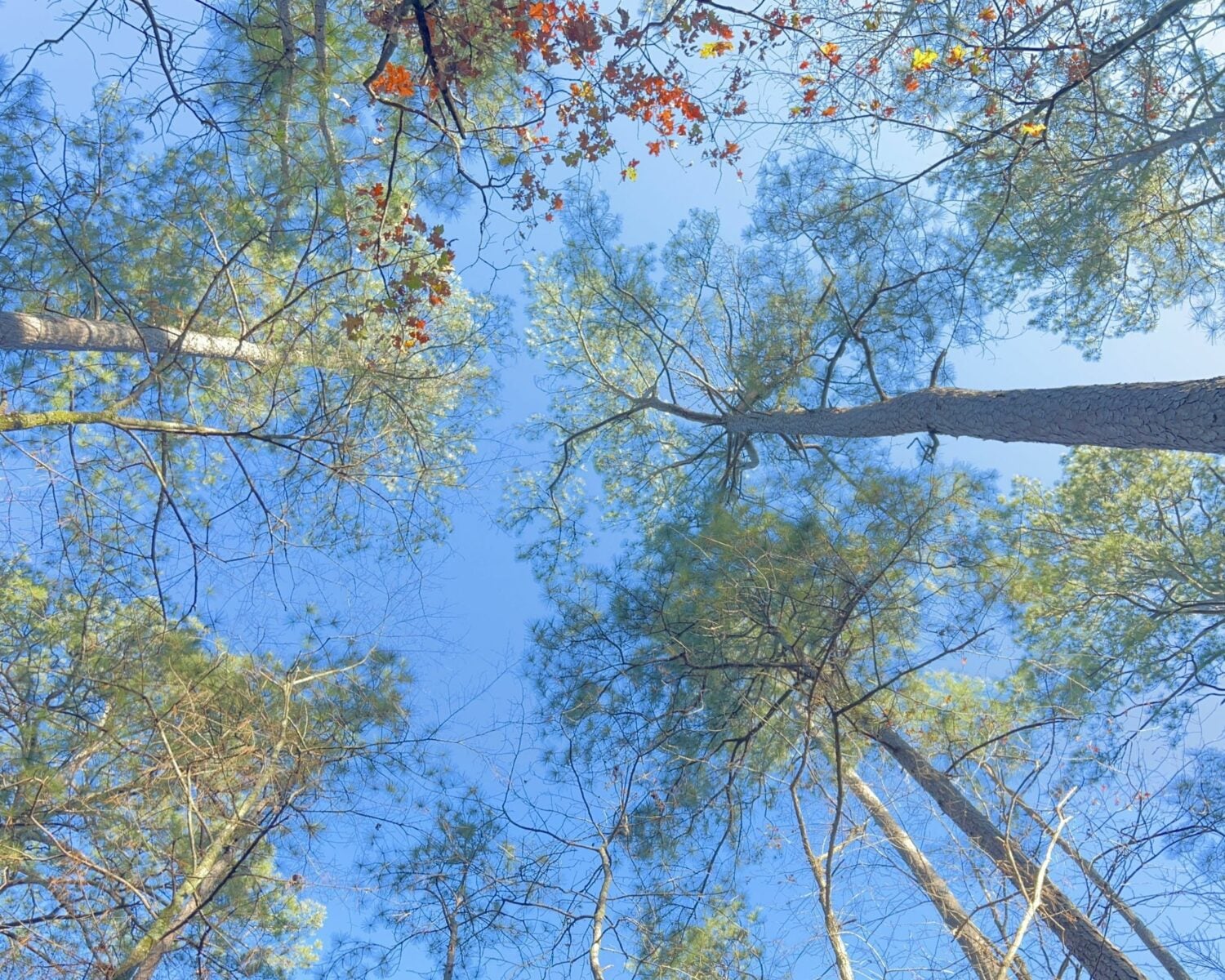
One should take precautions similar to when hiking any other trail in Texas. Especially in the summer, it is hot and humid, so bring plenty of water and avoid the heat of the day. Taking suitable precautions against mosquitoes and ticks is wise, although they are less of a problem in the winter and early spring. Be cautious with navigation, as the undergrowth grows quickly in some areas, making it somewhat challenging to follow the trail. While most of the trail has a cellphone signal, there are some dead spots. Keep an eye out for snakes. I’ve seen deer and a turkey in the woods and heard coyotes. This trail allows you to experience some wild national forest if you wish, with the first 0.7 miles from Lakeview Campground to a road crossing being a fine introduction.
Hobby #2: Wildlife Photography
I used my “big camera” a lot to photograph our kids’ volleyball and theatre activities. An empty nest and our LTV have brought a new chapter where we will spend much time camping in nature. This was a perfect time to change the focus of my photography to birds. I had just bought a used Sigma 150-600mm lens to accompany my Nikon D7200 camera and was very excited about using it on this trip.
Below, I share some of my attempts. I learned a critical lesson during this first wildlife photography outing. The joy comes as much from the experience as the result. I struggled to see any birds during the initial twenty minutes on my first morning. However, I learned to be still, watch, and listen. My eyes, ears, and brain needed to recalibrate from the excessive stimuli of modern life. After five minutes, I began to hear birdsong. I stopped reacting to the sight of falling leaves and spotted birds in flight. This first step in slowing down has parallels with adapting our lives to enjoy the journey rather than just reaching our destination.
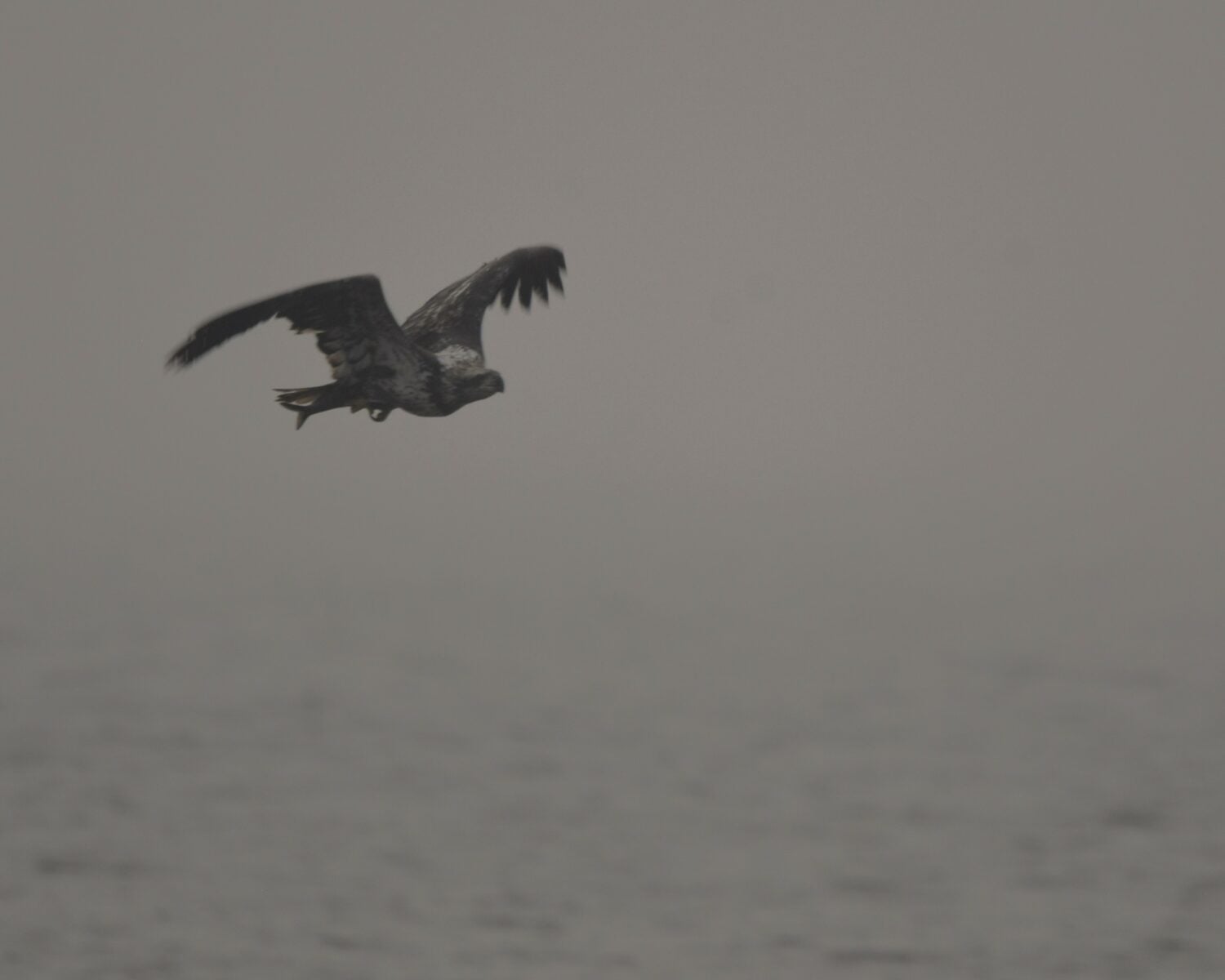
On this trip, I chose to divide my days between hiking and photography as the camera and lens were heavy. I decided to dedicate the first and last hour of daylight to photography at the campground, with the rest of the day available for hiking. On the first morning, after the first twenty minutes of calibrating my senses and about another twenty minutes of mediocre results, I spotted what looked like an eagle flying over the water. I remembered reading a Facebook post about juvenile Bald Eagles at this location, and I was delighted to have captured one. The light wasn’t ideal, but it was a start.
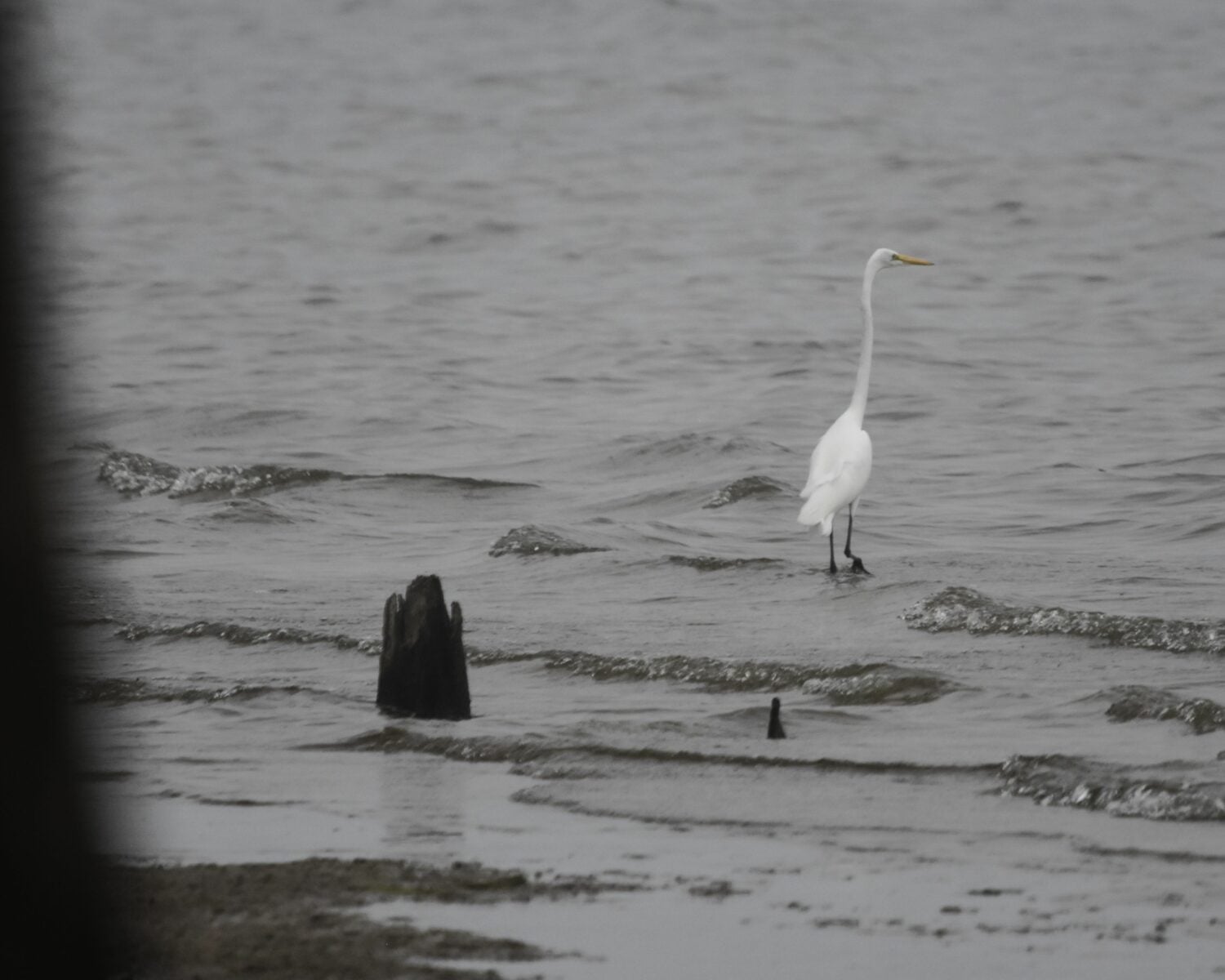
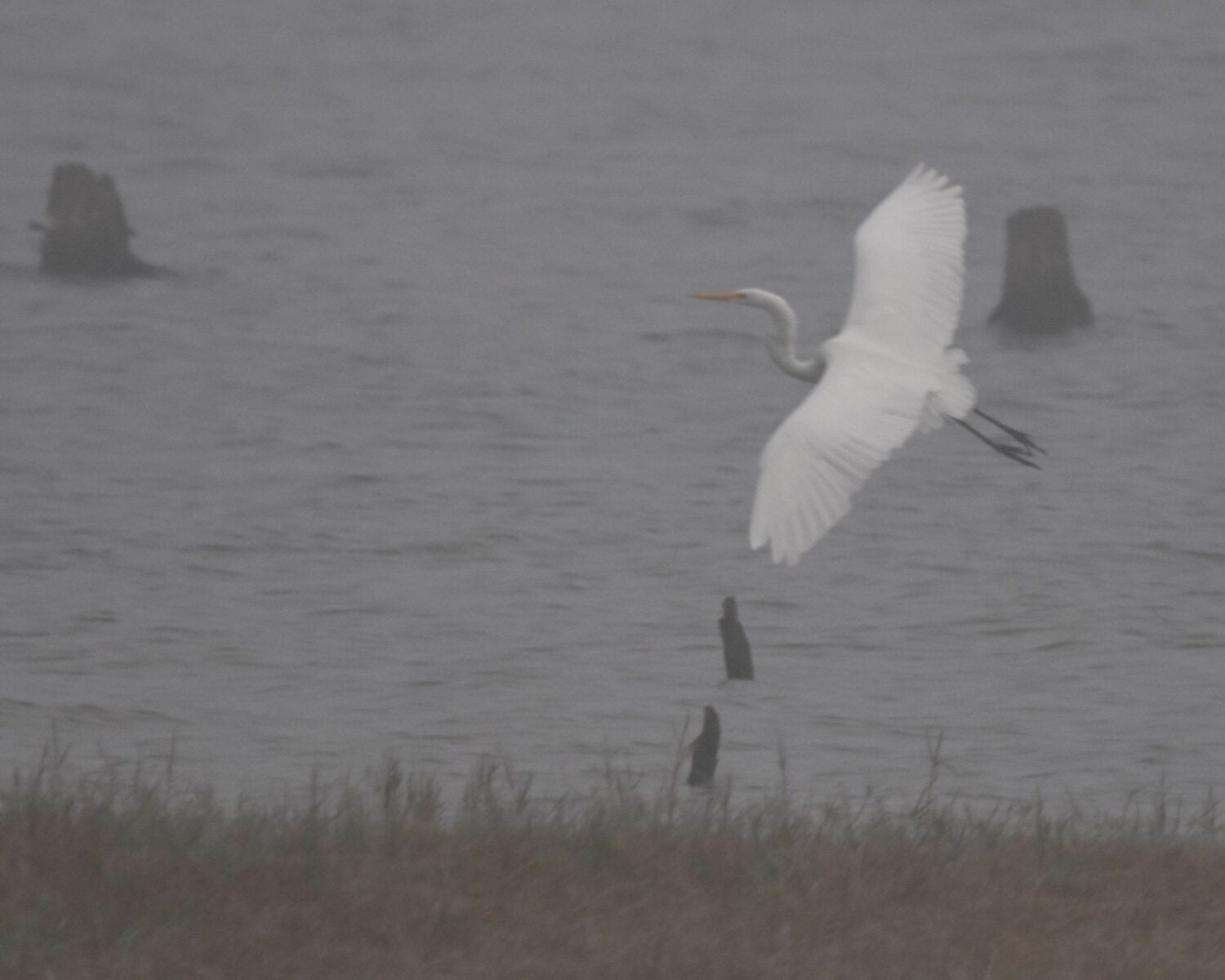
At about the same time, I had spotted a Great Egret along the shore. Earlier attempts to approach had caused him to fly away, but coming from behind a tree allowed me to get closer. You can see the remains of tree stumps poking out of the reservoir. They also provide hiding places for fish in the water. Photographing a Cattle Egret, sitting on the back of a cow, remains one of my elusive bucket list photographs, but there were no cows on this trip.
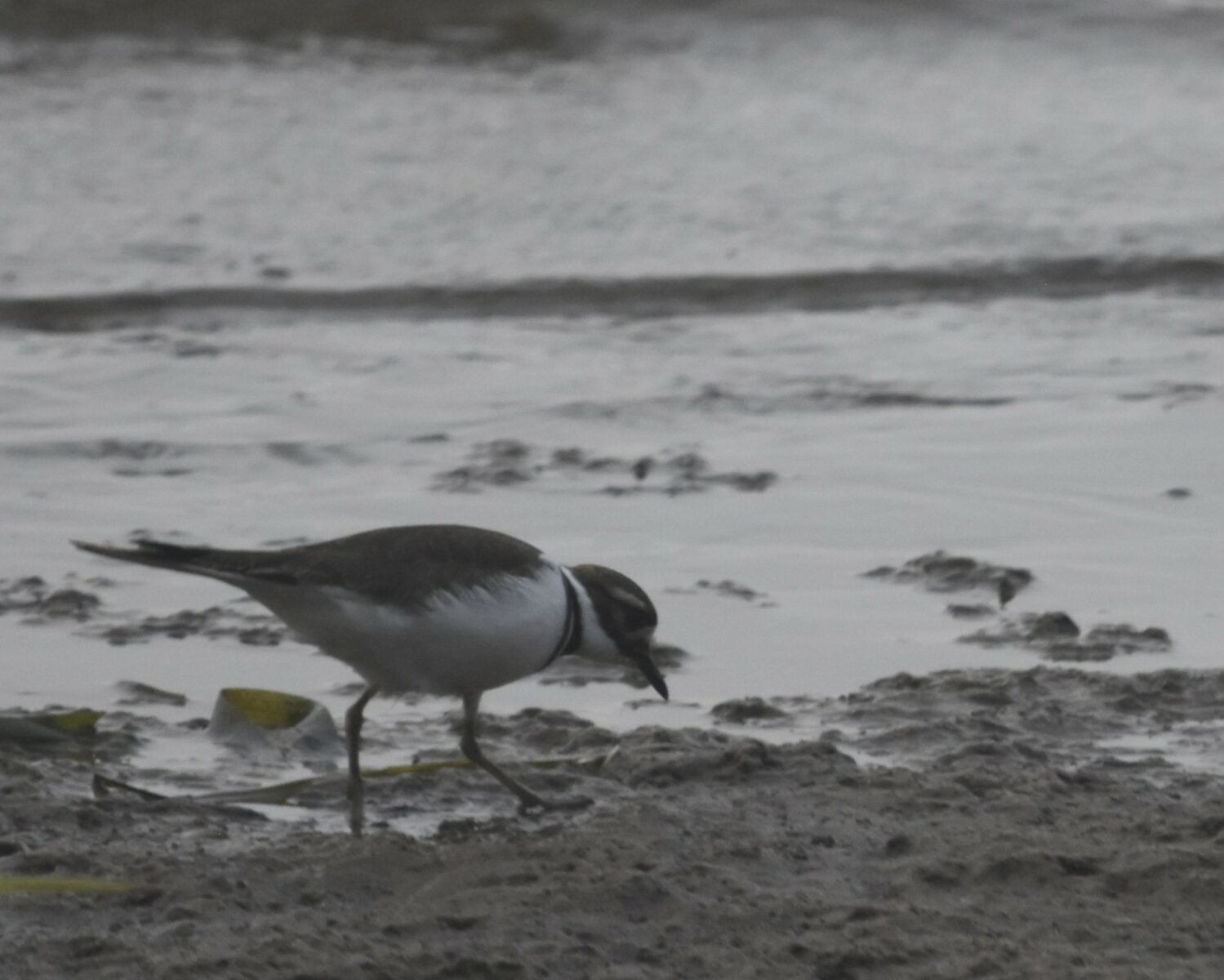
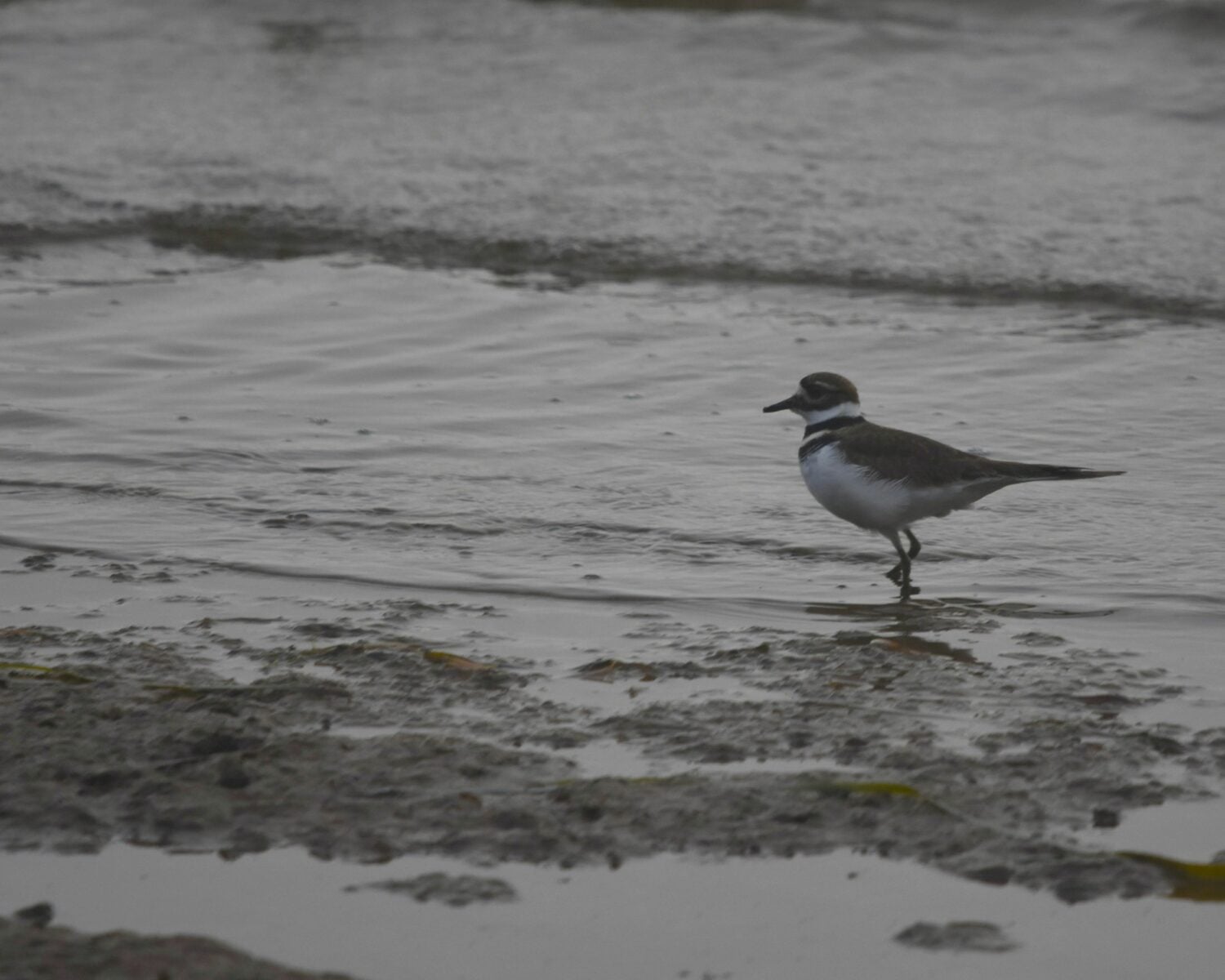
Having honed my bird-spotting skills with the big birds, I noticed a little bird hopping along the foreshore. Subsequent searching using my photo with Google Lens identified it as a Killdeer, and I enjoyed reading about the species in my new Birds of Texas Field Guide. The two black neck bands distinguish this bird from other species.
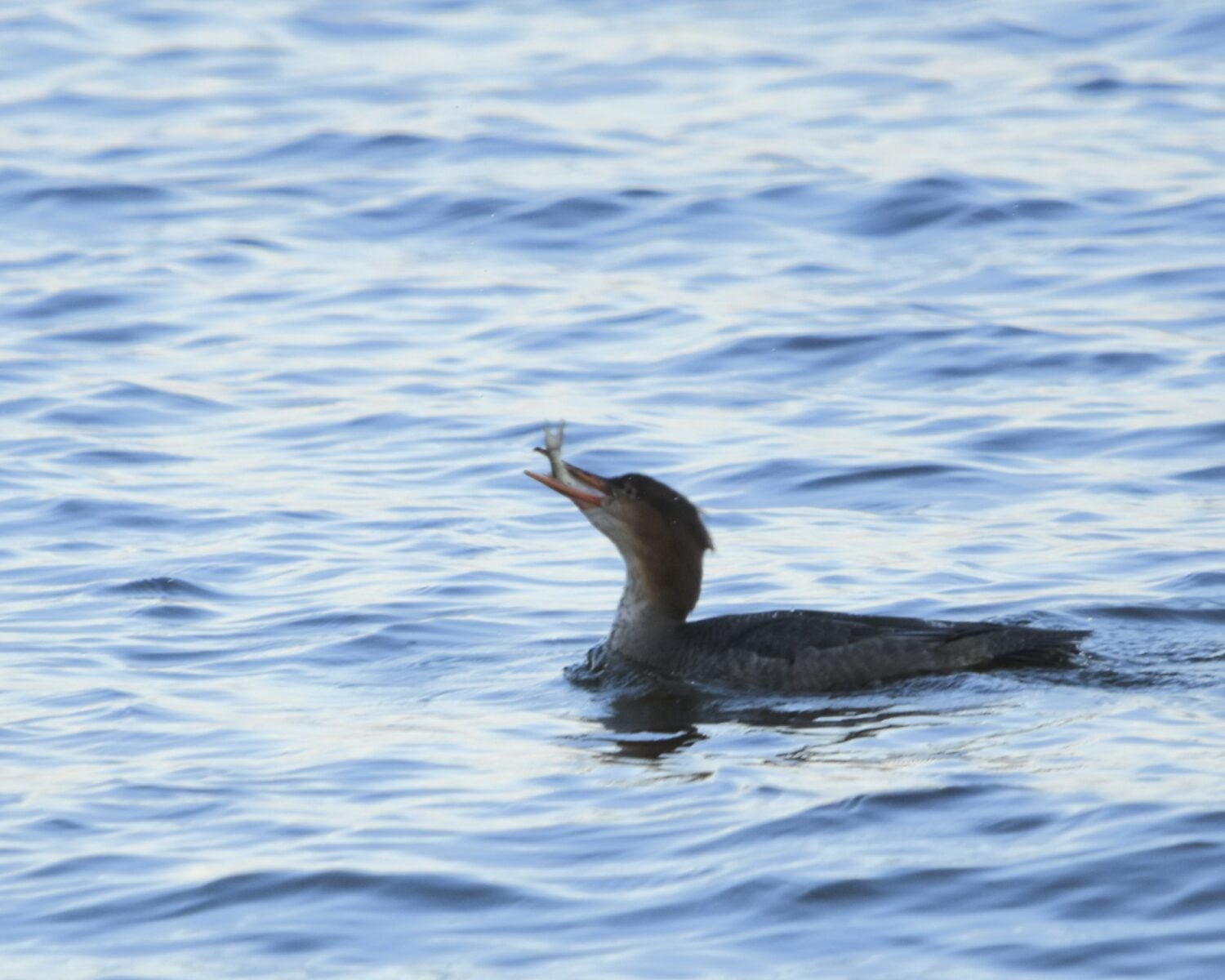
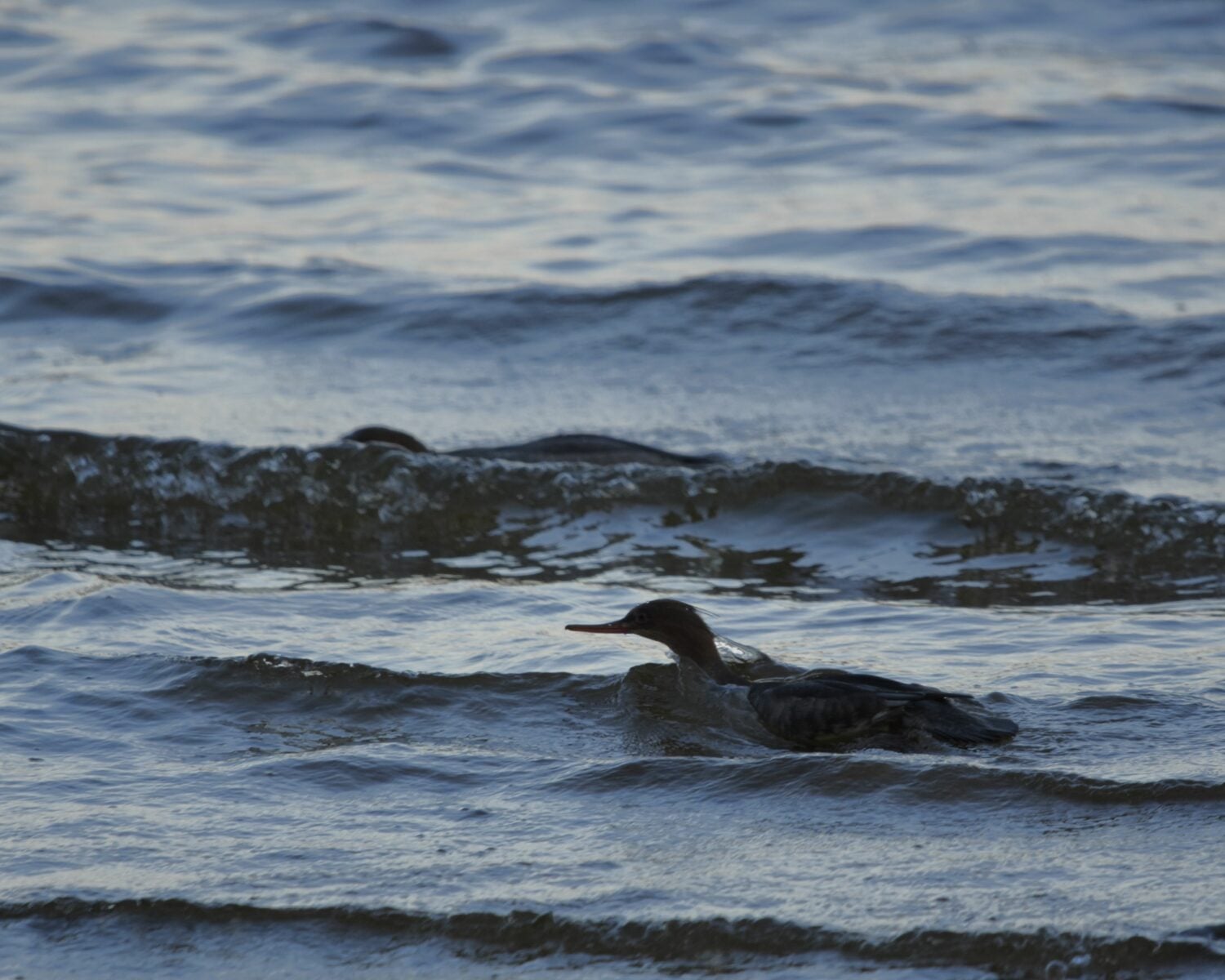
When I returned to the campground that evening, all traces of the morning fog had evaporated, and the setting sun lit everything with a warm silhouette. Amongst the tree stumps, I noticed several small birds darting around. They were generous enough to stay in the area while I got my camera, and I then saw that they were diving and catching fish. I would have liked to capture some video, as their movement was cool, but I was very happy to get some photos of ducks with fish in their mouths. Google Lens suggested they were female Merganser diving ducks, but my photos were insufficient for me to confirm that with my field guide.
Herons enjoyed wading in the shallow water but were skittish and would fly off when I approached, even from a distance of 100 yards. I was able to catch a couple of photos of Great Blue Herons in the evening as the light faded.
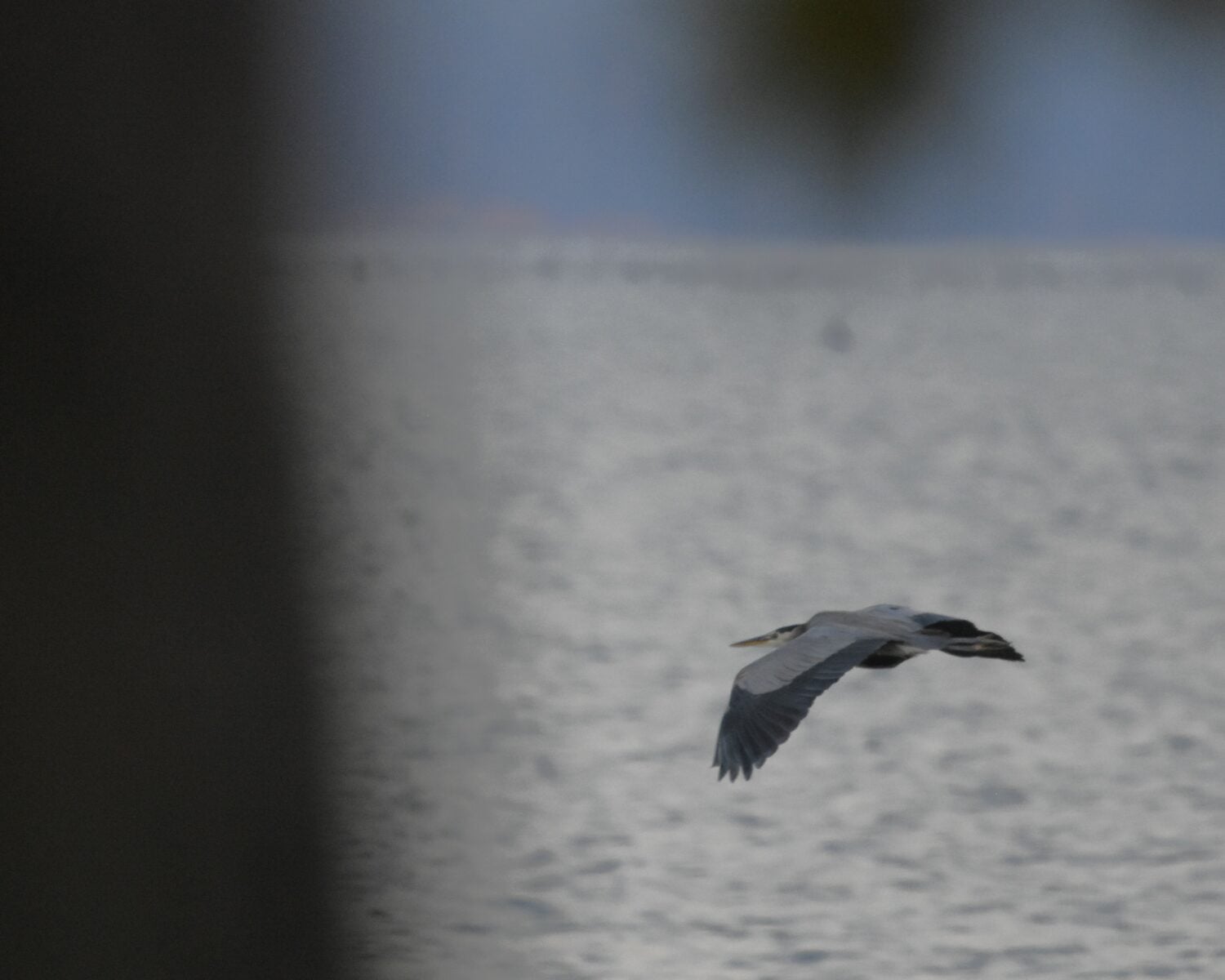
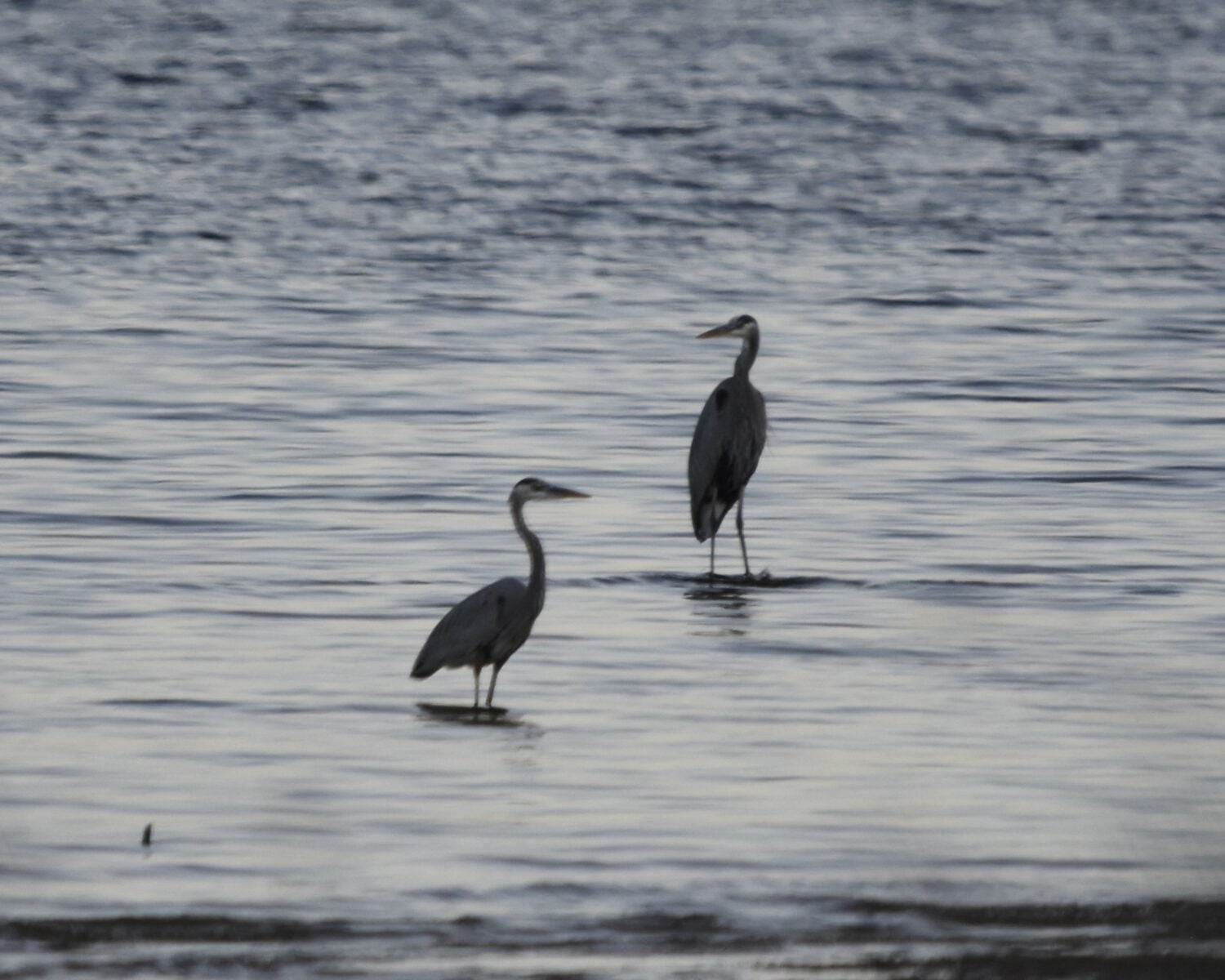
I was happy with the results of my first outing photographing birds, and I look forward to many more. It’s a hobby that pairs well with LTVing.
Special Joys
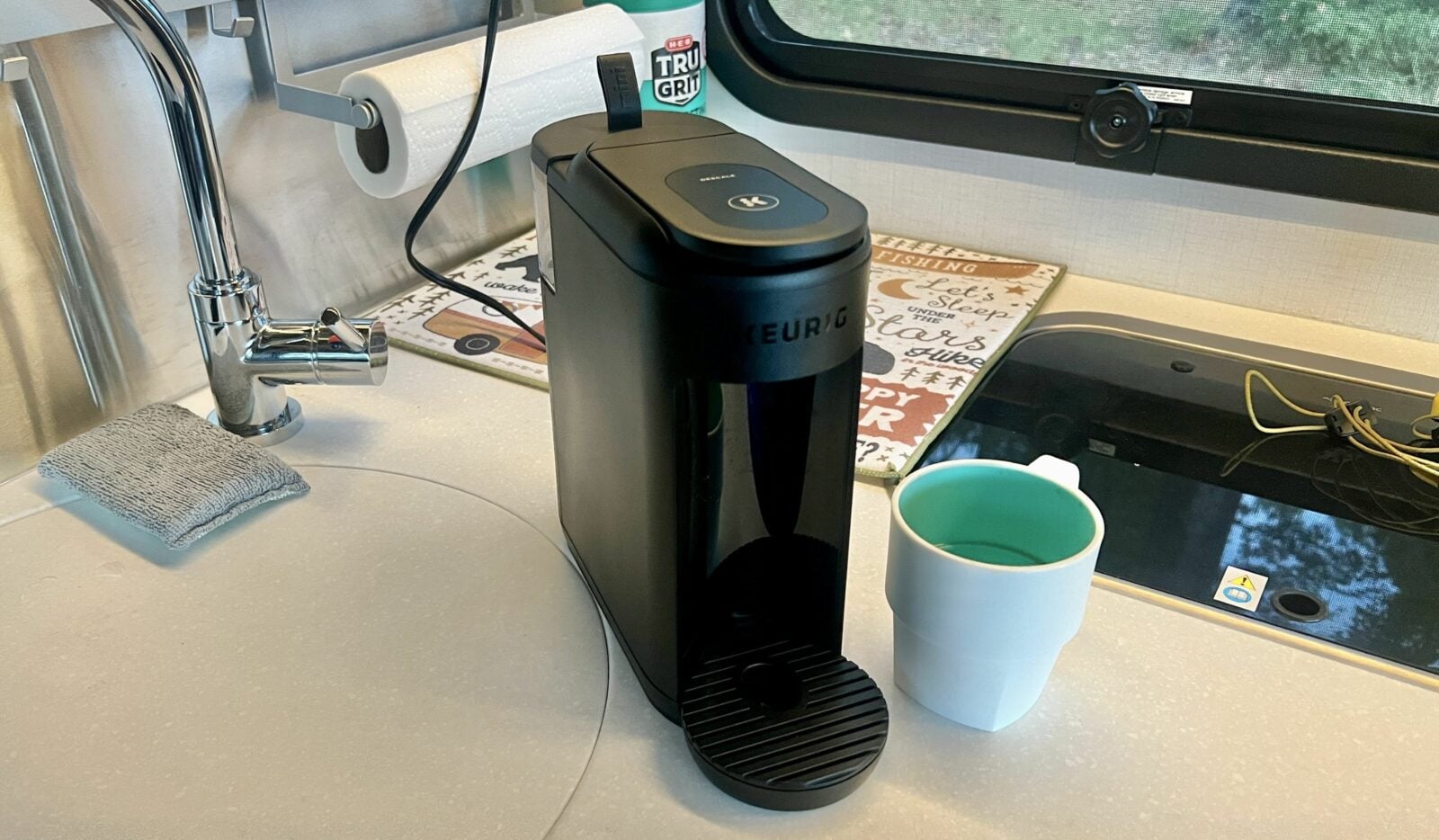
While owning an RV involves work and challenges, it brings joy in unexpected places. Taking Arvan on a hiking and photographing trip brought comforts that are likely to turn me soft! The warm shower after a day in the woods was so refreshing. The bed was significantly more comfortable than my camping mat, and I even ran the AC one evening for an hour to alleviate the residual heat in the house. One of the greatest joys came in the morning from a cup of coffee, freshly brewed with our new Keurig K-Mini Mate, and with real milk kept cold in the refrigerator.
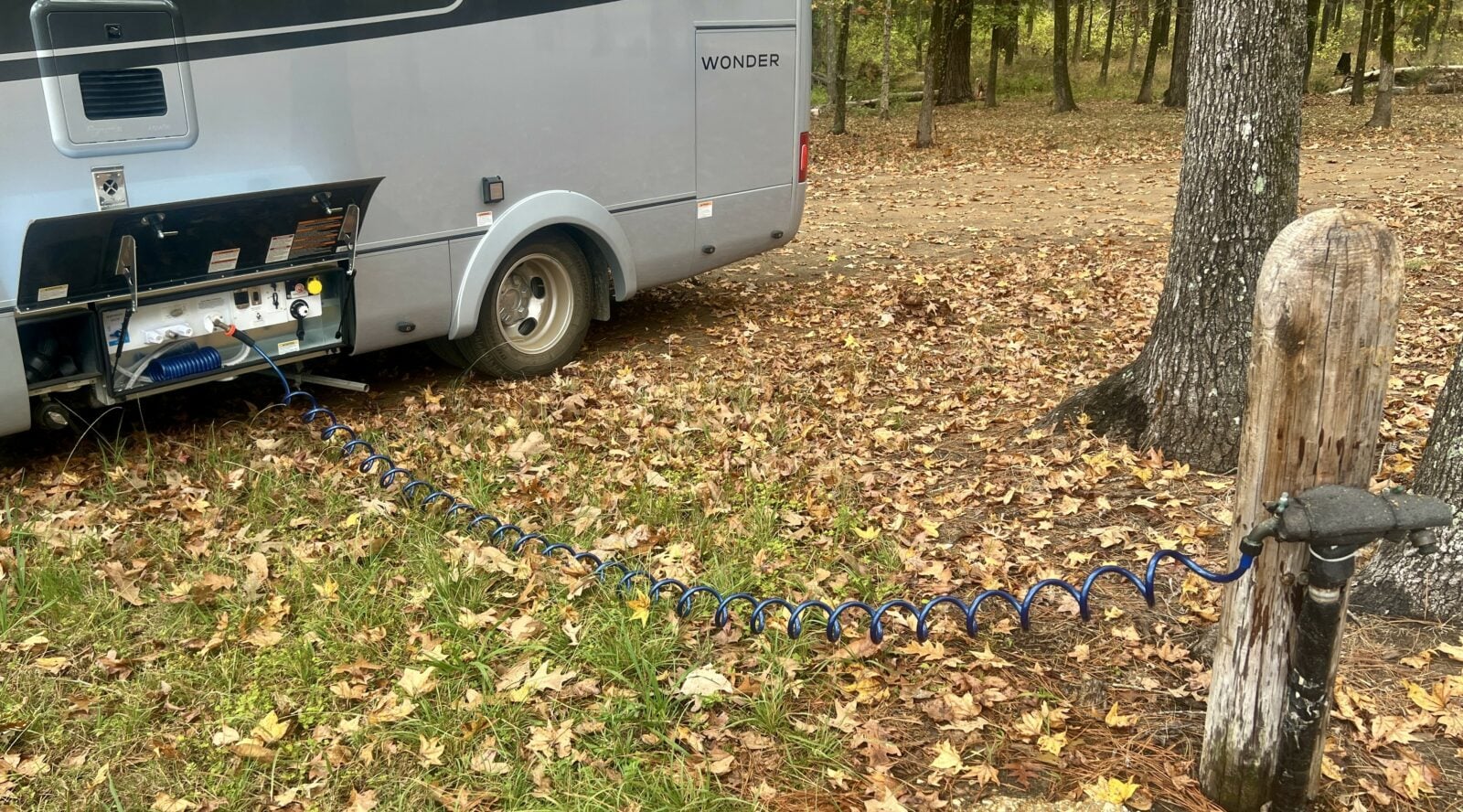
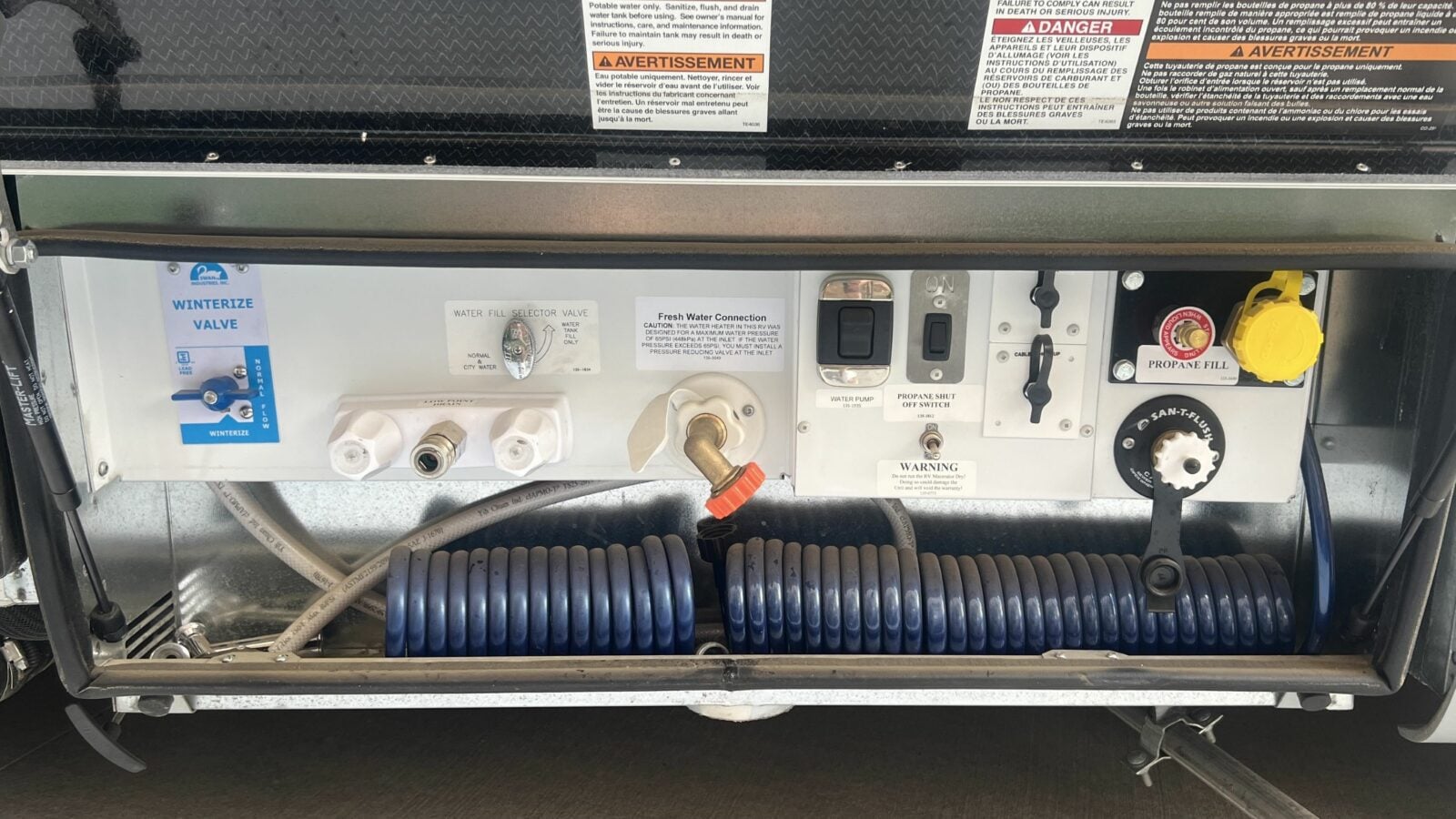
Another joy, which suggests I am becoming an RV nerd, was a new water hose. After learning during shakedown trips that we could normally park close to a water faucet, I found my regular long hose annoying to manage. I had bought this 25-ft coiled drinking water hose. On her first outing, she was perfect, being long enough to reach the campground’s central spigot and fitting perfectly in Arvan’s wet bay.
What next?
November marks the beginning of great camping weather in Texas and along the Gulf Coast, with numerous campsites of all types available. Camping next to water offers spectacular views of sunrises and sunsets, accompanied by birds and potentially other wildlife. The state is big enough to avoid crowds, and I look forward to many varied opportunities to develop my bird photography.
This is a companion discussion topic for the original entry at https://leisurevans.com/blog/developing-hobbies-with-an-ltv/