Air conditioning is the reason most campers ultimately upgrade from tent camping to RVing. But just like any appliance, your camper A/C can wear out over time — or you might just need an upgrade. So, let’s help you find the best RV air conditioner replacement to keep your RV cool and comfortable.
Key Takeaways
- A same-footprint RV AC replacement is a potential DIY project, but the wiring complexity, roof sealing, and the unit’s weight make professional installation the safer choice for most owners.
- RV air conditioners come in three main types: rooftop (ducted or non-ducted), window, and portable.
- Choosing the right A/C unit depends on the BTU rating, brand compatibility, power source, and optional features such as a heat pump, soft start, or condensate pump.
Types of RV Air Conditioners
The most popular type of air conditioner for RVs is an overhead A/C installed on the roof; most techs refer to it as a roof A/C or rooftop A/C. This type blows air directly into the RV or distributes it through a ducting system. In recent years, we’ve seen an emergence of window and wall-mounted units, especially in smaller RVs. While less common, portable RV air conditioners can also be found in modern RVs.
Need help determining which is best for you? Let’s review the best RV air conditioners by type.
RV Roof Air Conditioners
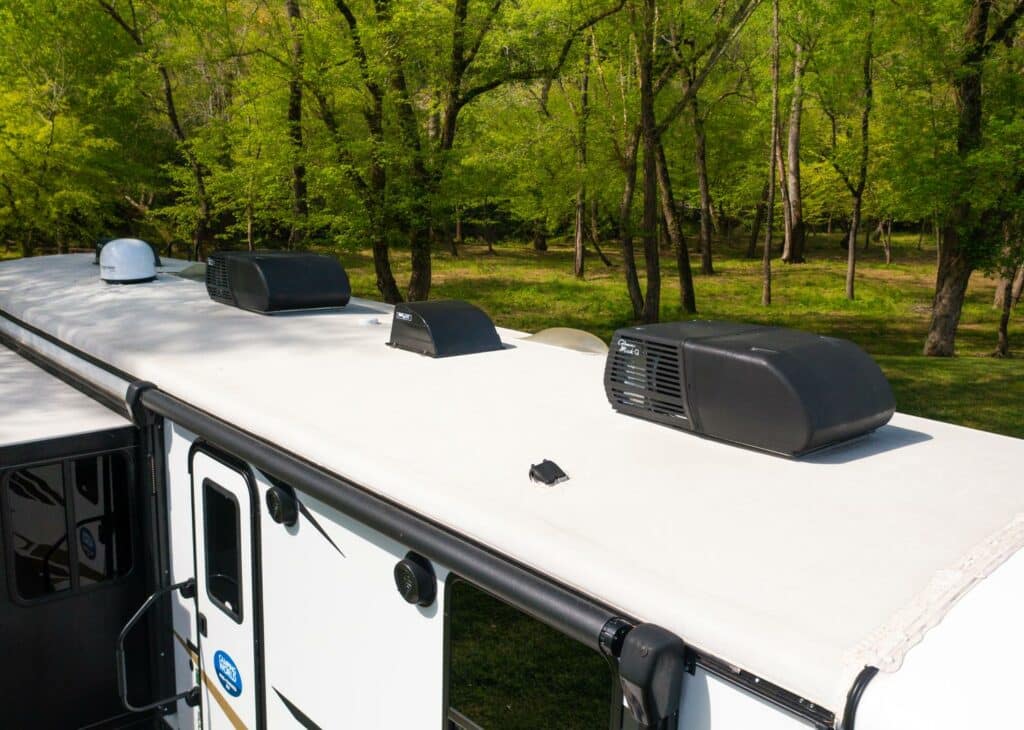
The most popular, and for good reason, RV roof air conditioners don’t take up any space inside the RV. They are the most effective at distributing air, especially in a ducted system. These units provide the most efficient cooling, and many can also deliver heat if you have a model with a heat pump or strip. Although leading the charts in performance, they also lead the charts in power draw and replacement cost.
| Pros | Cons |
| Powerful | Expensive to Replace |
| Don’t Take Up Interior Space | Large Power Draw |
| Heat Pump Option | Adds to Overall RV Height |
Ducted versus Non-Ducted RV A/C Units
There are two types of roof-mounted A/C units: ducted and non-ducted. In a ducted system, ducts run through the RV’s floor, walls, or ceiling, and vents deliver the air throughout the floor plan.
A non-ducted system has only one vent at the distribution box. Air blows straight down from the unit into the RV. Non-ducted systems are standard for small RVs, while ducted systems are common in larger RVs with multiple rooms.
Distribution boxes are usually specific to ducted or non-ducted RVs, so you’ll need to know which type you have before selecting one.
RV Window A/C Units
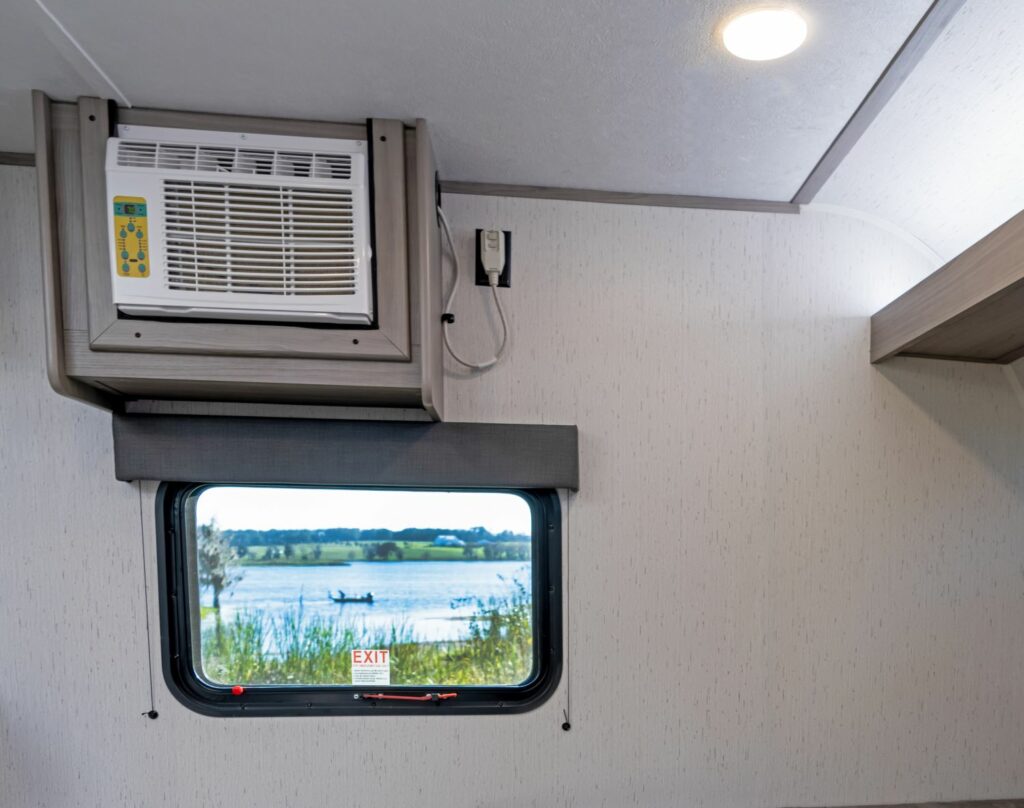
One issue with using an overhead air conditioner in a small camper is the risk of overcooling. Most manufacturers consider a small RV air conditioner to be 13,500 BTU, which can be too much for a small RV, even on the lowest setting. With a smaller RV, you also likely have a more limited power supply, and window units draw about half as much power as average roof-mount A/Cs.
| Pros | Cons |
| Won’t Freeze You Out | Takes Up Wall Space |
| Smaller Power Demand | Unsightly |
| No Addition to RV Height | Less Efficient Cooling |
Portable RV Air Conditioners
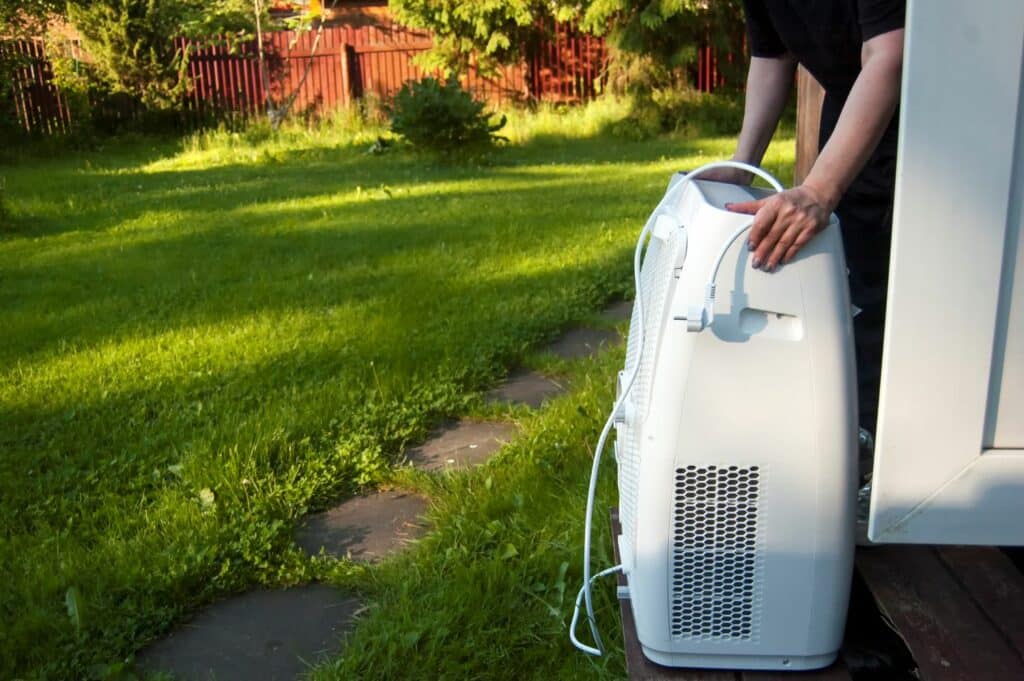
A portable air conditioner is most likely used in an RV to supplement a roof or wall-mounted unit. Its downsides include reduced cooling capacity, added setup time, and reduced storage space. However, it also has positives, such as quiet operation and less strain on your wallet.
Portable air conditioners are also an option for RVs without an air conditioner or a temporary A/C replacement. The best part is that adding one does not require significant modifications, like cutting into the roof or walls.
| Pros | Cons |
| Easy Install | Poor Efficiency |
| Easy to Move Design | Requires Setup |
| Cost Effective | Takes Up Storage Space |
Best RV Air Conditioner Models to Consider
Our top-rated RV air conditioner reviews will help you find a reliable AC unit to keep you cool this summer.
Dometic® FreshJet 3 Series RV Air Conditioner
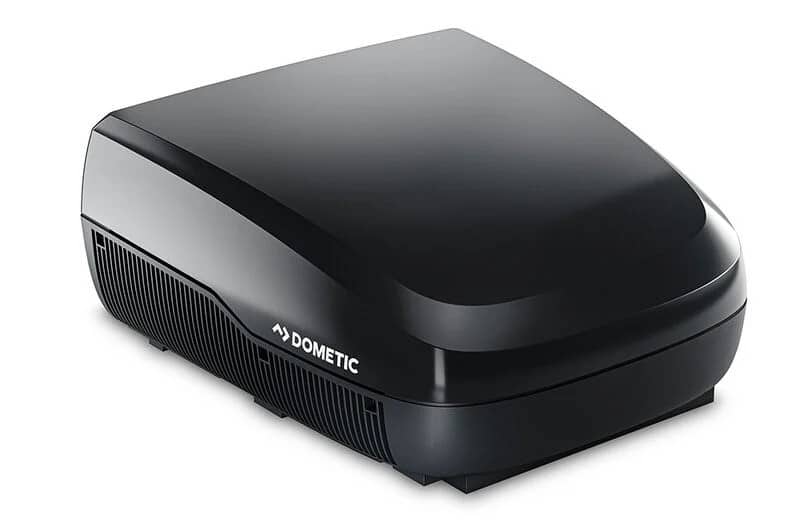
The most innovative rooftop air conditioner on the list is the Dometic® RV FreshJet 3. The FreshJet offers upgraded efficiency, quieter operation, and e-coated coils for added durability.
| Profile Height (in.) | Weight (lbs) | Rating (BTUs) |
| 13.8” | 64-66 | 13,500 or 15,000 |
Furrion® Chill HE RV Roof Air Conditioner
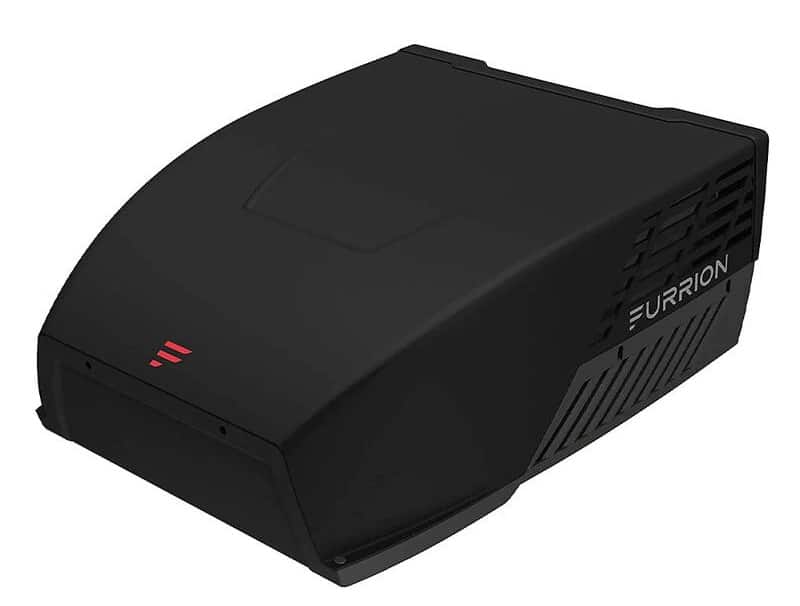
The Furrion® Chill is a highly efficient rooftop air conditioner with durable features, including vibration protection and a thermally insulated shroud.
| Profile Height (in.) | Weight (lbs) | Rating (BTUs) |
| 13.5” | 82-93 | 13,500 or 15,000 |
Coleman Mach® 8 15K Air Conditioner
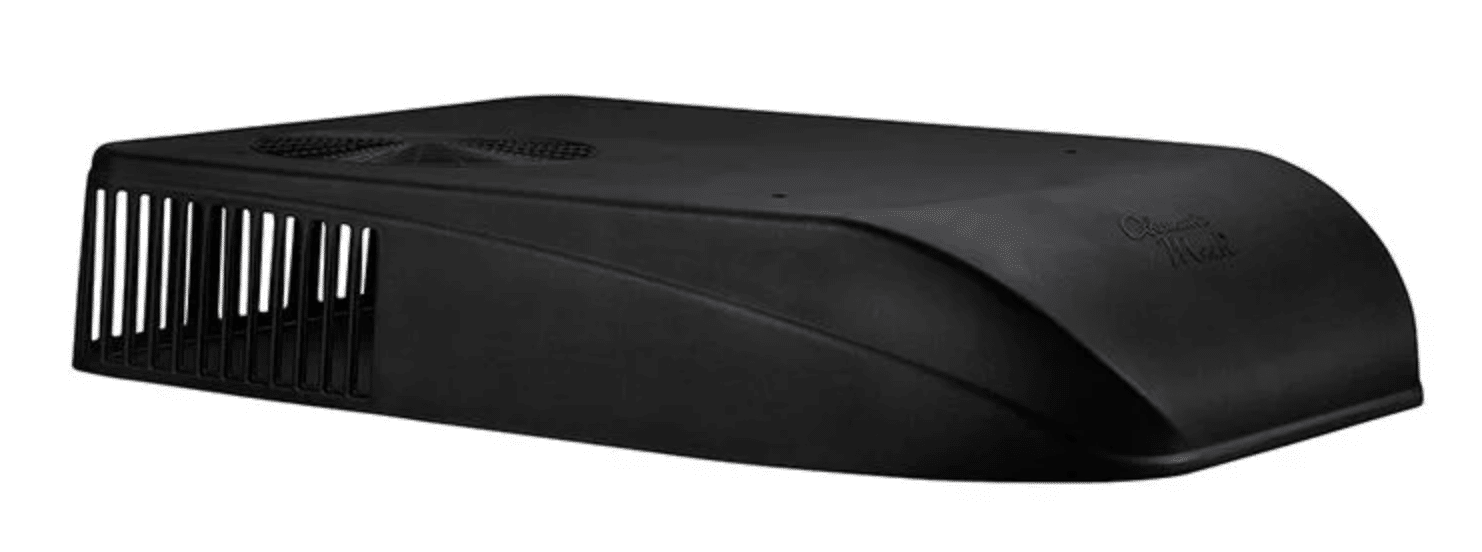
The Coleman Mach® is one of the most tried-and-true RV rooftop air conditioners. This high-performance air conditioner offers superior cooling and unrivaled durability.
| Profile Height (in.) | Weight (lbs) | Rating (BTUs) |
| 8.25” | 98 | 15,000 |
Dometic® Penguin II High-Capacity Air Conditioner

What’s unique about the Penguin is its low-profile design, which improves aerodynamics and helps reduce fuel costs. Pair this with a high-performance motor for maximum cooling power, and you have an excellent rooftop RV air conditioner.
| Profile Height (in.) | Weight (lbs) | Rating (BTUs) |
| 11.25” | 101 | 13,500 |
GE® R32 Deluxe RV Air Conditioner
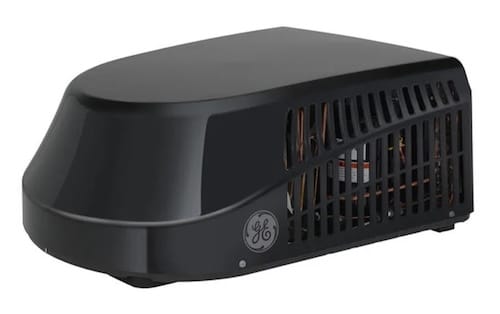
The GE® air conditioner is cost-effective and reliable. It has rubber grommets to reduce vibrations, a glossy shroud to increase aesthetics, and easy-to-maintain coils for cleaning.
| Profile Height (in.) | Weight (lbs) | Rating (BTUs) |
| 13.9” | 80 | 13,500 |
How To Choose an RV Air Conditioner
Finding the best RV AC takes some homework. There is an endless list of options and plenty of compatibility concerns. Let’s go over some common deciding factors to help you make a suitable choice.
Brand
There are two schools of thought behind choosing the right RV air conditioner brand. The first is matching the existing brand to ensure compatibility. The second is choosing a different brand, with the expectation that you may have to replace multiple components to ensure everything works together. It’s a good idea to pick one that offers a system with the features you need. Here are some of the top RV AC brands and units worth reviewing:
Size (BTU Rating)
When most people talk about an RV air conditioner’s size, they refer to its BTU rating. British Thermal Units, also known as BTUs, are essentially a measure of power. The higher the BTU rating, the greater its cooling capacity. Most manufacturers offer a smaller 13,500-BTU and a larger 15,000-BTU RV air conditioner. There are some oddball ratings as well, such as 11,000 BTU for smaller RVs.
Several factors, such as the size of the RV, insulation properties, and number of rooms, must be considered when choosing the correct size (AKA BTU rating) for your RV. We recommend sticking with the manufacturer’s suggestion, which you can get by calling the manufacturer directly with your vehicle identification number (VIN).
If your camper does not have an air conditioner and you want to add one, you can use the general size chart below as a guide.
| RV Length | BTU Requirement |
| <20 | 13,500 |
| 20-30 | 15,000 |
| >30 | 27,000-30,000 |
Manual or Electric
A manual system is controlled via the distribution box, so you must adjust settings directly on the ceiling or wall-mounted RV air conditioner. This may pose an issue if you’re shorter or have a high ceiling.
An electric system uses a wall-mounted thermostat for operation. Although most prefer a wall thermostat, manual systems are easier to install because you don’t have to run wires through the walls and ceiling.
Features
There are many features to consider, but not all brands offer the same options. It’s smart to select only what you need. Generally, the more features it has, the more expensive it will be. A few examples of standard features are listed below:
- Heat Pump – Provides extra heat in colder months. Works best above 40℉.
- Heat Strip – Designed to remove the chill, it should not be a primary heat source.
- Soft Start – Reduces start-up energy demands, allowing for a smaller generator.
- Condensate Pump – Channels condensation away from the roof and out a drain tube.
- RV Air Conditioner Soft Starter – Reduces the amount of power needed to start your A/C. Great for boondocking.
What Are the Different Rooftop Air Conditioner Components?
RV roof air conditioning systems are a collection of components that work together to deliver cool air throughout your camper. The main element is your roof-mounted AC, followed by the distribution box, a control module, and the thermostat. Some units come as a kit with all the needed items, whereas others require you to purchase them separately. Here’s how each component in the system functions:
The Cooling Unit
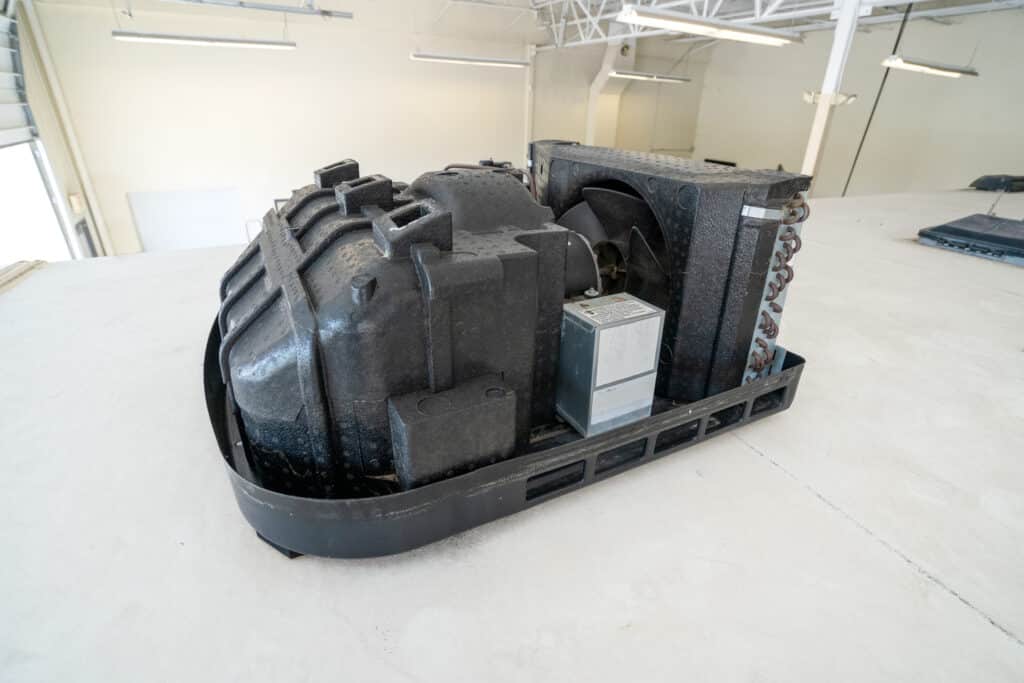
The main component of an air conditioner for RV roofs is the cooling unit, which houses the internal air conditioning components, such as the coils, condenser, and compressor.
Air Distribution Assembly
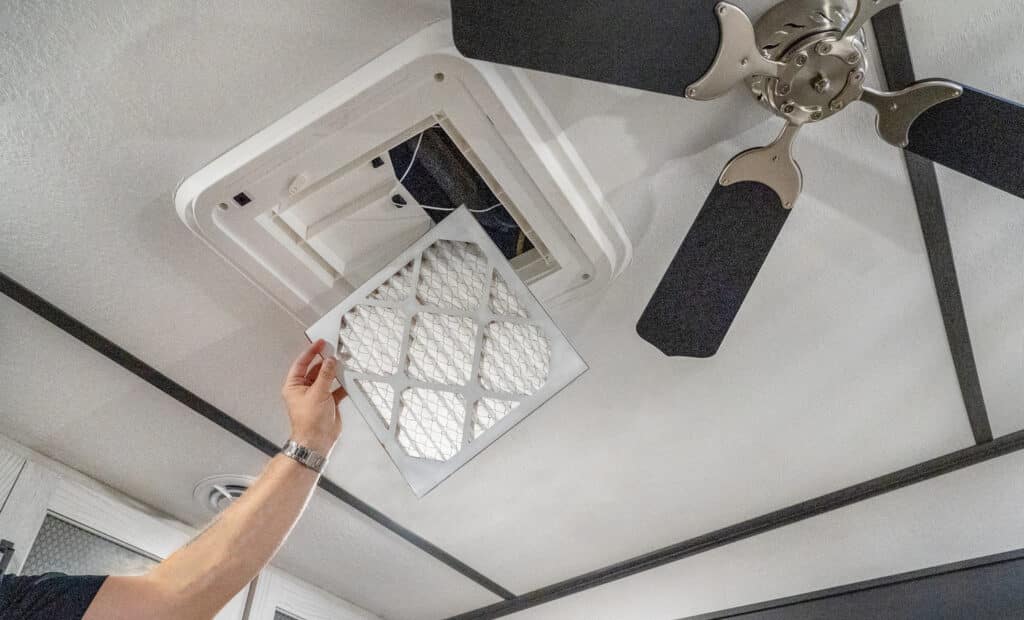
The air distribution assembly is mounted inside the RV, directly on the ceiling below the A/C unit. It distributes air throughout the RV through one or multiple vents.
Control Module
The control module is mounted to the distribution box or inside the unit. It controls all the settings, such as air speed and temperature. It is the system’s brain that communicates with the A/C unit, distribution box, and thermostat.
Thermostat
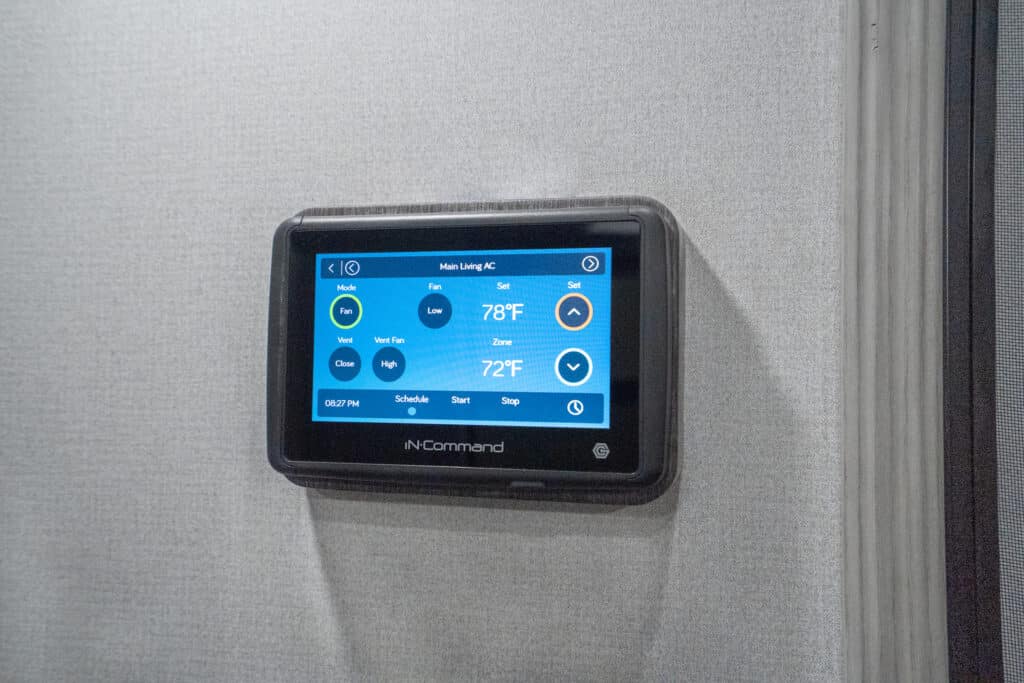
The thermostat tells the A/C unit when to turn on/off. It can be mounted on the wall (electric) or to the distribution assembly (manual).
Shroud
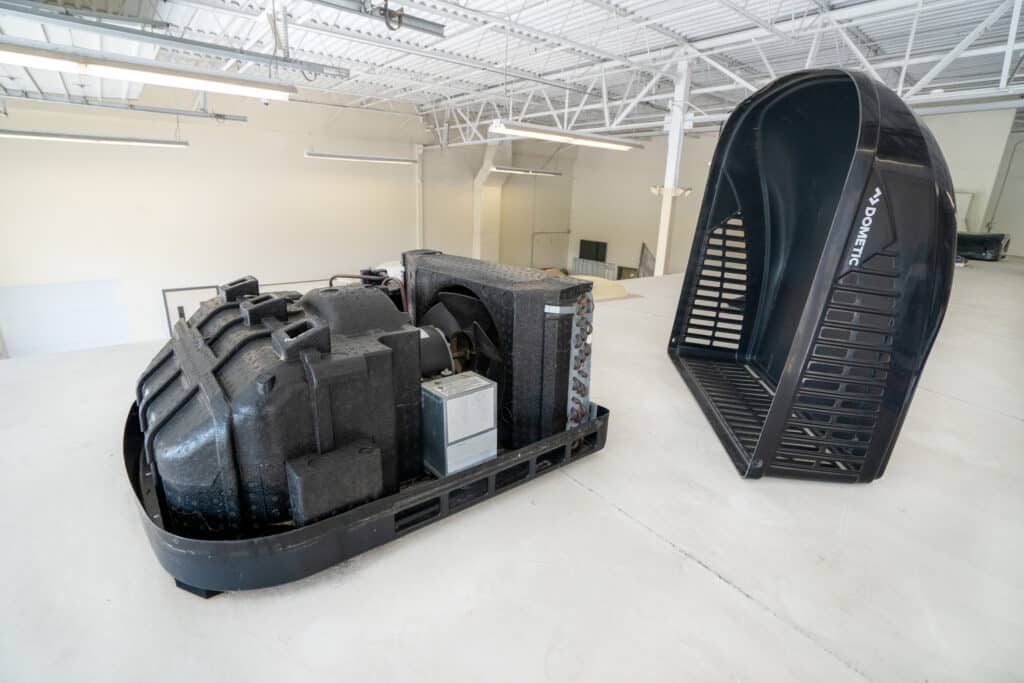
The shroud protects the air conditioner’s internal components. Typically constructed of polypropylene, these covers are durable and weather-resistant.
Air Filter
The air filter is installed inside the distribution box in front of the vent. It blocks allergens, such as dust, pollen, mold spores, and more, from entering the RV.
Do I Need An Air Conditioner Cover?
If you don’t have an RV cover, a rooftop air conditioner cover is noteworthy for protecting the assembly when your RV is in storage. Use an air conditioner cover to prevent dust, debris, moisture, and other potentially damaging substances from negatively impacting your vital components.
How Much Does It Cost to Replace an RV Air Conditioner?
The total cost of an RV air conditioner replacement depends on the unit, your roof configuration, and whether you install it yourself or have it professionally installed.
Unit cost:
A new roof-mounted RV air conditioner typically costs $900-$2,200 for a standard 13,500- or 15,000-BTU unit, depending on the brand and features (heat pump, soft start, etc.). Window and portable units generally cost less.
Installation cost:
Professional installation adds labor cost on top of the unit price. The exact amount depends on whether the replacement uses the same footprint as your existing unit (a straightforward swap) or requires roof modification for a different base.
The most cost-effective replacement is an RV A/C with the same base dimensions as the one you’re removing.
How Hard Is It to Replace an RV Air Conditioner?
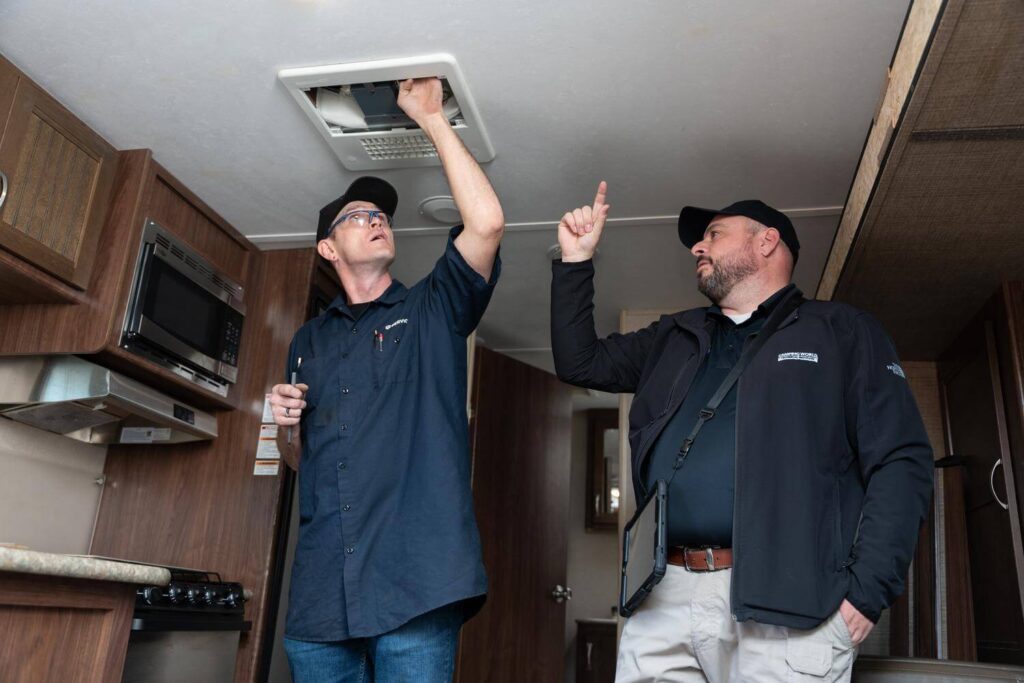
A compatible air conditioner swap with the same base footprint and mounting bolt pattern is potentially a DIY project for owners with the technical skills and confidence to do it. But it will still be difficult and may even alter existing warranties.
Most involve turning off all power to the RV, removing the interior ceiling assembly and exterior shroud, removing the old roof sealant, disconnecting the mounting bolts and wiring, lifting the old A/C off, cleaning the roof opening, positioning the new air conditioner in the roof opening with its fresh foam gasket, reconnecting the electrical lines, securing the bolts, and applying new roof sealant.
Proper gasket compression and sealing are also critical to prevent leaks. See our guide on why RV ACs drip water inside for torque and gasket compression tips.
There are swaps best left to certified RV technicians, such as those that require roof modifications, special drain and duct trays, installing lag bolts from the top down, and those with no ceiling assembly that requires special return air ducting. In some cases, the original components are no longer available. But in most cases, they are available and should be used whenever possible, since these modifications are complex and expensive.
Wiring is one of the biggest issues. The thermostat wiring, 12 VDC wiring, and 120 VAC wiring for the old unit may not be where the new unit needs them, may not be the same type, or may not exist at all. Miswiring or damaging the conductors can present electrical shock and fire hazards.
The most dangerous part is moving the awkward, heavy unit up and down from the roof. Most owners also lack fall protection, which increases the risk.
Technician Tip: Swaps such as converting to window units, mini splits, or 120 VAC to 12 VDC can be even more dangerous. These units are seldom UL approved for RV use, so they may not perform adequately, last as long, or be safe when used in an RV.
Professional RV Air Conditioner Installation
If you’d rather not tackle the swap yourself, or you’re interested in a non-compatible replacement that requires roof modification, Camping World’s certified technicians can handle the full installation, from removing your old air conditioner to properly sealing and testing the new one.
Our service centers also handle ongoing AC repair and maintenance, so your new camper A/C stays covered long after installation.
Having AC issues? Here’s a link to our complete AC troubleshooting guide for campers.
Let us know which RV air conditioner you prefer, or if you have any questions, in the comments below.
The post Choosing the Best RV Air Conditioner appeared first on Camping World Blog.
This is a companion discussion topic for the original entry at https://blog.campingworld.com/gear-and-accessories/choosing-an-rv-air-conditioner-unit/