RV power converters and inverters are essential to supply the correct type of electricity to your camper’s appliances. Whether you’re a new owner learning the difference between converters and inverters, or you’re an experienced camper troubleshooting why your RV power converter is not working, you’ve come to the right place.
This guide breaks down the essential functions of RV converters and inverters, common signs and symptoms of failure, and troubleshooting steps to resolve your RV power issues. It also breaks down when it’s time for professional assistance, and where to find it.
Key Takeaways
- Functionality: Converters transform 120V AC shore power into 12V DC to charge batteries and run lights, while inverters do the opposite, turning battery DC into AC to power household appliances like microwaves.
- Troubleshooting: Signs of failure include dim lights, slow fans, or non-functional outlets; testing involves using a voltmeter to verify battery health (12.3V–12.9V) and converter output (13.6V–14.4V).
- Maintenance & Safety: Users should check for blown reverse-polarity fuses, tripped breakers, and proper cooling fan operation before seeking professional help to avoid damaging sensitive electronics.
What Is an RV Converter?
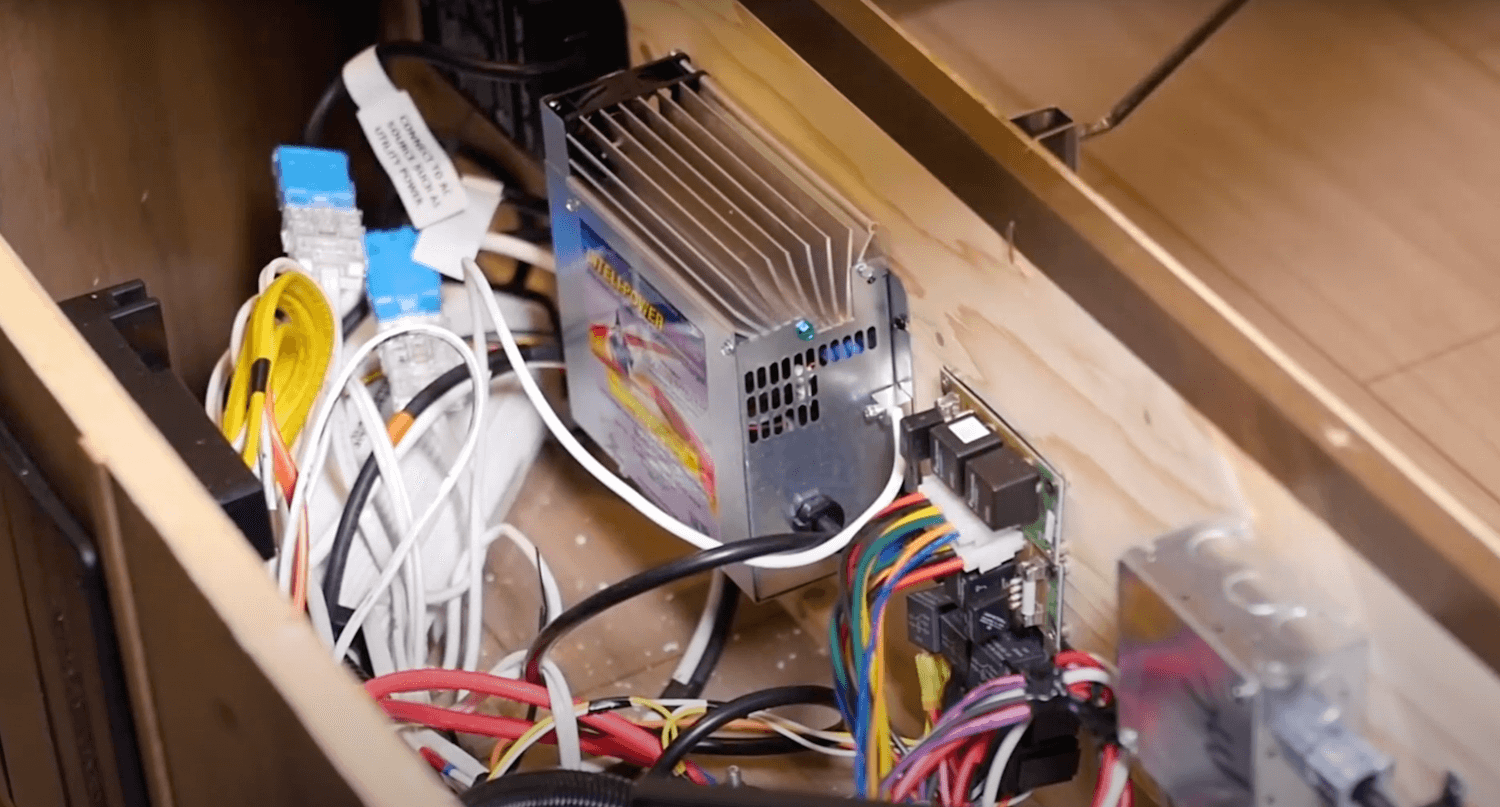
When you hook your RV up to 30 or 50 amp shore power, that power comes into your RV as alternating current (AC). An RV converter changes that 120-volt AC to 12-volt direct current (DC), allowing you to use appliances that require DC and charge your RV battery simultaneously. Your converter will typically be found next to your RV’s fuse box and breakers.
What Happens When the RV Converter Goes Bad?
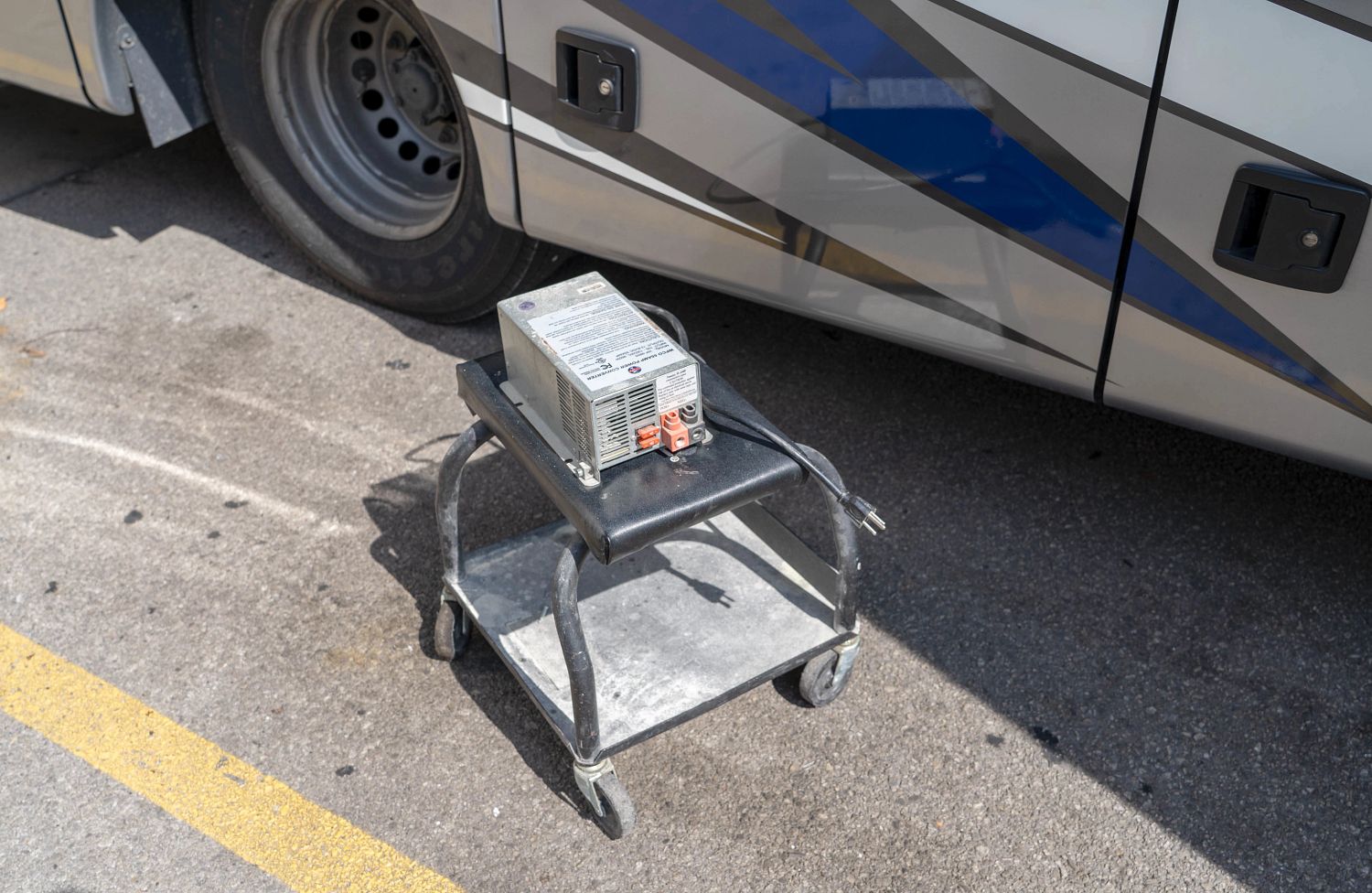
If your RV power converter is not working, you’ll typically see one of three main warning signs. These can vary depending on make and model, but you’ll typically see one of three things when your RV converter goes bad:
- Onboard batteries won’t hold a charge. This could be a bad battery or a bad converter, so further testing is required.
- Interior lights aren’t as bright as usual.
- Vent fans are spinning slowly.
Both of these final points can be signs that these small RV appliances aren’t getting enough power.
How To Test an RV Converter
Testing an RV converter is a delicate process that must be completed in the correct sequence. Consult your owner’s manual for the manufacturer’s specific testing instructions, as the exact voltages and recommended testing sequence may vary by model. However, these quick tests will help you test most RV converters:
Test Your Coach Battery
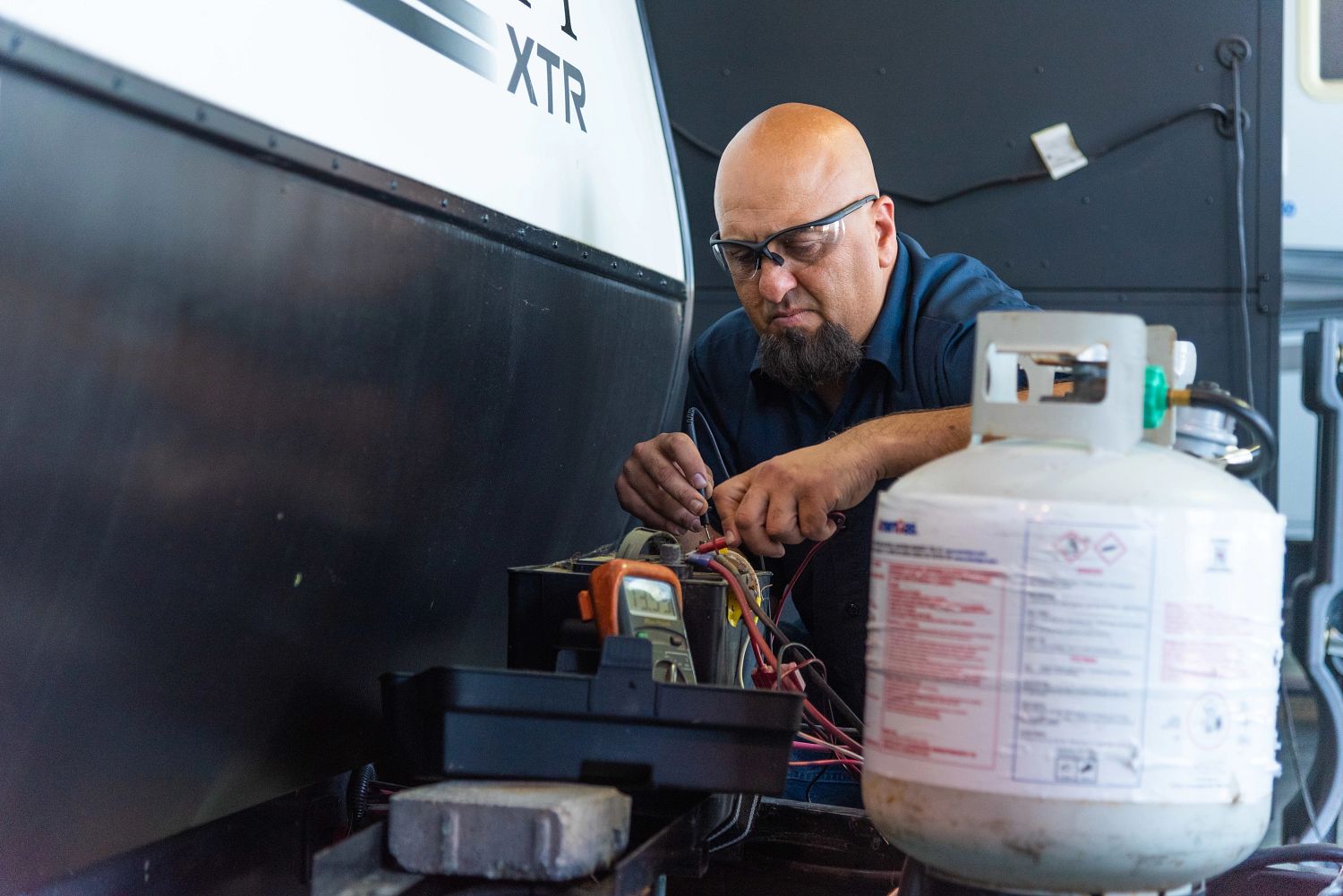
Start by disconnecting from all power sources. Remove the RV plug from the shore power pedestal and turn off the engine, generator, and inverter. Connect a voltmeter to the battery terminals, and set it to the Volts DC setting.
Your battery should maintain a consistent charge between 12.3 and 12.9 Volts DC. If you get a reading below 12.3 Volts DC, recharge the battery with a battery charger until you get a reading between 12.3 and 12.9 Volts DC. Then wait 2-3 hours and re-test. If your battery isn’t holding a charge, it needs to be replaced.
Test Your Converter’s Output Voltage
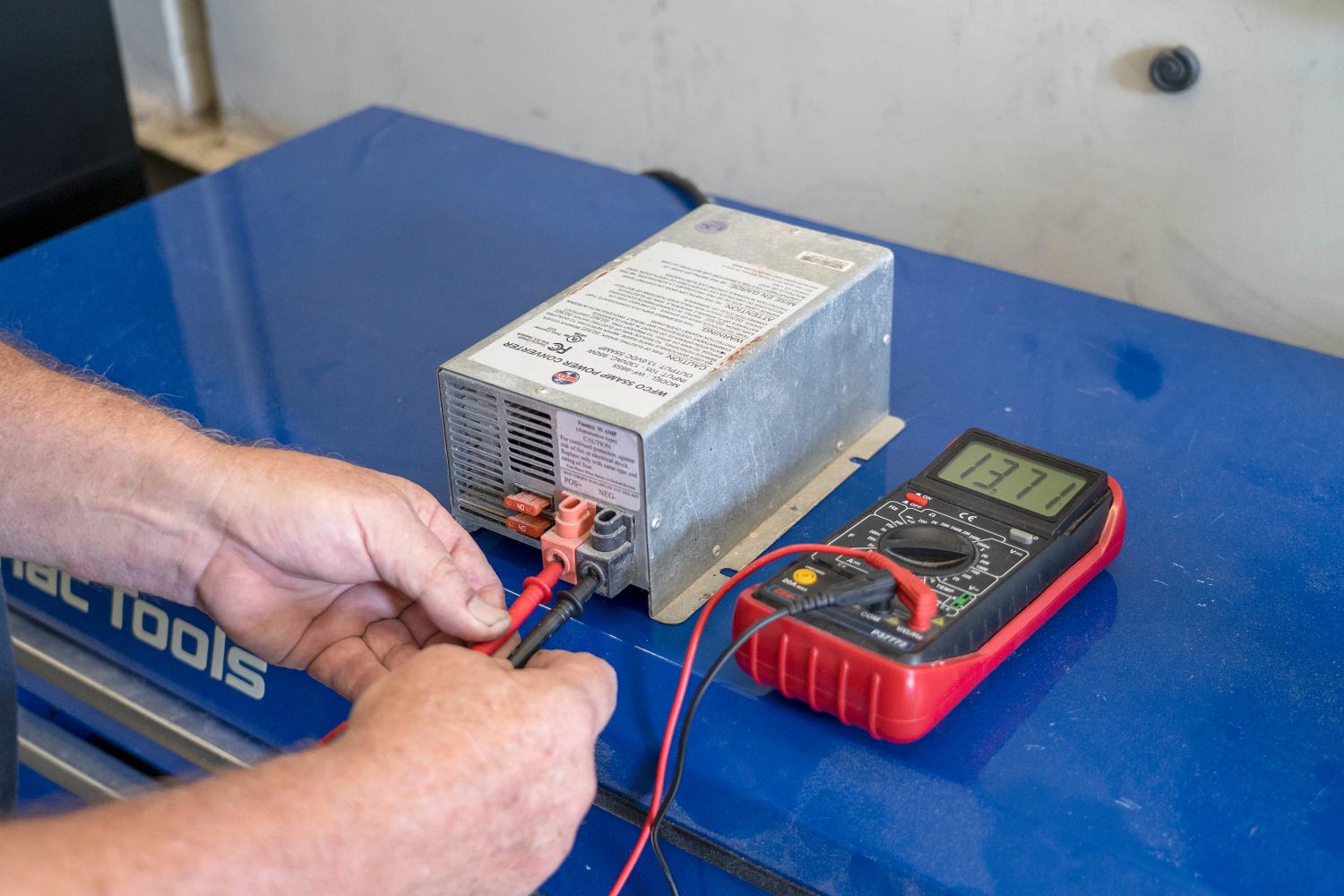
Begin by plugging your RV into a reliable AC power source. Set your voltmeter to the Volts DC setting and follow these steps:
- Place the meter’s probes on the battery cables or terminals. Red probe to the positive battery wire. Black probe to the negative battery wire.
- Ensure good connections to the cables.
- The voltage should read between 13.6 and 14.4 Volts DC if the converter is functioning correctly.
If the output voltage reads below 12.3v or 0.0 Volts DC, or the battery isn’t charging:
- If equipped, ensure the battery disconnect switch is in the normal use position.
- Check for an open inline fuse in the battery wire circuit.
- Check for loose wiring connections.
Check for a Reverse Battery Hookup
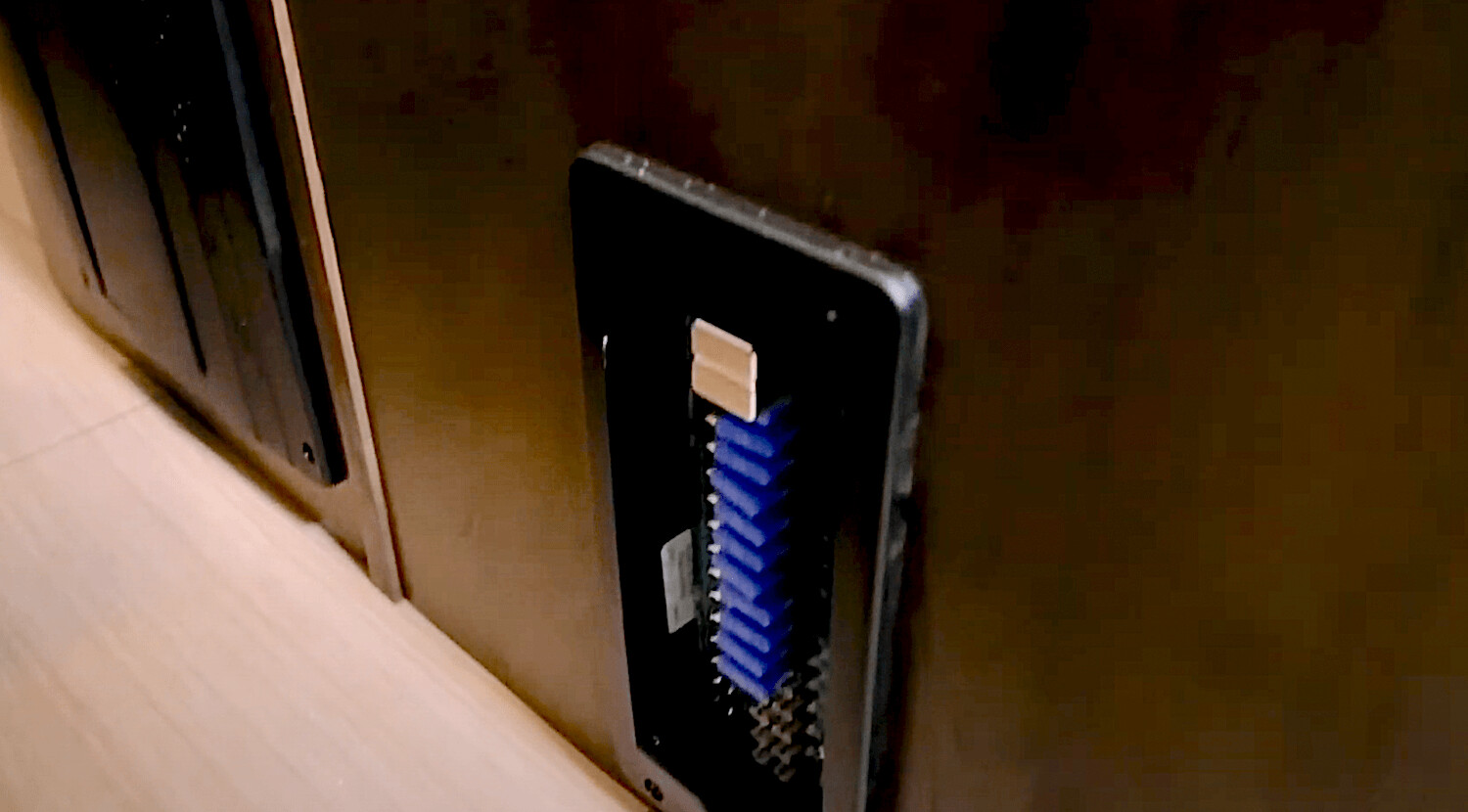
This is a smart test to perform if no DC output is being measured from your converter. Follow these steps:
- Check the reverse polarity fuses on your RV’s fuse board.
- Visually inspect them for breaks in the fuse element.
- If no breaks are found, use a continuity tester to test for continuity.
If you find blown fuses, it’s a sign that your RV battery was connected in reverse. This could be the case at the battery or the converter. Check the cables at both locations and reconnect them properly. Replace the blown fuse with a fuse of the same type and Amperage rating as the original.
Technician Tip: If no blown fuses are found, the connections to the battery and/or converter aren’t reversed, and you’re still getting an output voltage of less than 12.3 Volts DC, contact the manufacturer or your nearest Camping World Service Center for further troubleshooting assistance.
Some RV converters also feature AC reverse polarity protection. If the AC neutral wire and the lead wire coming into your converter are connected backward, this protection feature triggers and shuts down your converter.
Some converters may have an audible alarm that sounds when the AC wires aren’t connected properly. If your converter is equipped, the alarm will continue to sound until the wires are appropriately reconnected.
Will an RV Converter Work Without a Battery?
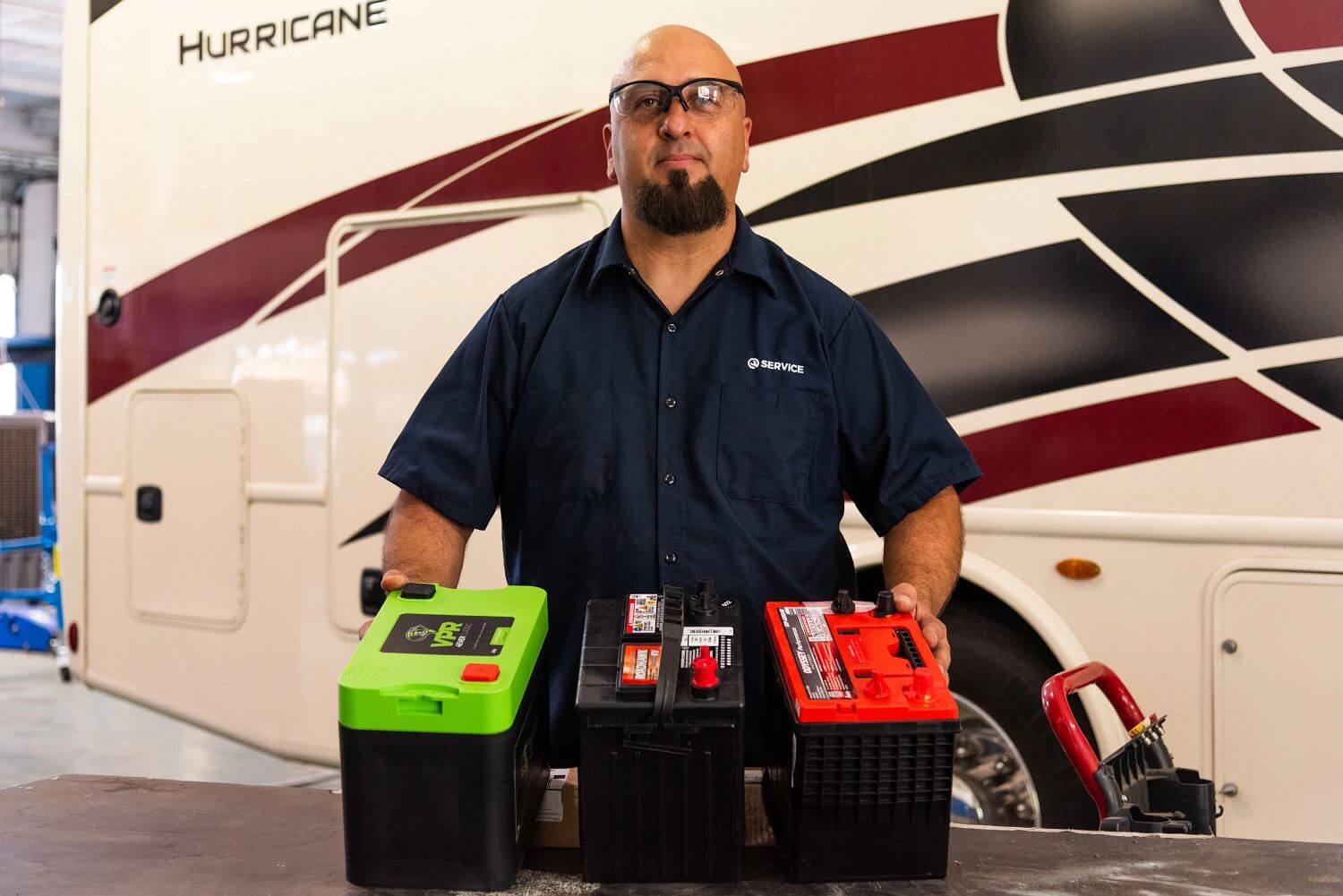
If your RV is unplugged and your battery dies, you’ll be without power in your coach. Using your RV without a battery isn’t recommended, as the 12-volt components inside often draw more amperage than your converter can supply.
Your battery is essential for powering these components safely. If your RV is plugged in and the battery is disconnected, some small electronics, such as RV lights, may work solely on the converter. However, maintaining a healthy RV battery is essential to safe RV use.
If you do need to disconnect your battery for any reason, power off all 12-volt appliances inside. Then consult your owner’s manual for the proper disconnection and replacement procedures.
What Does an Inverter Do in an RV?
If you aren’t using a generator, installing an RV inverter is a good idea if your RV didn’t come with one pre-installed. RV inverters change DC to AC, but you’ll need to consult your owner’s manual for specifications on what type of inverter suits your RV and the appliances you want to power.
How To Test an RV Inverter
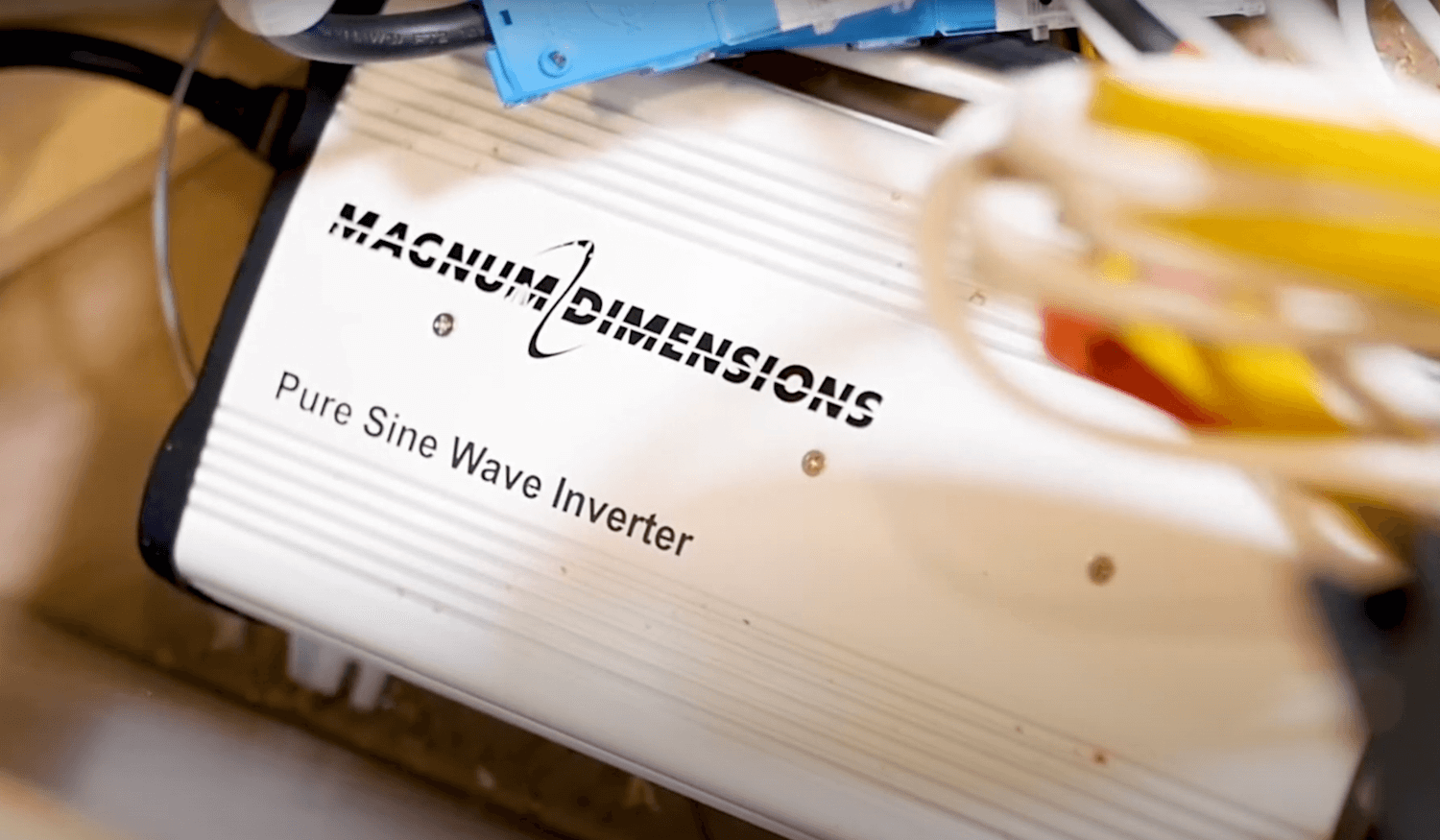
Use this sequence to test if your RV’s inverter is functioning correctly:
- Disconnect from shore power and other power sources (like an RV generator).
- Turn on appliances powered by the inverter. The microwave would be the best to test with. If an appliance is working, turn it off before testing another appliance.
- After checking appliances, plug a small accessory into any outlets powered by the inverter to test them.
Most RV inverters only operate one or two circuits of your RV’s electrical system. Some luxury RVs and motorhomes offer the ability to invert all circuits using multiple inverters. But most RV inverters power specific outlets or appliances, such as your refrigerator, microwave, or television.
Your owner’s manual will tell you which outlets or appliances should be powered by your inverter. But if you’re having trouble locating that information, contact your RV’s manufacturer.
If all the appliances and outlets on the inverter’s circuits are working properly, your inverter is doing its job. But further troubleshooting is required if you encounter a lack of power at any outlet or appliance.
How To Troubleshoot RV Inverters
Different symptoms will call for different RV inverter troubleshooting procedures. Because there are various converter makes and models, your owner’s manual is your best resource for specific troubleshooting procedures.
That being said, here are some general troubleshooting tips for RV inverters:
Check for Adequate DC Power Supply
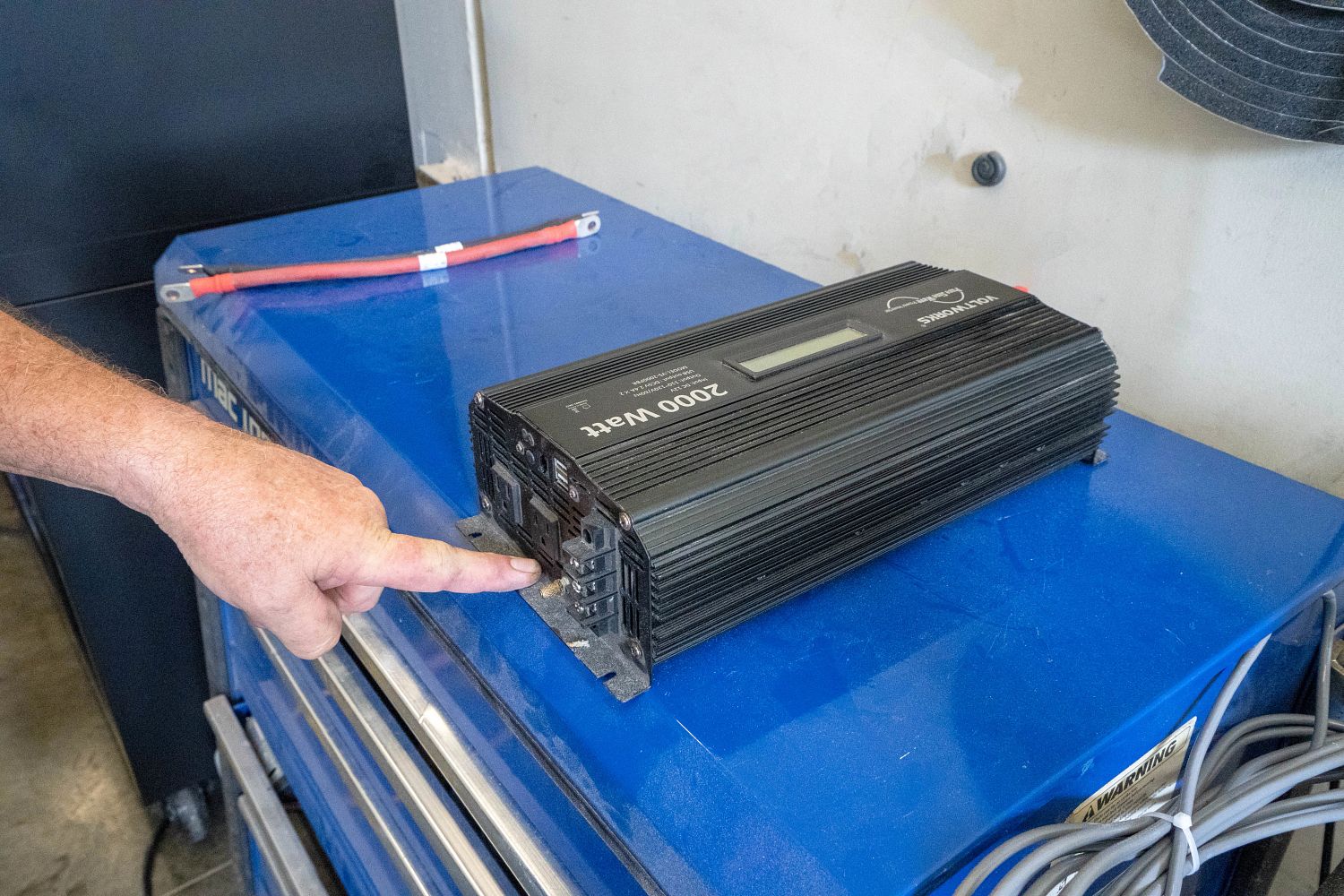
Most inverters are equipped with a status light. If the status light is off, you usually have one or two problems: the inverter is switched off, or there’s no DC voltage connected to the inverter.
To remedy:
- Switch the inverter on.
- Connect a battery with the correct voltage.
A healthy RV battery should have a voltage above 12.5 Volts DC. If the voltage is between 12.5 and 10 Volts DC, your battery may be wearing out, but it may just need to be charged. Charge it until you get a reading of about 12.5 Volts DC and wait 2-3 hours before retesting.
If the voltage is below 10 Volts DC on the initial test, your battery may be bad, but it may also need to be recharged. If there’s a continuous draw on the battery, such as a light left on, it could draw the battery below 10 Volts DC. While this may shorten the battery’s life, it doesn’t mean you have a bad battery.
Learn more about testing RV batteries to ensure your RV has healthy engine and coach batteries. If your RV isn’t holding a charge or is past its serviceable date, you’ll need an RV battery replacement before further testing.
Test Incoming AC Voltage
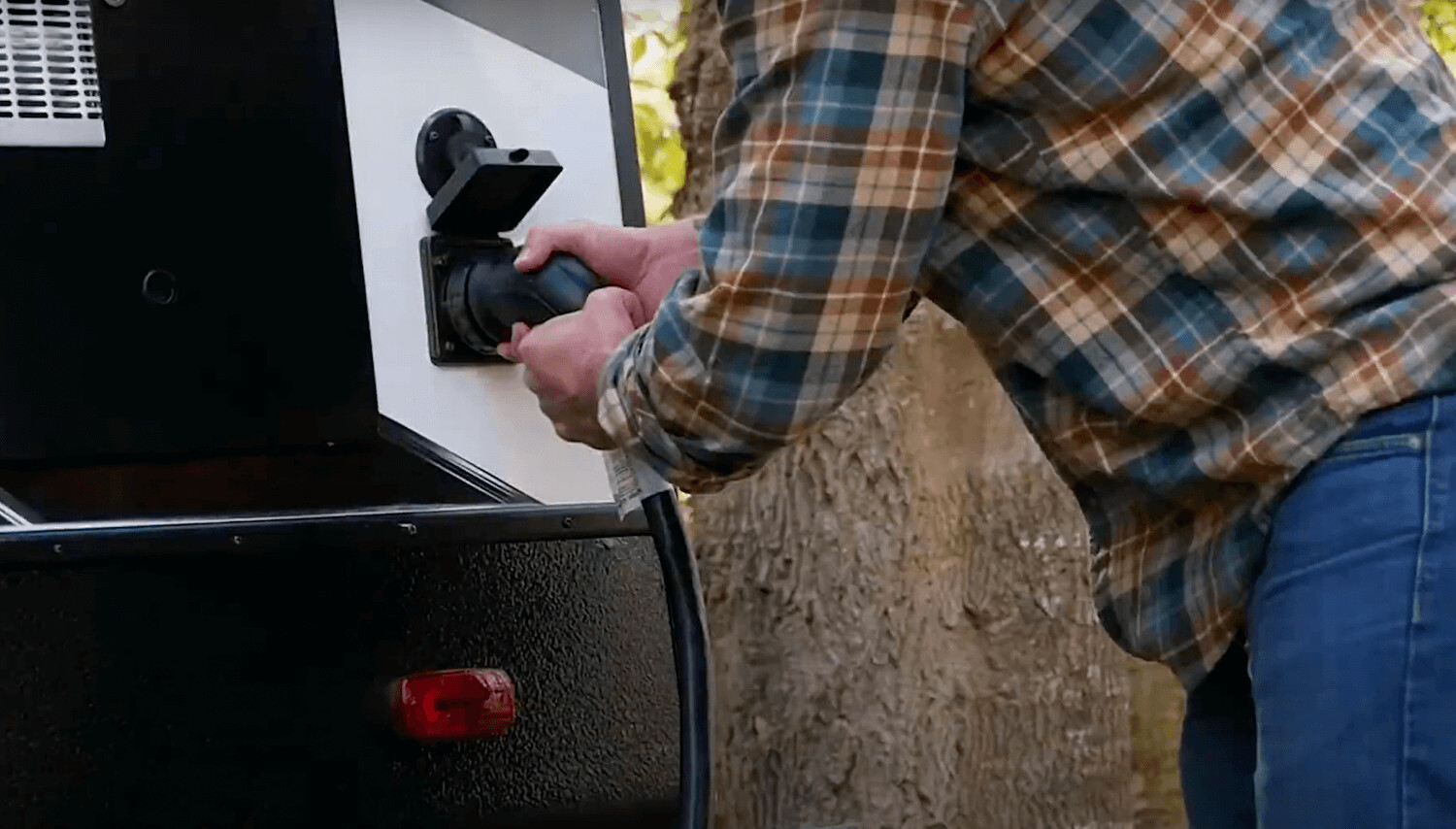
Some units are equipped with a dropout setting that disconnects the unit from the AC power when the incoming AC voltage is below the programmed threshold (80 Volts AC is standard on many units).
To test:
- Set the voltmeter to the Volts AC setting.
- Connect meter probes to the AC neutral and lead wires. Red probe to lead wire. Black probe to neutral wire.
- Ensure voltage is present and above your inverter’s Volts AC dropout level.
If it is below the minimum threshold, you have an inadequate shore RV power source that could damage your RV’s electrical system. You should already be utilizing a surge protector to protect your RV, but disconnect immediately if you find low voltage.
Learn more about surge protection for campers.
Check Circuit Breakers and Fuses
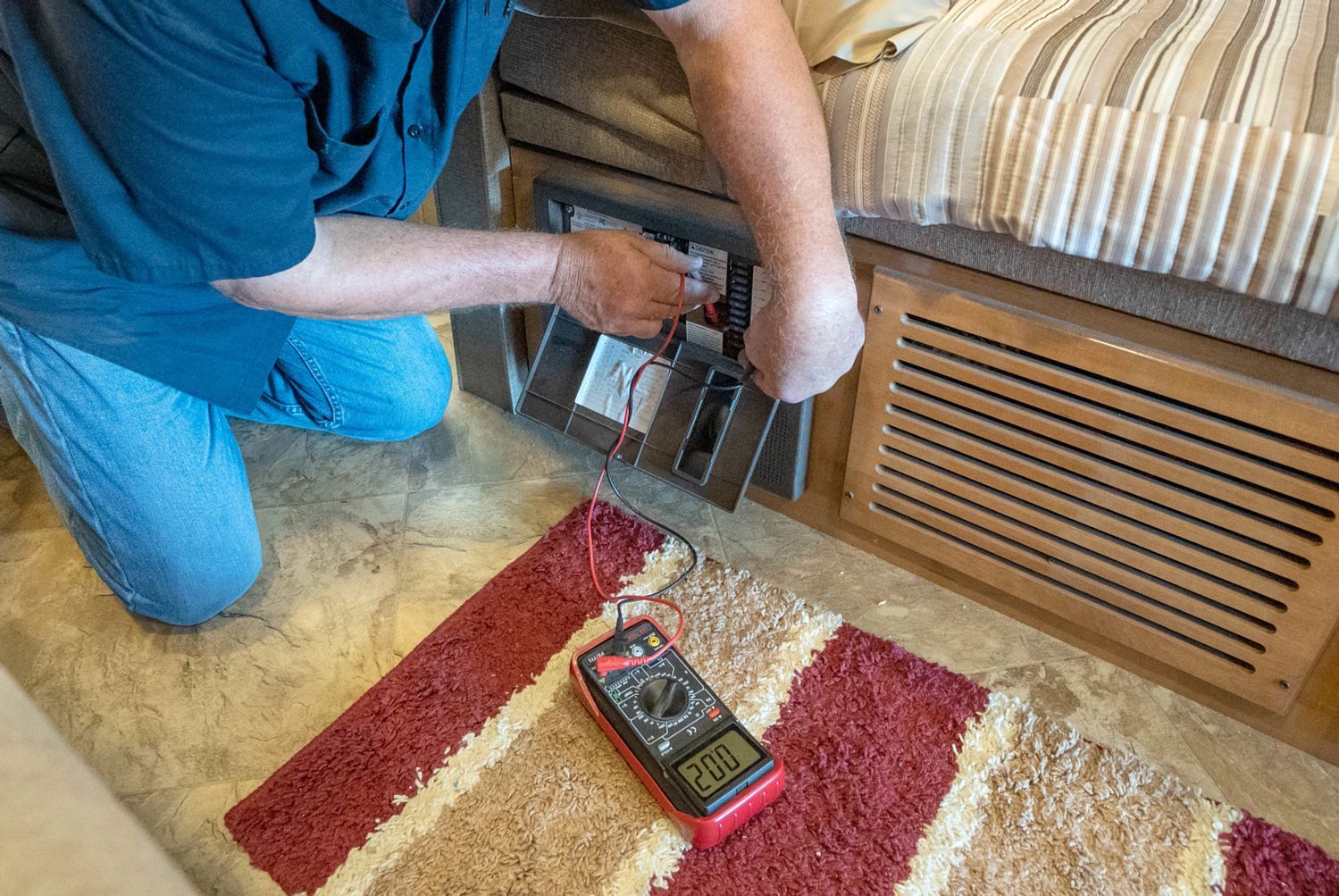
Begin by turning off any and all appliances/devices that aren’t functioning properly. Then, follow these steps:
- Locate your RV’s electrical panel (consulting your owner’s manual may be necessary).
- Identify the breaker that serves the malfunctioning device/appliance.
- The chart on the inside of the panel door should indicate which breakers serve which parts of your RV.
- Note the position of the breaker’s handle. If it’s tripped, it’ll be between the On and Off positions.
- To reset, push the handle to the Off position, then return it to the On position.
- Turn the malfunctioning device/appliance on to test.
- Leave it on for 30-60 seconds to confirm it’s working properly.
Technician Tip: If your breaker trips again or keeps tripping, there are two possibilities: a defective breaker or an appliance drawing too much power. In either case, consult an RV service technician for advice.
Examine the Cooling Fan
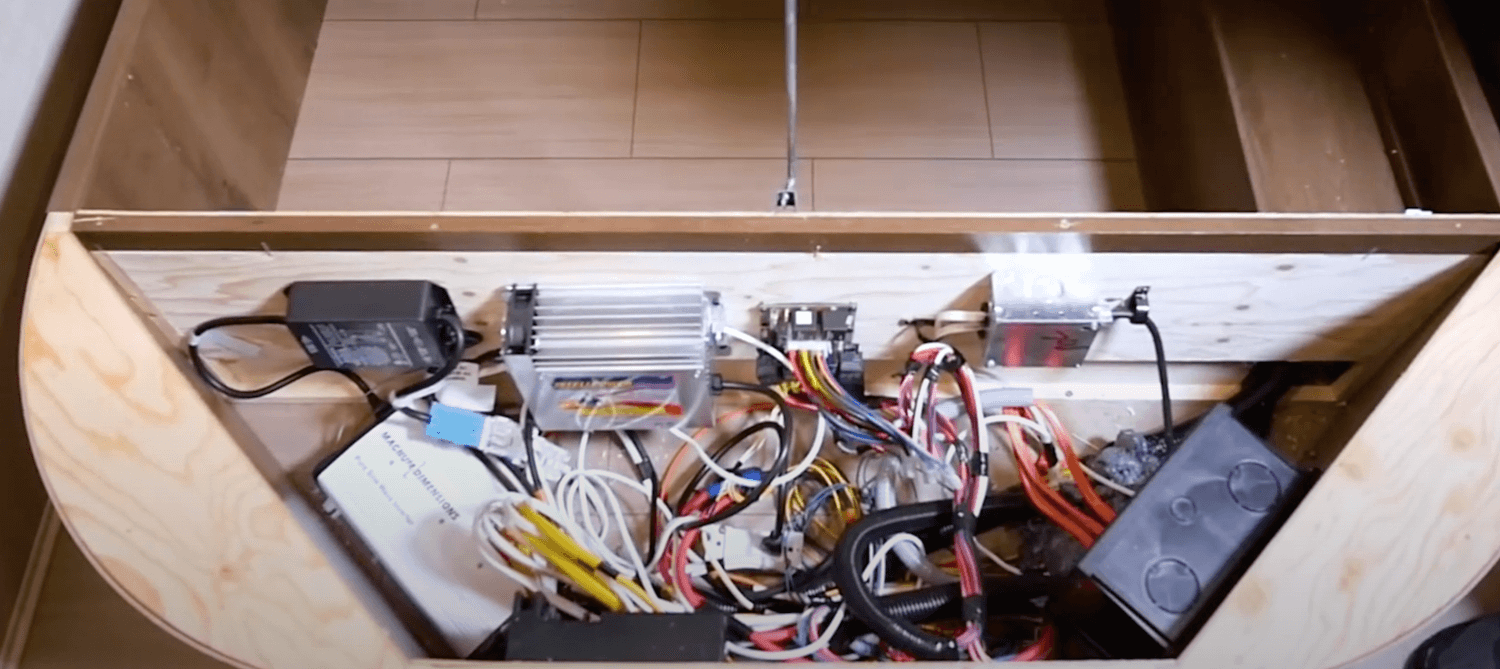
If no issues are present with your battery, incoming AC shore power source, circuit breakers, or fuses, your inverter’s cooling fan could be the culprit. The fan should cycle on and off periodically when your inverter is in use.
Listen for the fan to cycle to ensure it’s functioning properly. Heat buildup can melt or damage critical inverter components if it doesn’t.
To check:
- Visually inspect your inverter for melted parts or other deformities.
- Ensure there’s plenty of open space around the inverter to allow airflow.
When To Seek Professional Assistance
Working with RV electrical systems can be tricky. While they’re not overly complicated, minor errors when troubleshooting can damage sensitive appliances. If you’re uncomfortable with any of these troubleshooting steps, you’re better off scheduling an appointment at your nearest Camping World Service center.
Use these additional resources to troubleshoot other RV components:
- Air Conditioner Troubleshooting Guide
- RV Circuit Breaker Keeps Tripping?
- RV Furnace Won’t Light?
- Troubleshooting Electrical Systems in RVs
Is your RV power converter not working? Tell us more about the symptoms you’re experiencing in the comments below!
The post Camper Converter & Inverter Troubleshooting appeared first on Camping World Blog.
This is a companion discussion topic for the original entry at https://blog.campingworld.com/learn-to-rv/troubleshooting-converters-inverters/