Editor’s Note: This post is written by a member of LTV’s sponsored content team, The Leisure Explorers. Do you own a Leisure Travel Van and enjoy writing? Learn more about joining the team.
Lessons of a Civil War Prison Where 13,000 Died Are Ignored at Our Peril
If there is one lesson to be learned from touring Andersonville National Historic Site, the worst prisoner of war compound that ever existed on American soil, it is that what happened there was definitely not an isolated case. It has already been repeated elsewhere, and if we grow complacent again, could it happen again? Absolutely.
The Civil War Confederate prison at Andersonville, Georgia, existed for only 14 months, from February 1864 to the war’s end in April 1865. But visiting here tells both a lasting story of the inhumanity we humans can inflict upon each other, and how a perfect storm of events and decisions combined to make this 26-acre patch of ground 60 miles southeast of Macon a living hell for its Union Army prisoners. It is a dreadful, lasting monument to that inhumanity on American soil.
There is nothing joyful about a visit here. It is tough. It is grim. Because it is an experience meant to teach. You owe it to yourself to visit and try to understand and contemplate what happened here. Andersonville should not be thought of any other way except as a concentration camp, not unlike those in Europe. And it is a warning. It can happen again. Because it has. Here’s part of what you’ll try to and should take in.
The exact number may never be known, but from records secretly kept by one prisoner, at least 13,000 died there and were buried in what is now part of Andersonville National Cemetery. Sometimes, it was 100 men a day. Its official name was Camp Sumter, but everyone knows it as Andersonville.
Now set aside as the Andersonville National Historic Site, the prison grounds are just a short walk or ride in your LTV from the town of the same name, which in 1864 held perhaps 20 residents. Today, it isn’t much bigger, about 230.
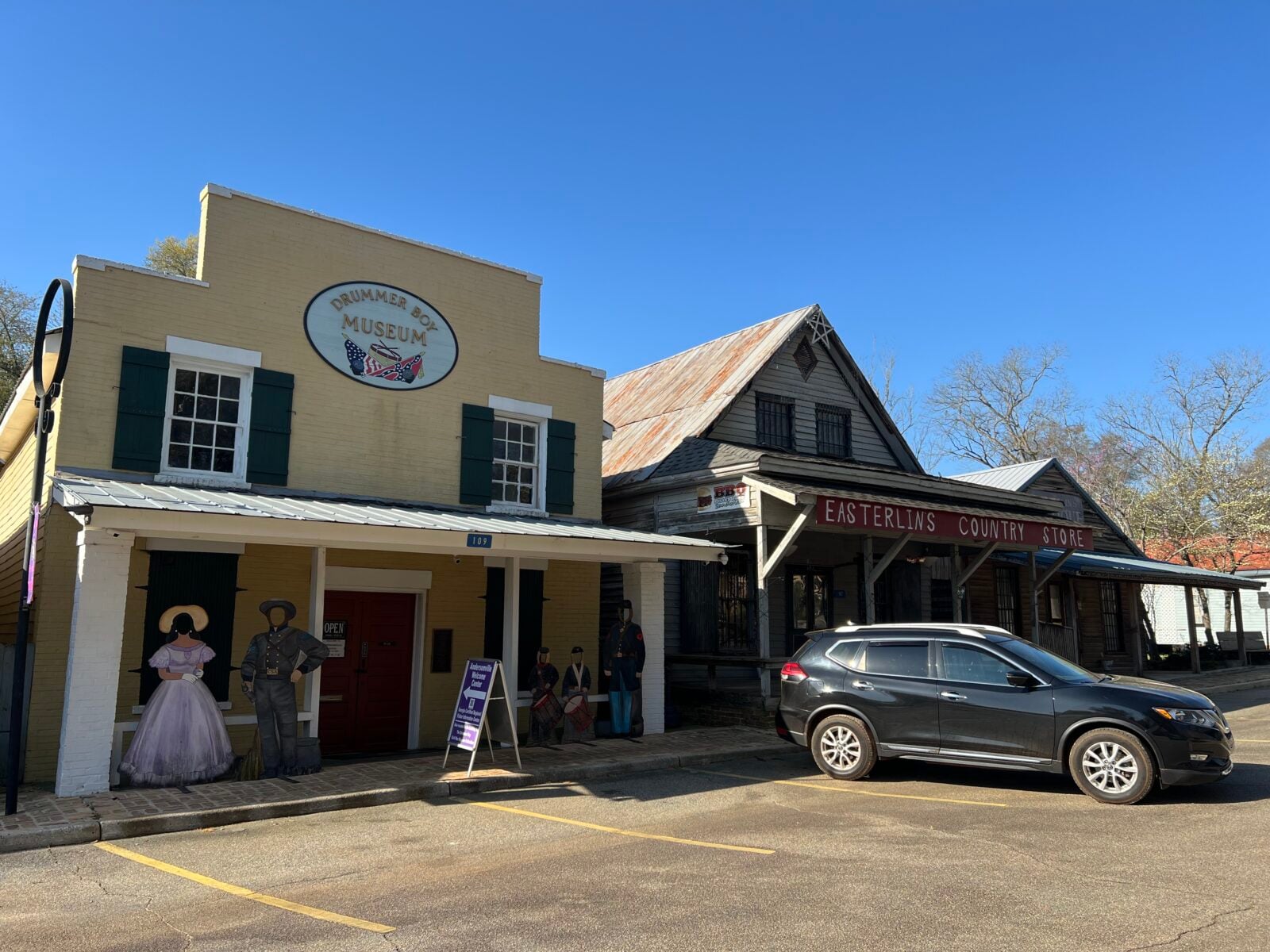
Our visit reminded us of the concentration camp Denise and I visited in Austria, just outside the town of Mauthausen, where at least 200,000 died at the hands of the Nazis. Tiny Andersonville had a somber, unsettling feel for me, from the downtown museum, which tries to portray a balanced view of what occurred here, to the obelisk dedicated to the prison commander, Captain Henry Wirz. Listen, and you could almost hear the cries of the dying.
Depending on what story you choose, Wirz was either unable, overwhelmed by, or indifferent to what was happening inside the log walls for those 14 months. Or maybe it was a horrific combination of all of them. Wirz, who some portray as a scapegoat for government and army failures, was tried and hanged. His last words? “I was only following orders.” He was the only soldier in the war executed for war crimes.
Nothing remains of the prison. Its 15-foot high log walls and two gates that used to surround what is a grassy 26-plus acre field pocked by monuments to the soldiers who were imprisoned and died here.
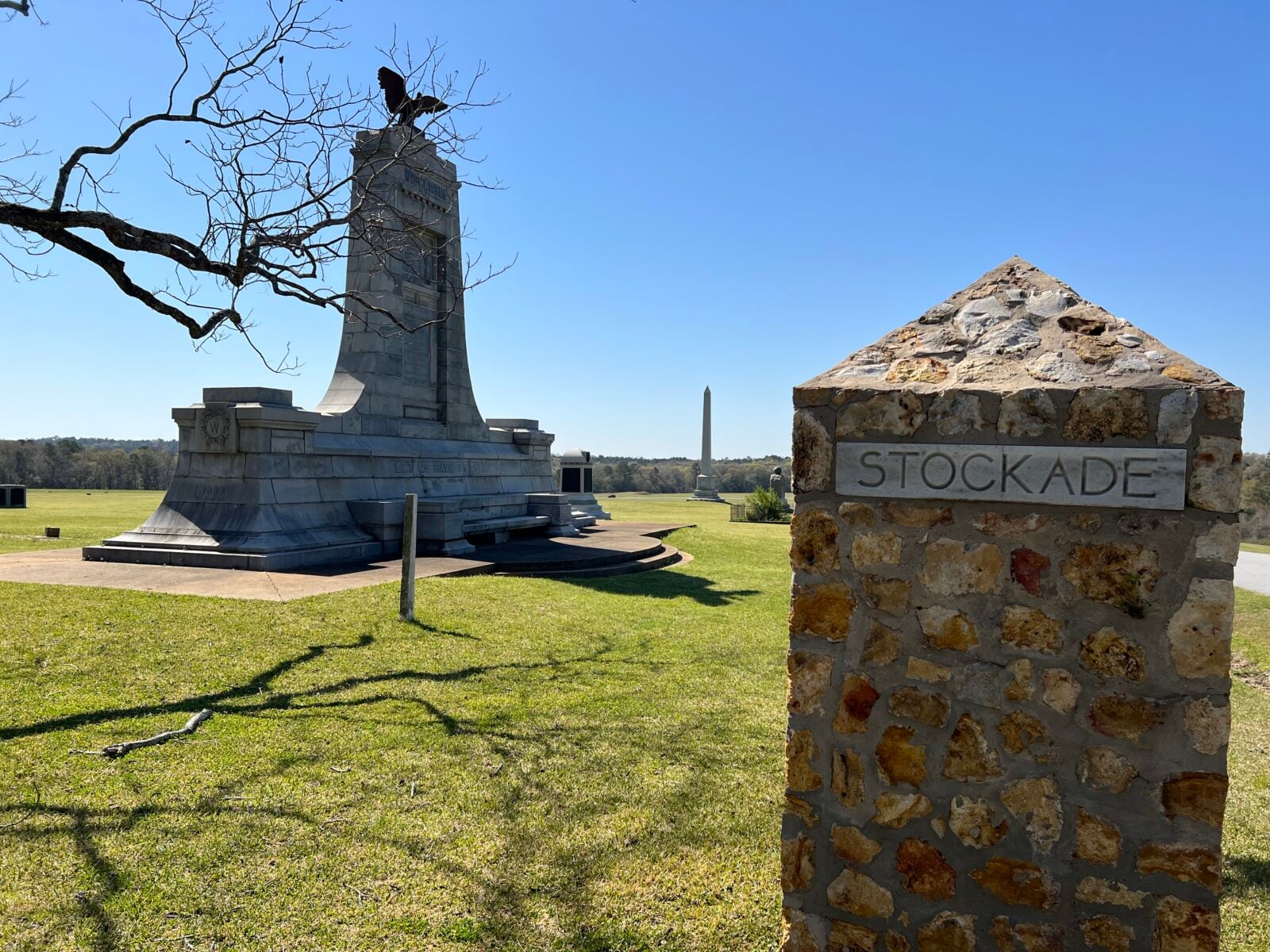
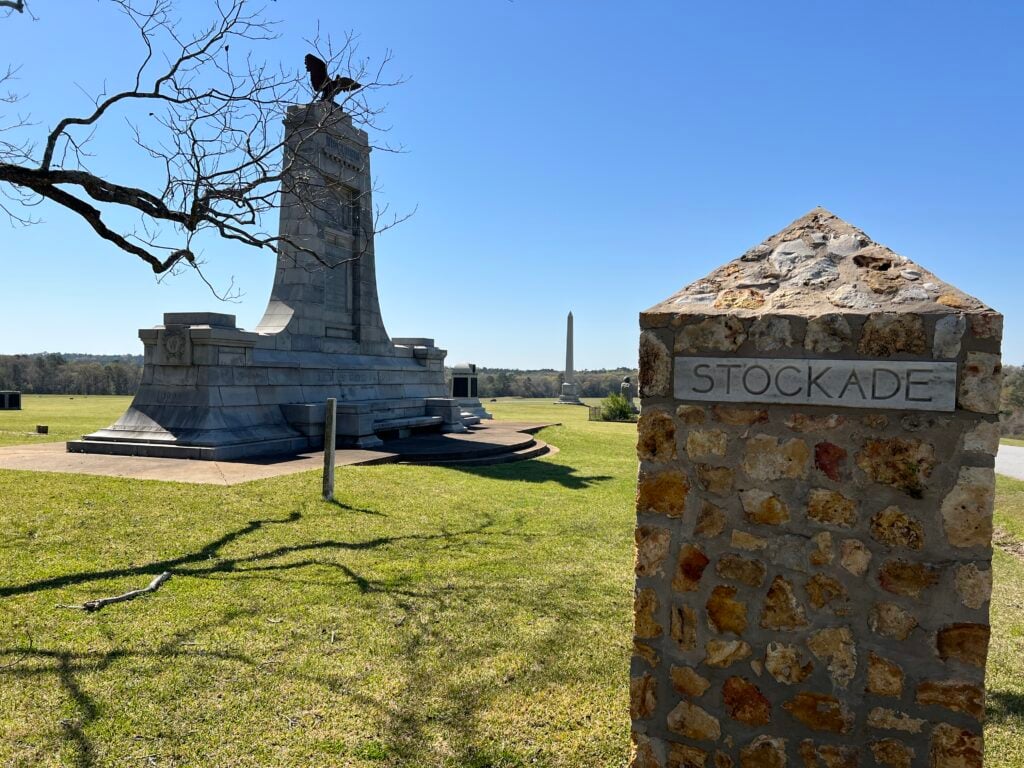
The former stockade walls are marked at each corner by stubby stone monuments. In 1864, however, that peaceful field became a Georgia red-clay, muddy, lice- and maggoty swamp or dust bowl, depending on the weather, covered everywhere by makeshift tents and lean-tos. There were no barracks.
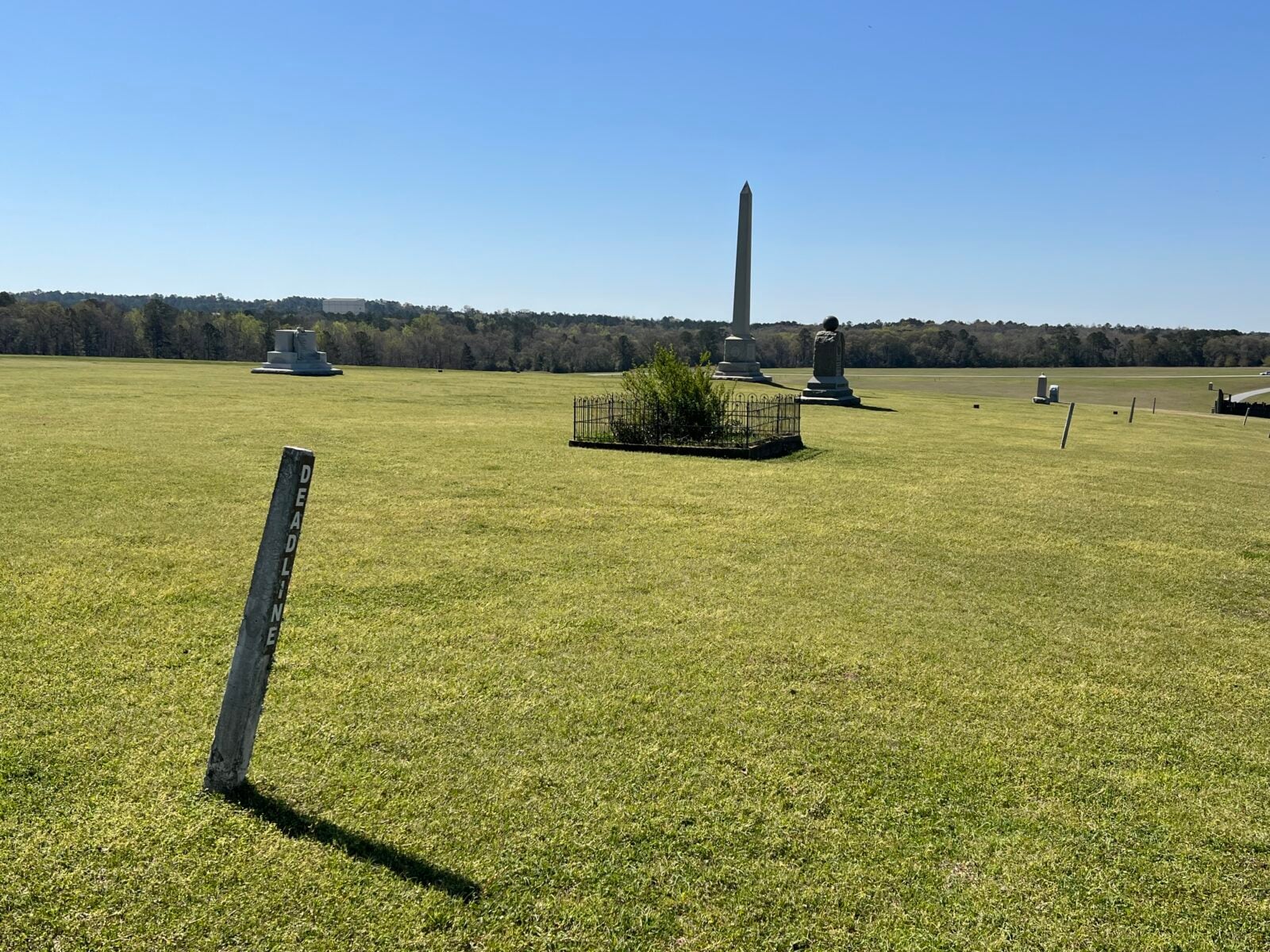
About 20 feet inside that stockade line today, white posts denote the “dead line.” Those who stepped beyond that small single fence that looked like a continuous hitching post were shot dead by guards from what prisoners called “pigeon roosts” every 30 yards along the wall. It was also how some prisoners deliberately ended their suffering because they could no longer take being there. Some say that’s where the term “deadline” came from.
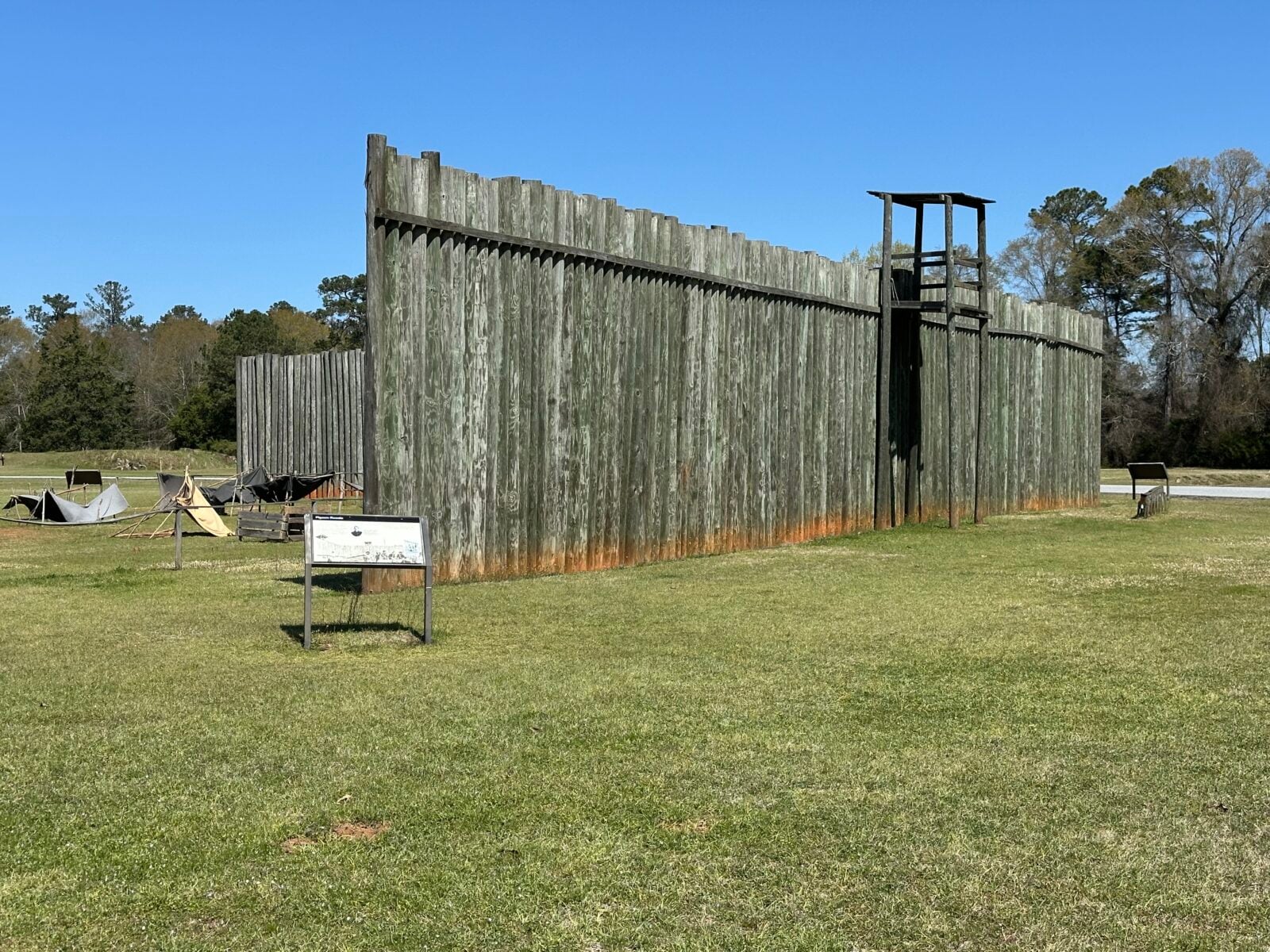
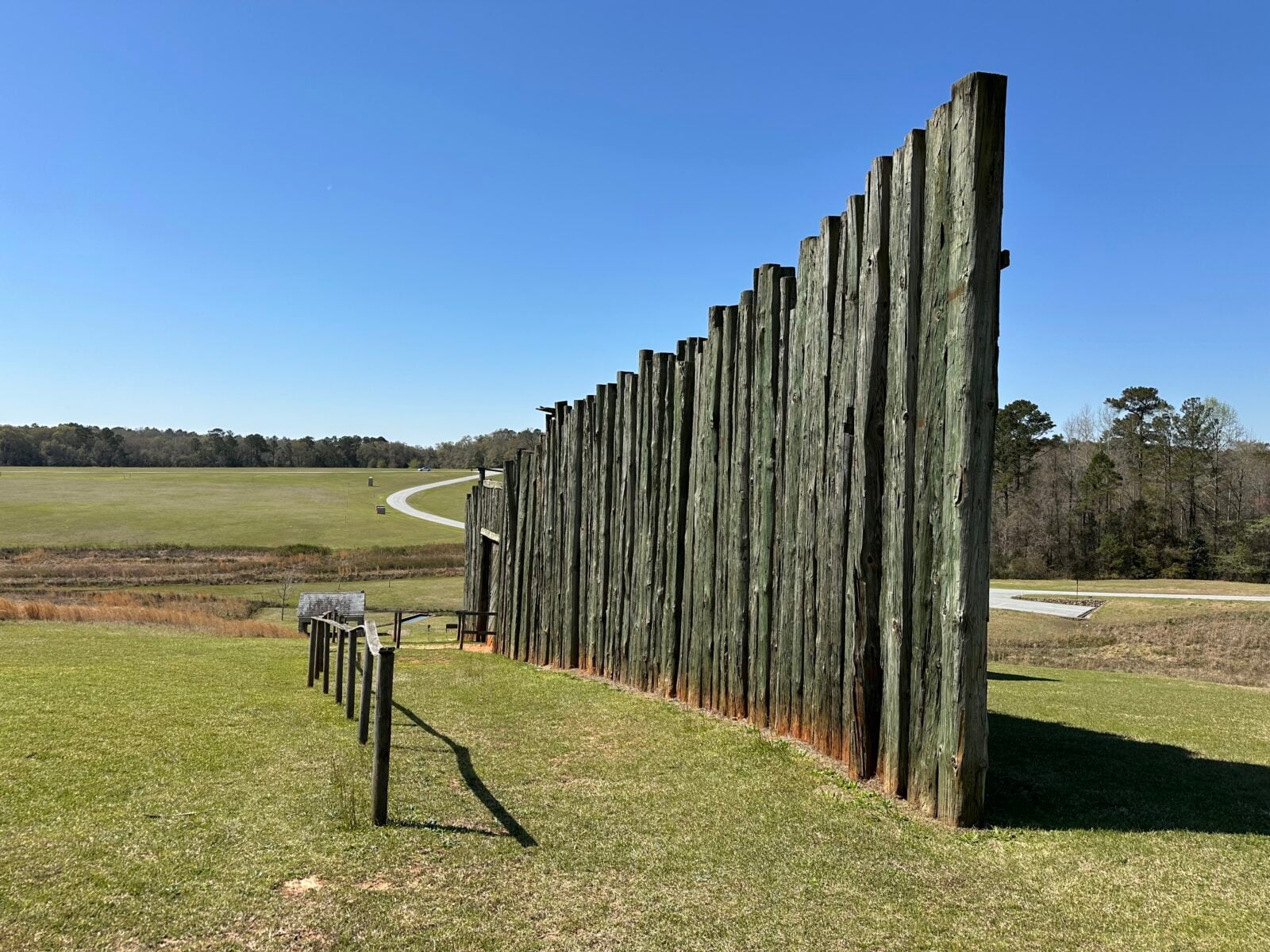
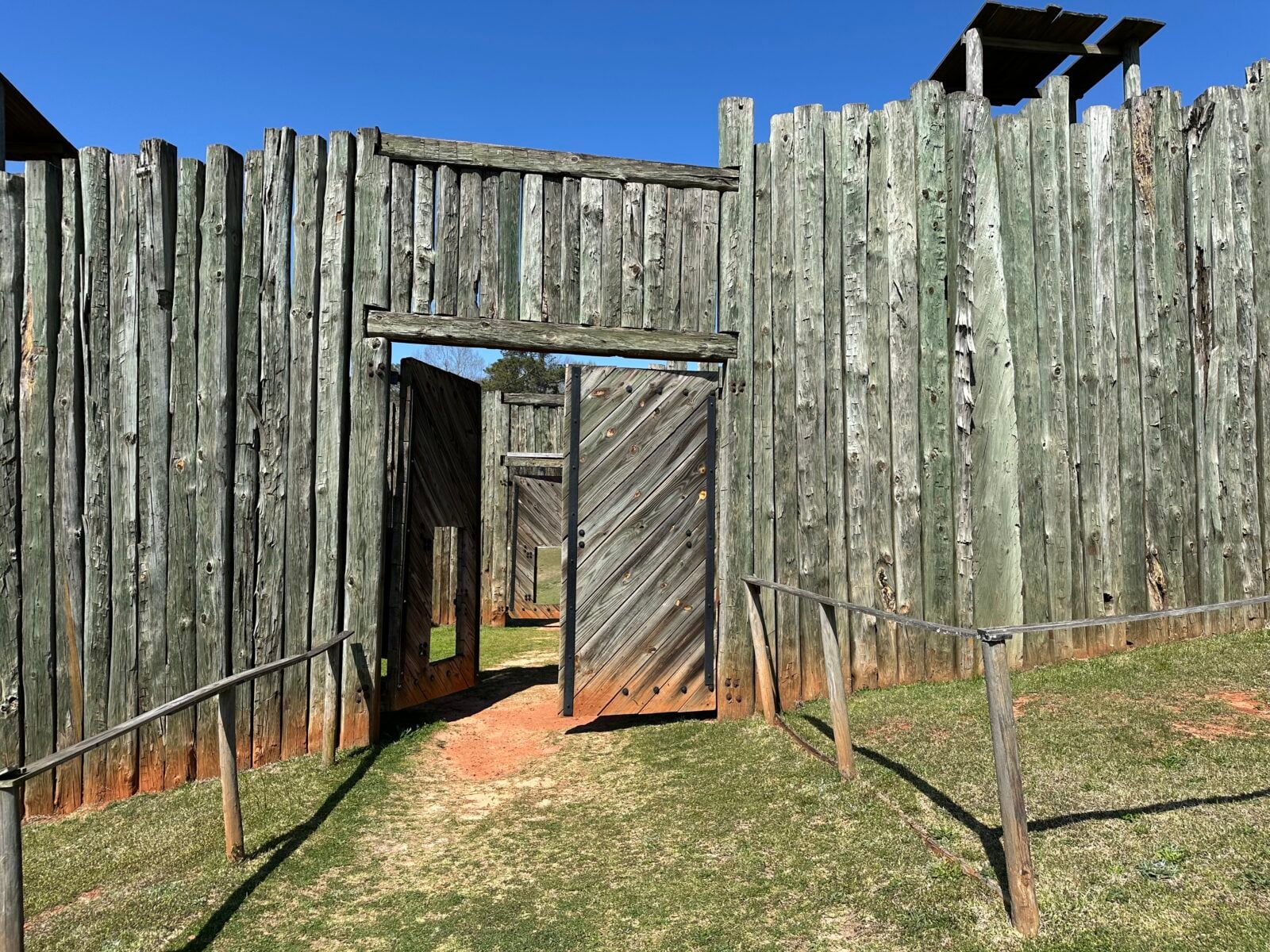
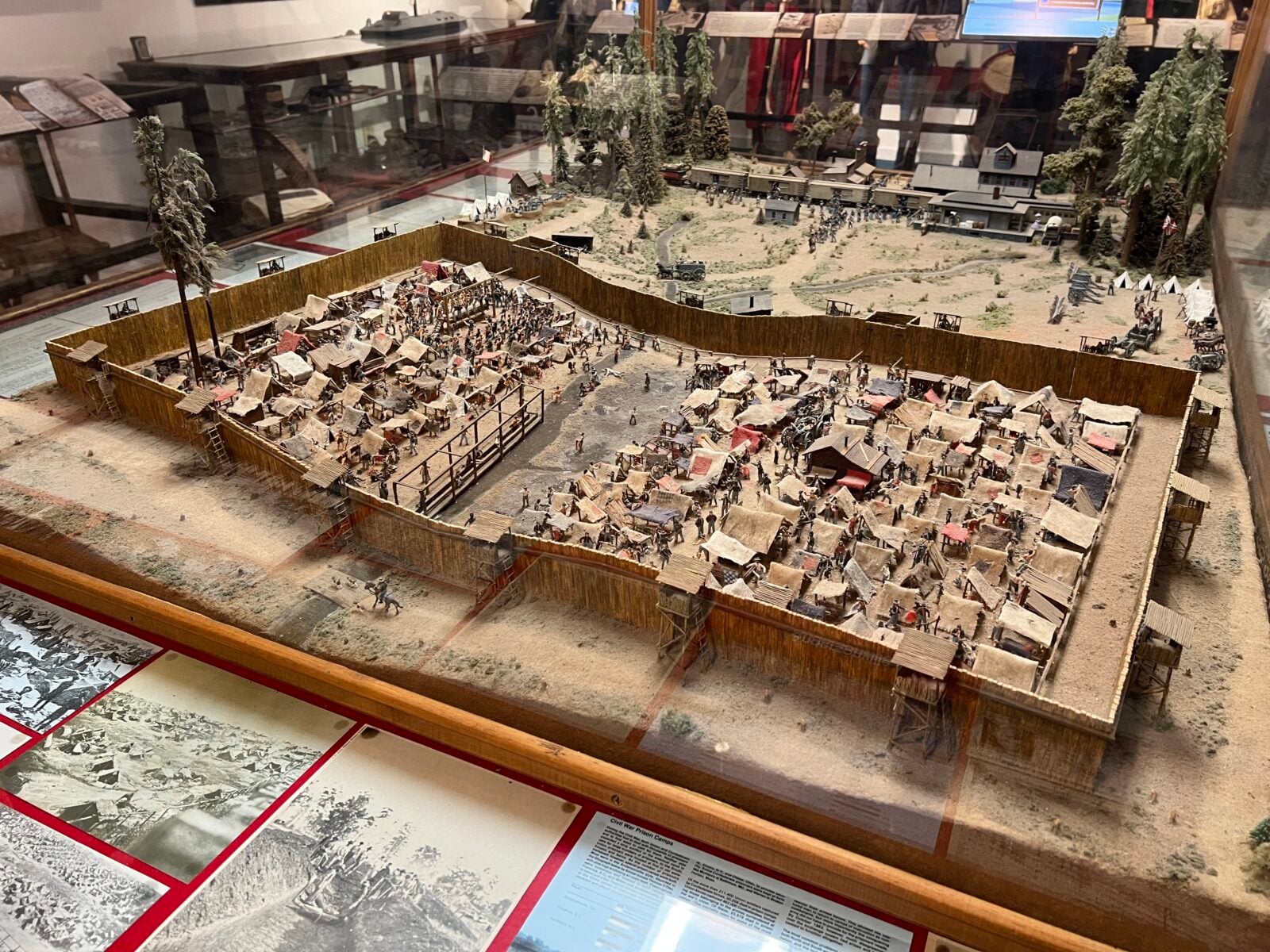
Nearby, you can enter a small, sanitized replica representing what the prison looked like. You’ll also see replica pigeon roosts.
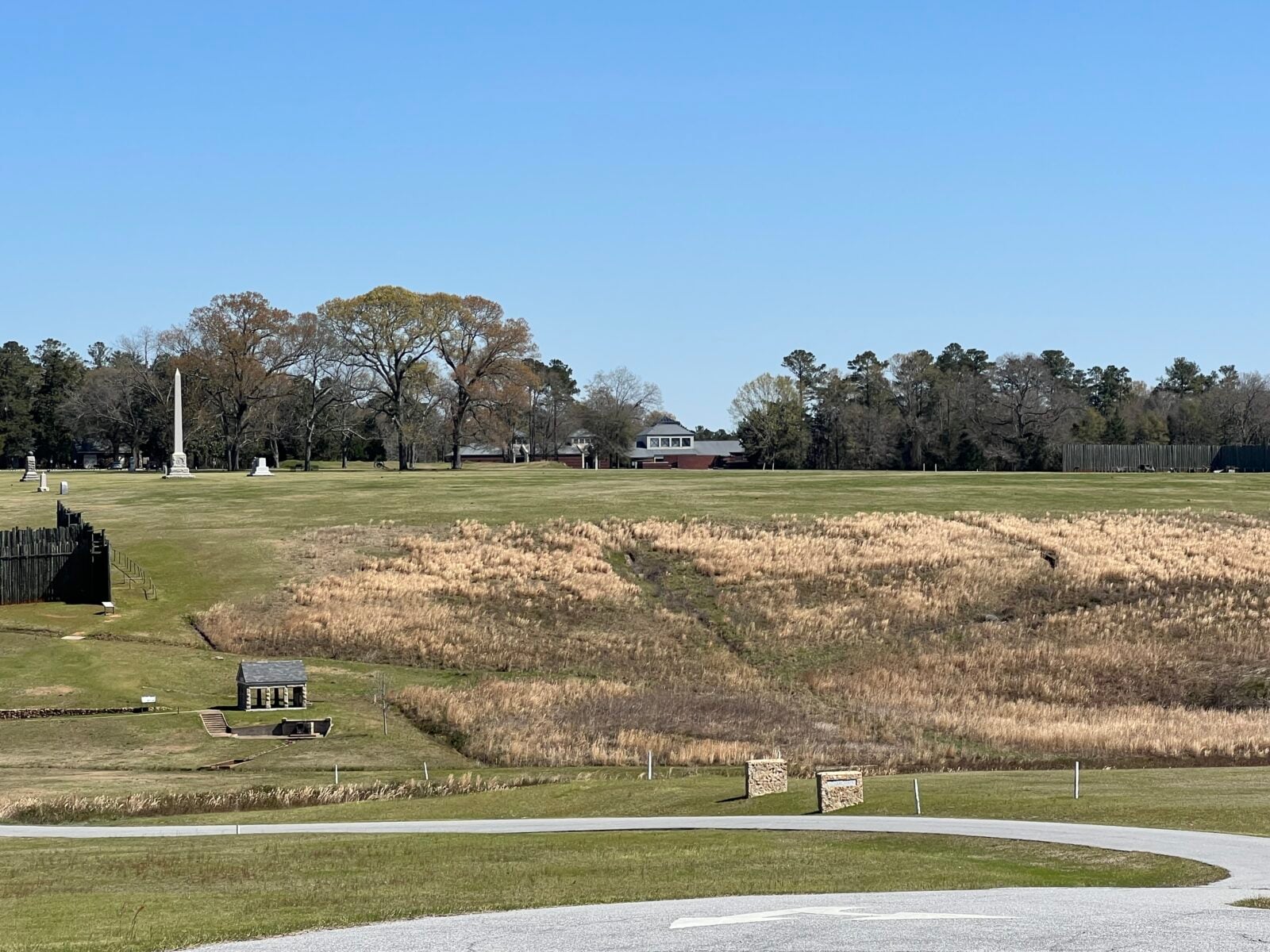
Still running through the valley center of the compound is tiny Stockade Creek. It was the only source of water for those 45,000. It also doubled as the latrine. It entered the walls already an open sewer as it left the nearby Confederate guard camp.
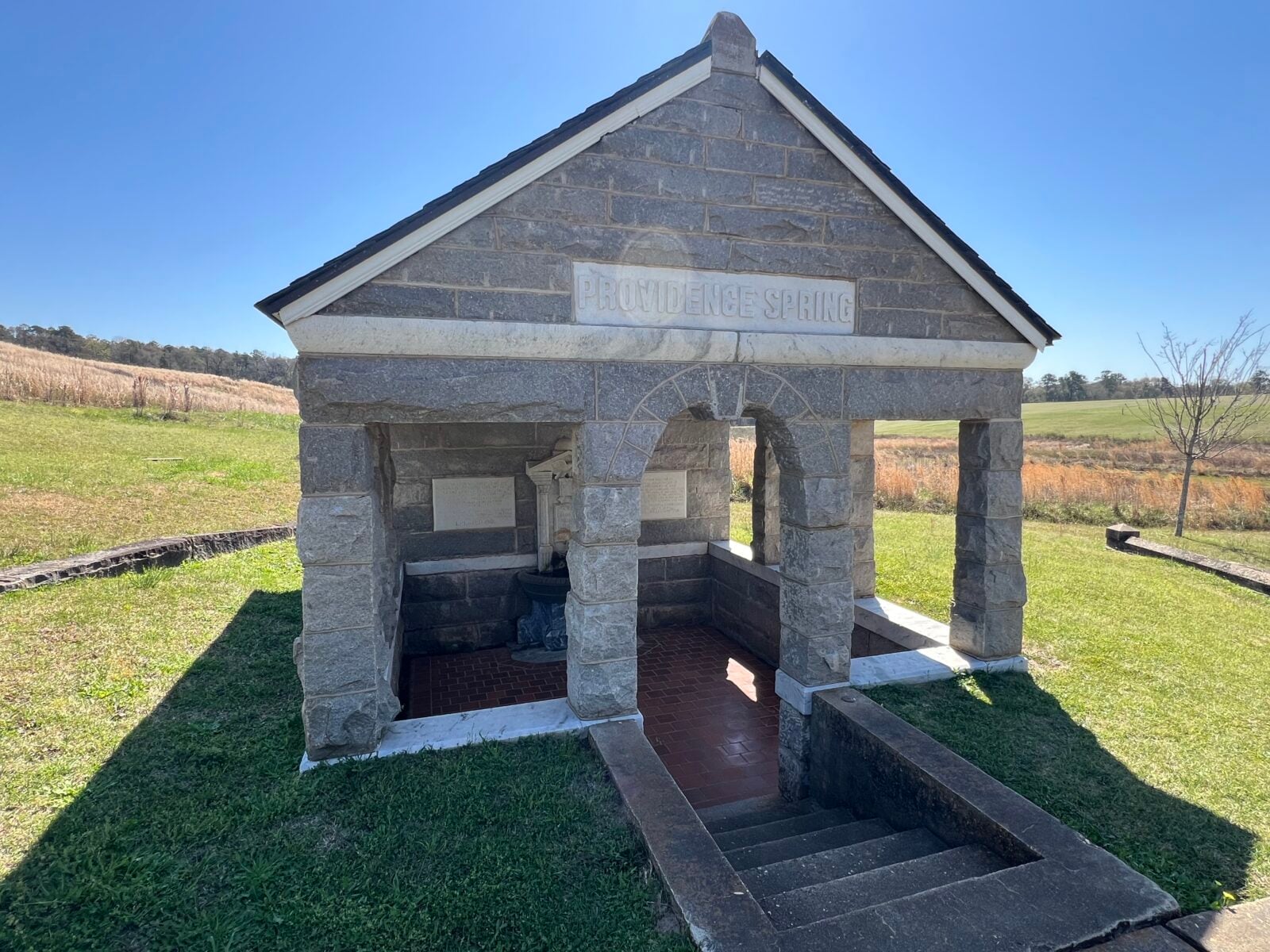
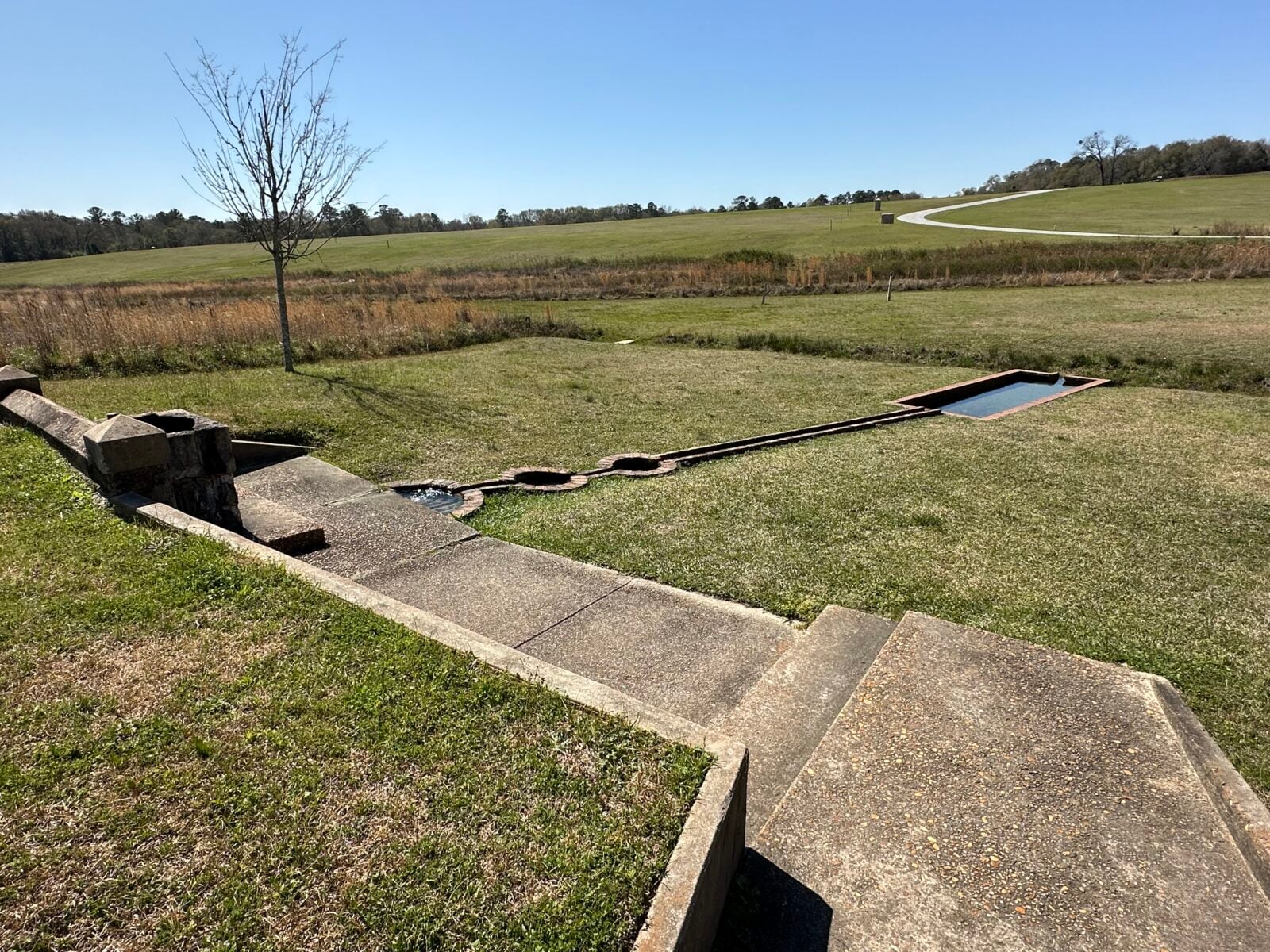
At one point, one telling goes, a bolt of lightning struck the hillside overlooking the creek, and a miraculous spring emerged. But others say that a long-covered spring emerged after heavy rains. Nonetheless, it provided a small source of good water, saving some. A stone monument to “Providence Spring,” the only other water source, was erected in 1901.
Most, however, succumbed to disease and starvation due to several reasons, where 45,000 humans existed in a space meant to hold 10,000:
- Even though the prison had been built in the heart of the South’s food production, a combination of Union attacks disrupting supply train routes and other snafus meant very little food reached the prison. The Confederacy couldn’t even keep its own soldiers fed at times.
- Food that did reach them was often rotted. It also couldn’t prevent scurvy, or a lack of vitamin C, which killed many.
- Prisoners covered in lice and other pests lived in tents, lean-tos, and other makeshift shelters in blazing summer heat and winter cold, and many also died of typhoid, exposure, and dysentery after drinking from that offal-filled creek. Bodies were quickly stripped of whatever clothing they had.
- Other prisons were emptied to bring more to Andersonville, compounding issues.
- Prisoner exchanges that had existed were halted, resulting in even more prisoners coming to Sumter.
It was a recipe for total disaster, and the result was just that.
That doesn’t even account for who died at the hands of the “raiders,” a gang of Union soldiers who preyed on their fellow prisoners. Eventually, with permission from the Confederates, they were faced down by another group called the “regulators” and hanged.
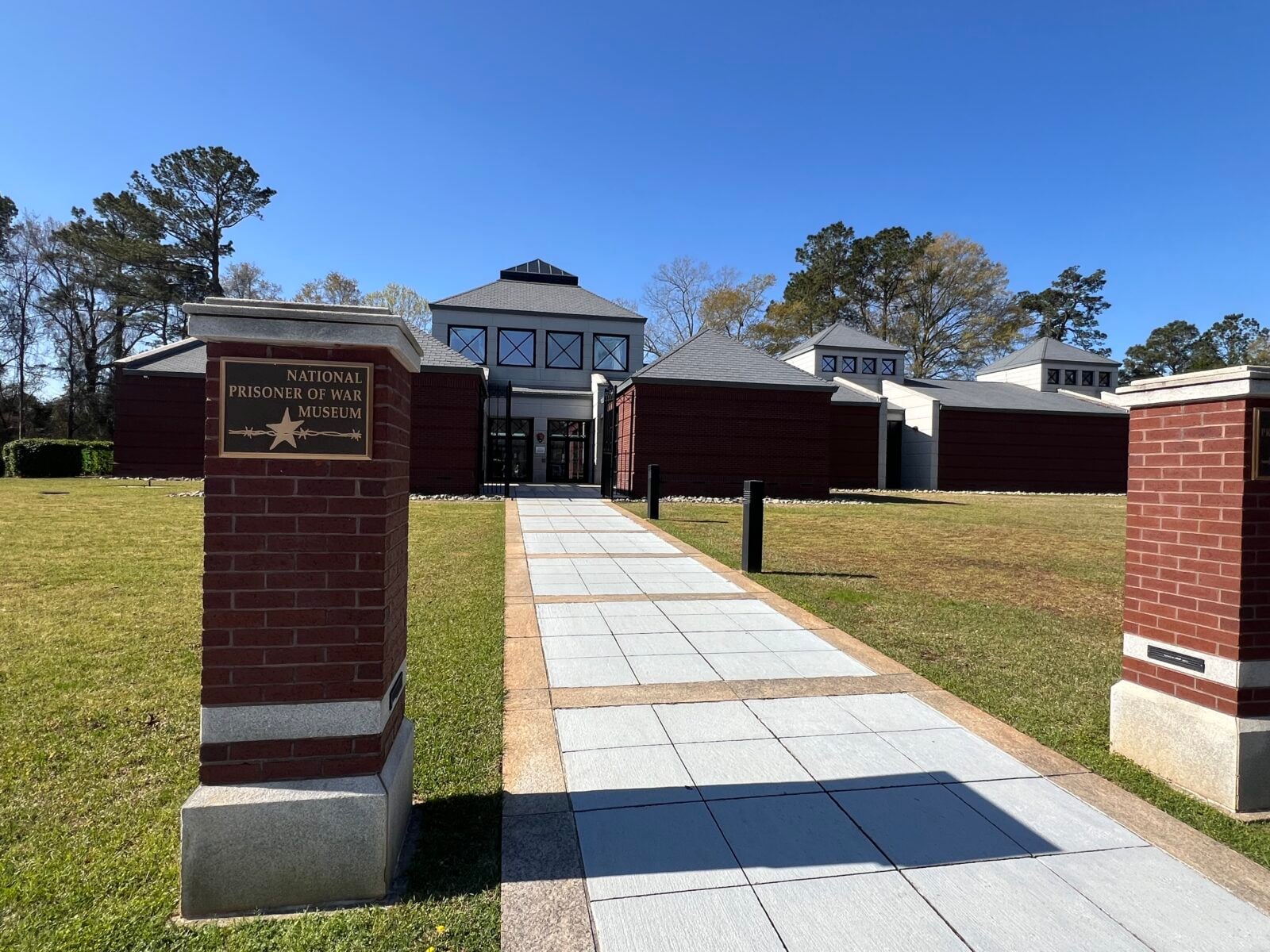
Once you leave, you also owe a visit to the site’s newest addition, the National Prisoner of War Museum, dedicated to all those who were captured, and either survived or perished in all United States wars. Then drive through and past the markers at the national cemetery, where 20,000 lie buried.
In 1971, the horrors here and elsewhere were replicated in one of the most famous psychological experiments ever conducted, the Stanford Prison Experiment.
It was so disturbingly successful in demonstrating how one group of student volunteers at Stanford University, called “the guards,” could quickly turn on another group of students named the “prisoners,” and vice versa, that it was halted after just seven days. It showed that humans have progressed very little since the Middle Ages, as evidenced by Mauthausen, Andersonville, and other examples. And it showed how easy it could happen again. We ignore its lessons at our peril.
When You Go
You can prepare for your visit by watching the movie Andersonville, available to rent on Amazon Prime Video. The 1971 PBS play The Andersonville Trial is available on the Internet Archive. MacKinlay Kantor’s Pulitzer Prize-winning historical novel, called simply Andersonville, which residents of the town decry, is at libraries.
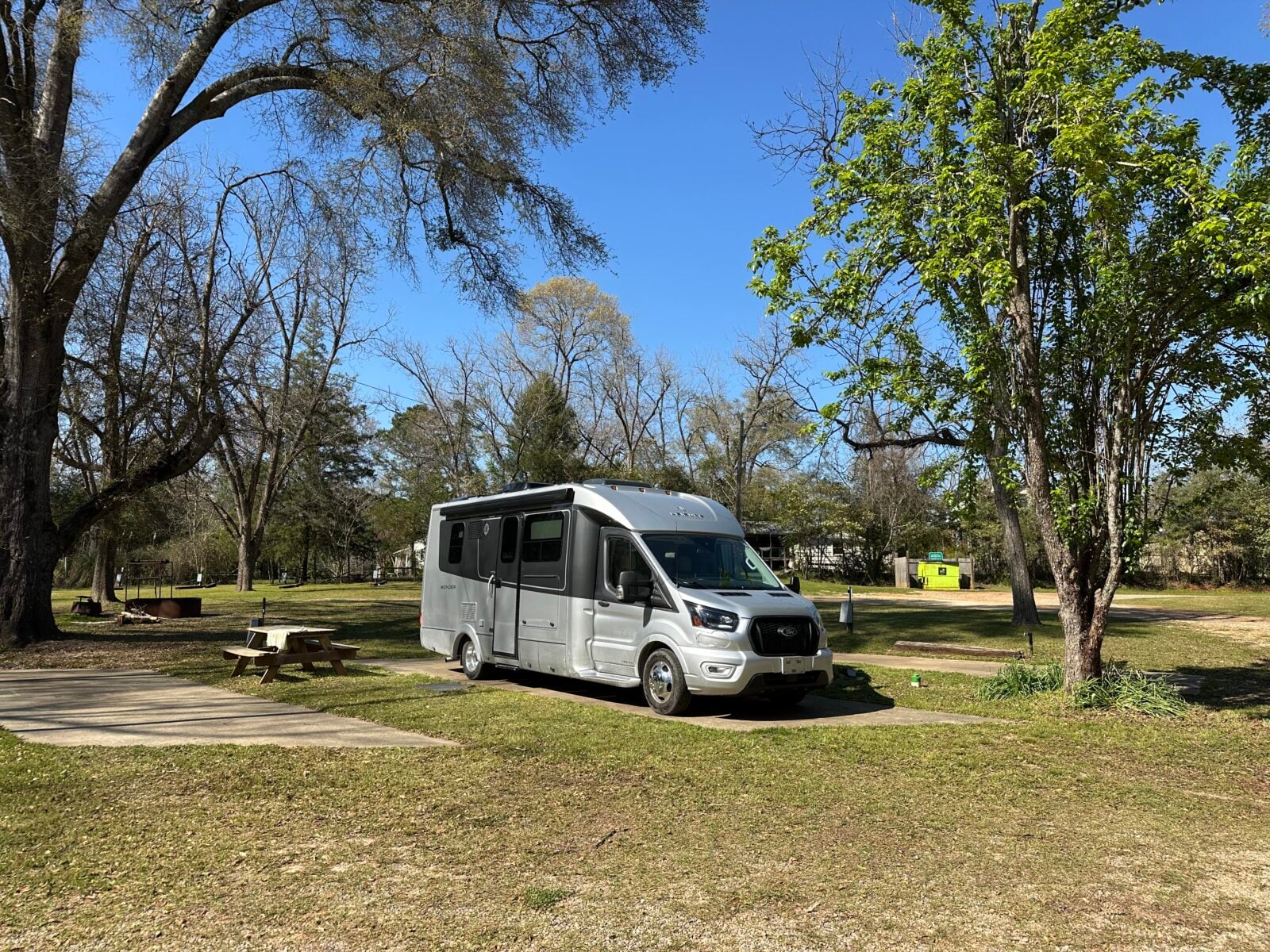
We stayed at Andersonville RV Park near the site. If she’s still there, say hi to park manager Mamma Kay, a former cargo ship first mate, whom we took the time to talk to.

This is a companion discussion topic for the original entry at https://leisurevans.com/blog/andersonville-a-memorial-to-the-past-and-a-warning/