Editor’s Note: This post is written by a member of LTV’s sponsored content team, The Leisure Explorers. Do you own a Leisure Travel Van and enjoy writing? Learn more about joining the team.
We crossed into North Carolina in early June, 2019. This was the 28th state we have visited in our Leisure Travel Van (Tiny House).
Our first stop was at Cape Hatteras National Seashore on the Outer Banks. We then spent several days visiting all the lighthouses before moving on to Roanoke Island and Fort Raleigh. The adventure on the Outer Banks can be read about in an earlier post titled The Outer Banks of North Carolina.
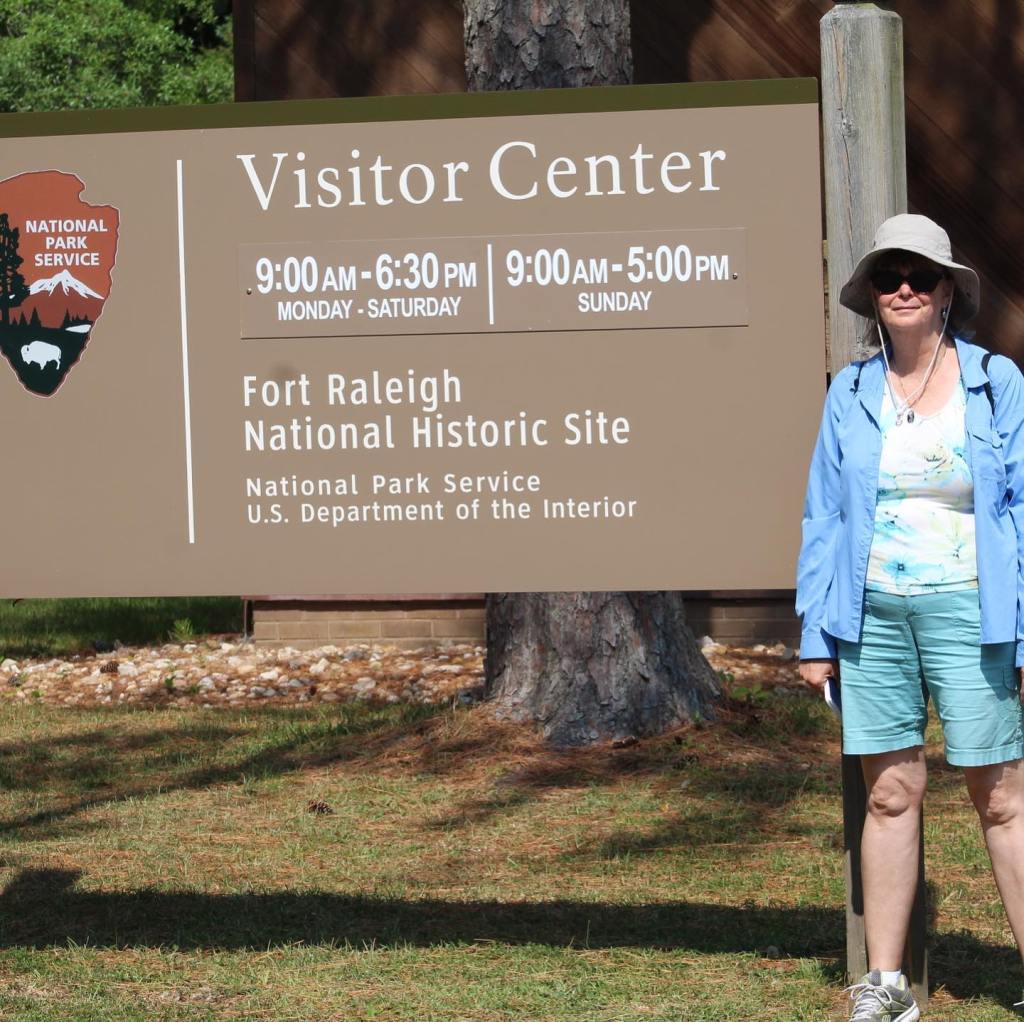
Fort Raleigh National Historic Site on Roanoke Island was our next adventure in North Carolina. It was here at Fort Raleigh that England attempted to establish its first/second colony in 1584-1589; the first English baby was born in America during this time. England’s first/second colony was known as the “Lost Colony.” Everyone vanished into thin air, and to this day, there is only speculation as to what happened to the 121 people.
In 1862, during the Civil War, the Northern forces captured Roanoke Island, and it quickly became a refugee camp for freed slaves known as the Freedmen’s Colony. This camp continued to house freed slaves until 1867.
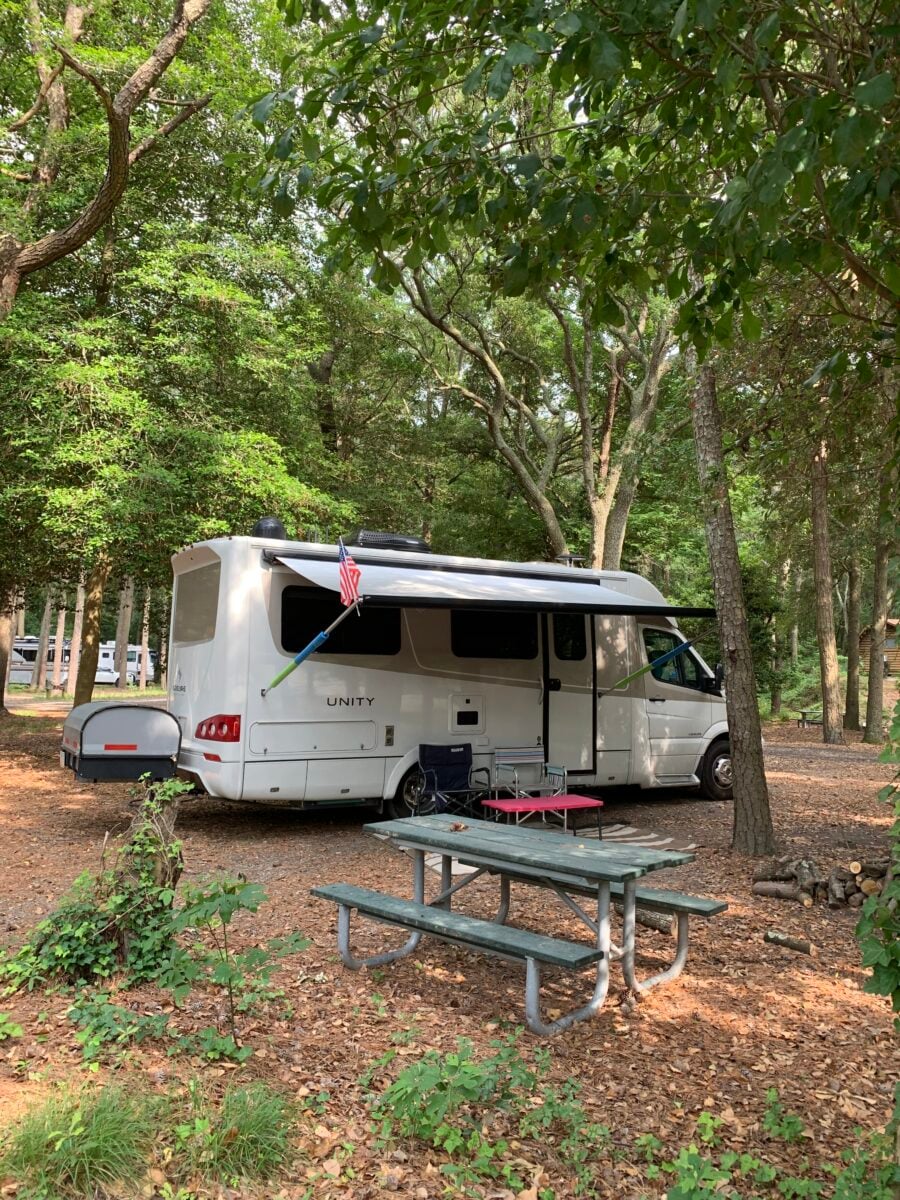
The Roanoke Colony was the site of two attempts by Sir Walter Raleigh to found the first permanent English settlement in North America. The first colony was established at Roanoke Island in 1585 as a military outpost and was evacuated in 1586. The more famous second colony, known as the Lost Colony, began when a new group of settlers under John White arrived on the island in 1587; a ship found the colony abandoned in 1590. The fate of the 112 to 121 colonists remains largely unknown. The following account gives more of the facts of the story.
Roanoke Colony was founded by Governor Ralph Lane in 1585 on Roanoke Island in present-day Dare County, North Carolina. Poor relations with some of the local Native American tribes and a lack of supplies troubled Lane’s colony. A resupply mission by Sir Richard Greenville was delayed, so Lane abandoned the colony and returned to England with Sir Francis Drake in 1586. Grenville arrived two weeks later and also returned home, leaving behind a small detachment to protect Raleigh’s claim. A third expedition led by John White landed on the island in 1587. Sir Walter Raleigh had sent him to establish the “Cittie of Raleigh” on the Chesapeake Bay.
During a stop to check on Grenville’s men, the ship’s pilot, Simon Fernandes, forced White and his colonists to remain on Roanoke. White returned to England with Fernandes, intending to bring more supplies in 1588. The Anglo-Spanish War delayed his return to Roanoke until 1590, and he found the settlement fortified but abandoned. The word “CROATOAN” was found carved into a tree, which White interpreted as meaning the colonists had relocated to nearby Croatoan Island. Before he could follow this lead, rough seas and a lost anchor forced the mission to return to England. The Roanoke Colony then became known as the “Lost Colony”.
Speculation that the colonists had assimilated with nearby Indian tribes appears in writings as early as 1605. Investigations by the Jamestown colonists (the first actual English permanent colony) produced reports that the Roanoke settlers had been massacred, and there were also stories of people with European features being seen in Indian villages, but no conclusive evidence was found. Interest in the matter fell until 1834, when George Bancroft published his account in A History of the United States. Bancroft’s description of the colonists cast them as foundational figures in American culture, particularly White’s infant granddaughter, Virginia Dare, and it captured the public imagination.
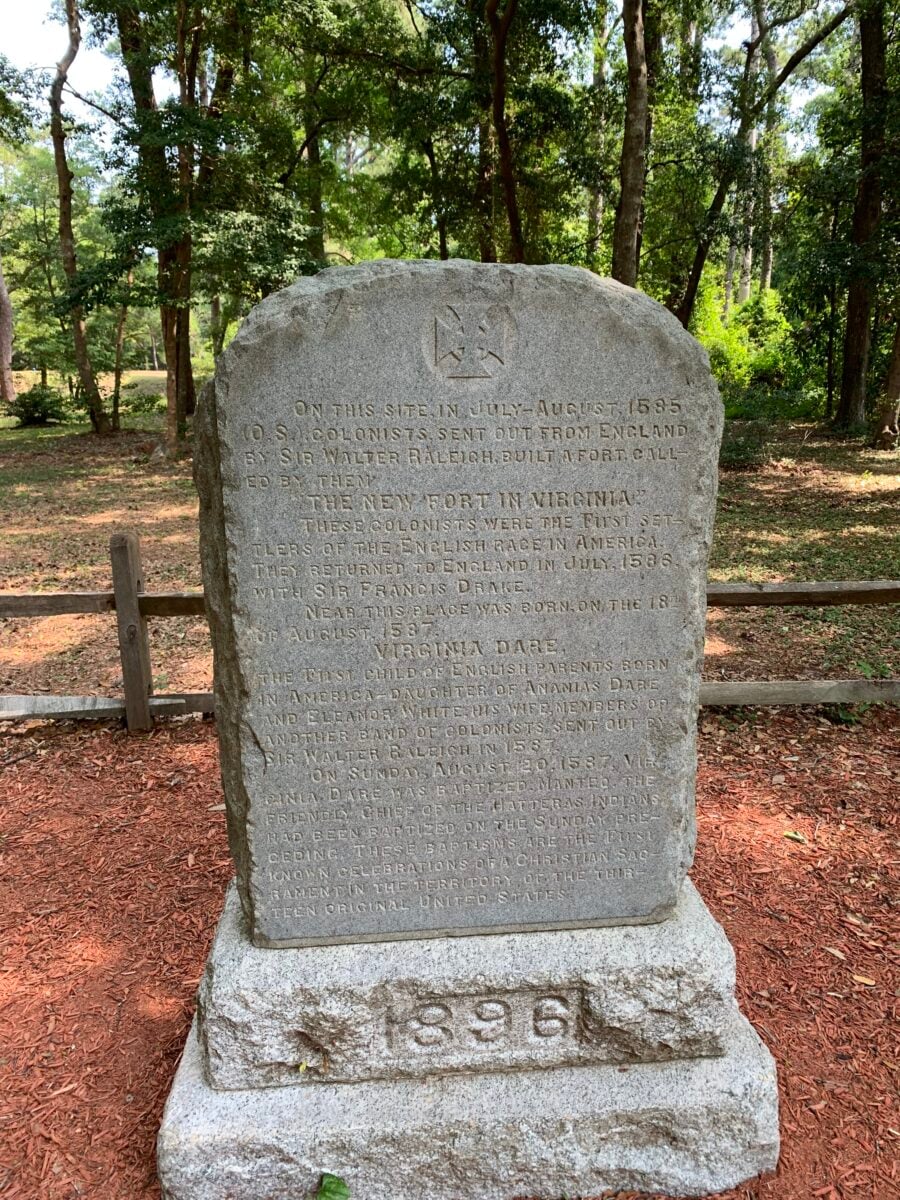
Although difficult to read since this plaque was placed here in 1896, here’s what the plaque says: “The first English American was born at Fort Raleigh, August 18, 1587. The girl’s name was Virginia Dare, born to Ananias Dare and Eleanor White, husband and wife who were part of a third group of settlers that arrived and disappeared in 1587. On Sunday, August 20, 1587, Virginia Dare’s parents had her water baptized. This water baptism was the first known English celebration of a Christian sacrament in the Thirteen original United States. Virginia Dare was part of the “Lost Colony,” and her fate remains unknown.
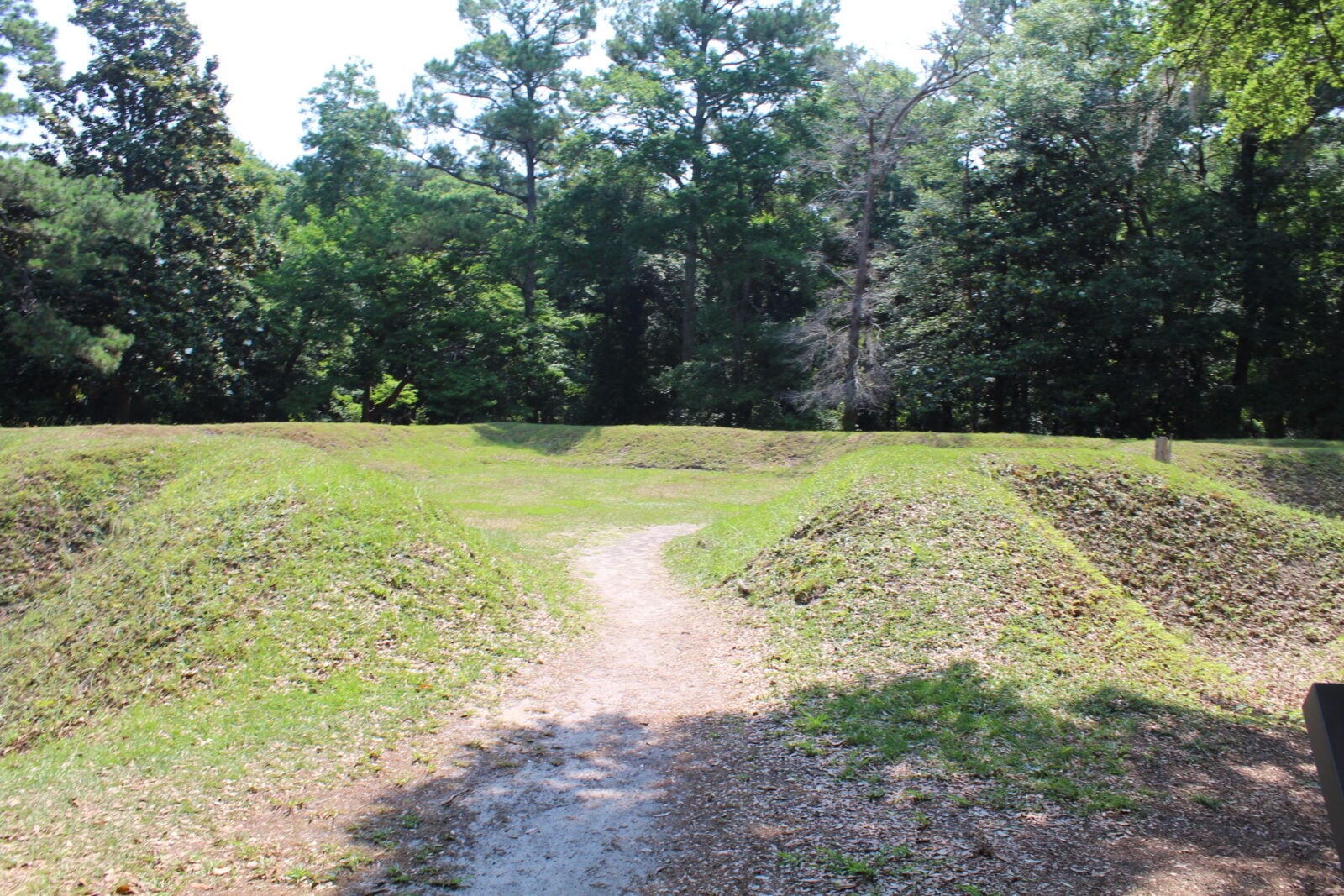
European expeditions in the late 1500s commonly constructed small defensive structures. Soldiers built these earthworks by digging ditches and then forming walls from the removed soil. Ralph Lane, a fortifications expert, led the 1585 English expedition. The full understanding of the earthwork is unknown since its small size would not have been large enough for the entire party to fit in, since the number of settlers was over one hundred. This did not include the number of explorers and soldiers.
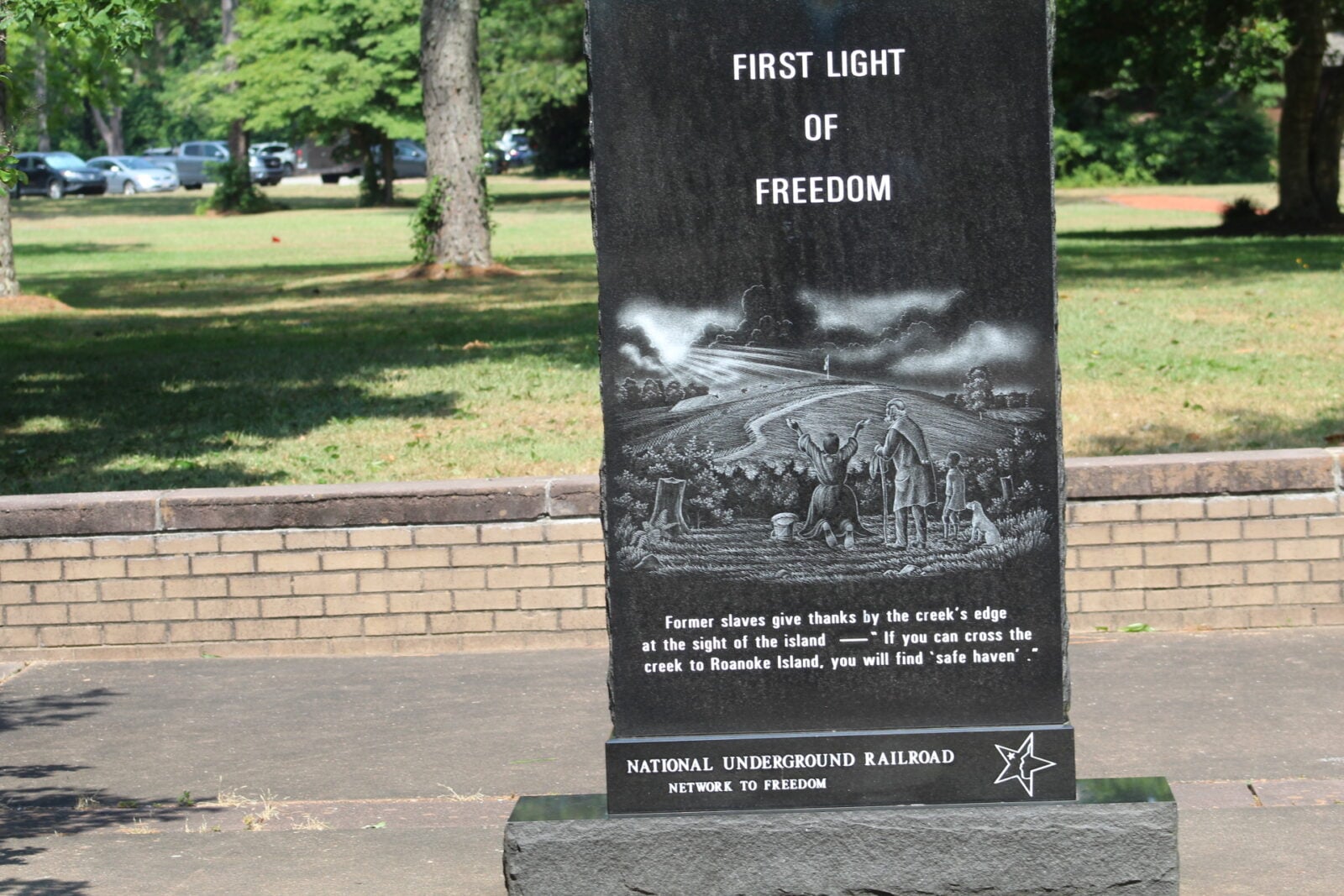
The Union Army occupied the island in 1862 and soon established a contraband camp for slave refugees. It founded the Roanoke Island Freedmen’s Colony in 1863 to be self-sustaining. The freed residents of the colony were allocated plots of land by household, paid for by the Army for work, and educated with the help of Northern teachers. By 1864, the colony had more than 2200 freed people as residents. It had a sawmill, fisheries, and 600 cabins. More than 150 freedmen from the colony were among the nearly 4000 freedmen from North Carolina who served with the United States Colored Troops. The colony is commemorated with a marble monument erected at the fort site in 2001 by Dare County.
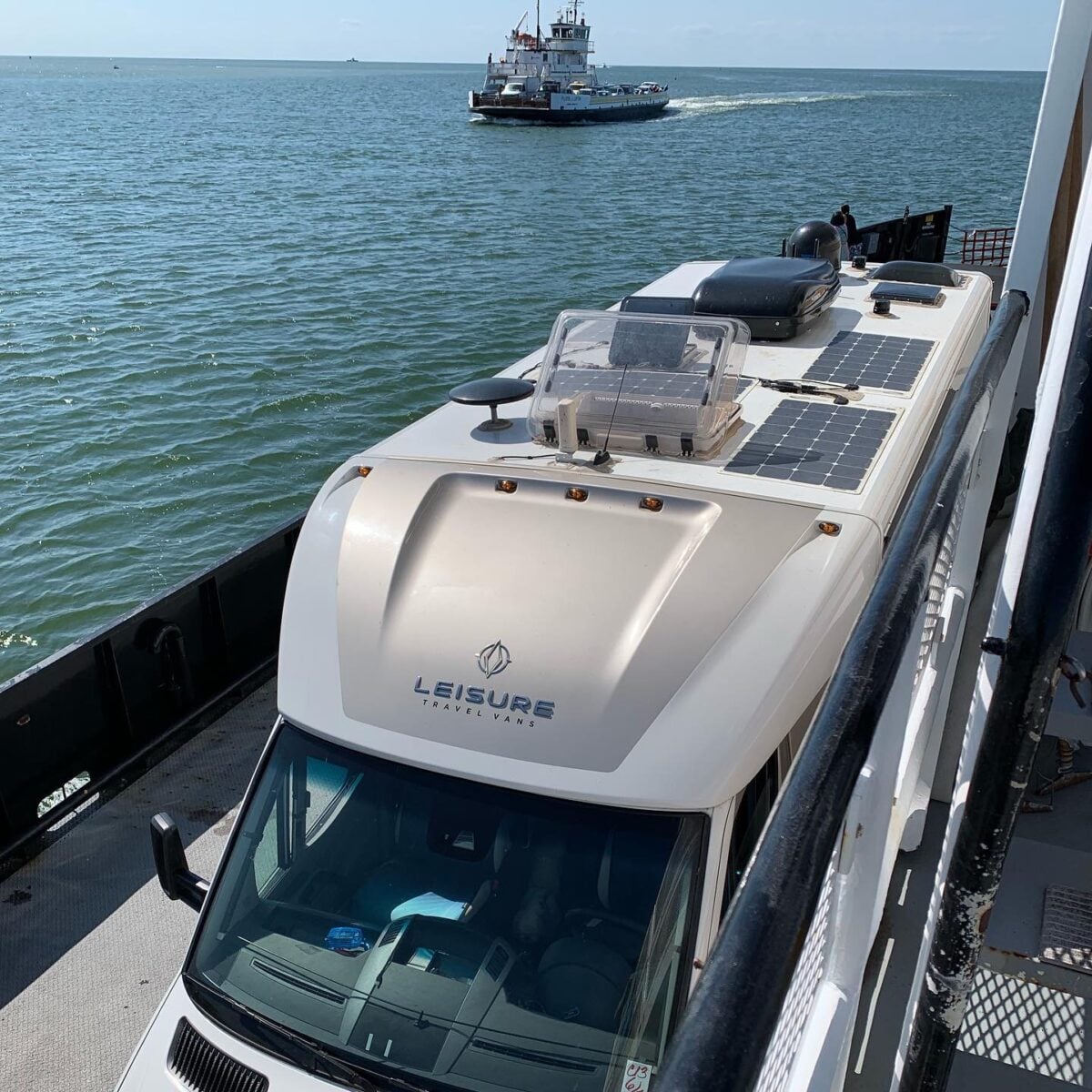
The information on Roanoke Island, the Lost Colony, Fort Raleigh, and the Freedmen’s Colony can be found at the Fort Raleigh National Historic Site itself and on Wikipedia. There is also a state park near Fort Raleigh; however, we didn’t stay there. We were headed for the Wright Brothers’ National Memorial and then on to Fort Story in Virginia. We didn’t stop for the night until we were in the Virginia Beach area.
Until next time, safe travels, my friends.
This is a companion discussion topic for the original entry at https://leisurevans.com/blog/fort-raleigh-national-historic-site-and-roanoke-island-north-carolina/